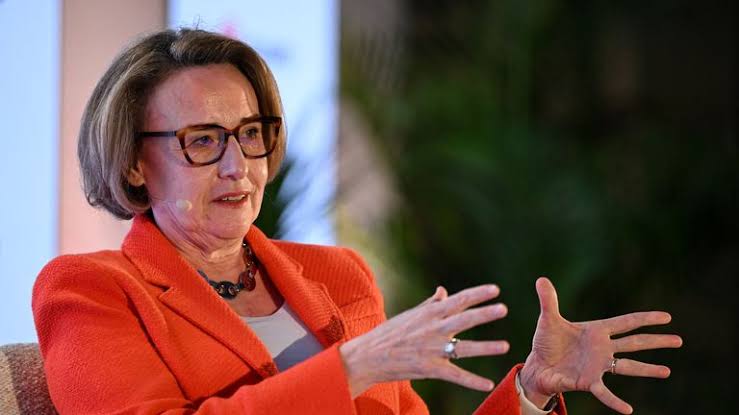
LONDON, United Kingdom — The chief executive officer of Vodafone Group PLC, Margherita Della Valle, has issued an urgent directive to European policymakers, stating that Europe's digital infrastructure requires massive corporate scale to stimulate critical network investment and remain globally comp...
LONDON, United Kingdom — The chief executive officer of Vodafone Group PLC, Margherita Della Valle, has issued an urgent directive to European policymakers, stating that Europe's digital infrastructure requires massive corporate scale to stimulate critical network investment and remain globally competitive. Speaking on Tuesday, June 16, 2026, at the high-profile Reuters Next summit in London, Della Valle criticized the slow pace of European anti-trust regulatory frameworks. She argued that bureaucratic delays in executing market mergers undermine regional security, economic resilience, and the rollouts of advanced next-generation telecommunications grids necessary to keep pace with rapid infrastructure expansions across the United States and Asia.
The Scale Problem in European Telecoms
The fundamental obstacle threatening European digital sovereignty centers on structural market fragmentation. While major global economic zones like the United States, China, and India have consolidated their domestic telecommunications operations down to three or four dominant, well-capitalized multi-regional carriers, the European Union remains divided into dozens of isolated national networks.
According to financial figures presented during the summit, this localized fragmentation drastically lowers the return on infrastructure investment for European network operators. Della Valle argued that without large-scale operations, private telecom groups cannot independently afford the billions of euros needed to build comprehensive, secure 5G and fiber-optic backbones.
"Speed is always the challenge, and the faster the better," Della Valle told industry reporters, directly targeting an ongoing European Union executive consultation aimed at revising the continent's strict cross-border merger guidelines. "Well-invested digital infrastructure is the right thing, not just for our economies, but also, frankly, for security and resilience in the current geopolitics. And if we want this, we need more investment, which needs scale."
Overturning the Four-Operator Red Line
For more than a decade, European antitrust regulators, managed by the European Commission, have maintained a strict policy prohibiting mergers that reduce the number of major mobile network operators within an individual member country from four down to three. This policy was built on the assumption that forcing maximum local competition was required to keep consumer prices low.
However, Della Valle has spearheaded a structural corporate overhaul to challenge this paradigm, demonstrating that under-capitalized operators ultimately hurt consumers through lower network reliability and slower technical updates.
Under her three-year tenure, Vodafone has systematically consolidated its positions by merging with rival network Three in the United Kingdom to create the country’s largest network provider. It has simultaneously exited smaller, low-yielding European markets by fully divesting its local operating segments across Spain and Italy.
Della Valle noted that she expects the European Union to replicate the regulatory flexibility recently shown by British oversight boards. "It's all about return on infrastructure," Della Valle explained. "If you can have, like we now have in the UK, one network which carries the traffic of 28 million customers, by definition your business case is a completely different one."
Active Consolidation Tests Across the Continent
The telecom sector is watching several ongoing regulatory reviews as a gauge of the EU's willingness to support market consolidation:
The French Merger Review: In France, major telecom players Bouygues, Orange, and Iliad-owned Free are navigating a complex antitrust investigation regarding their joint $23.5 billion proposed acquisition of mobile operator SFR.
The UK Integration Timeline: Vodafone is working to finalize its British consolidation, targeting full structural closing operations in the second half of 2026, pending final security reviews under the UK National Security and Investment Act.
Macroeconomic Projections: Industry whitepapers published alongside the summit indicate that the European Commission must close a massive €200 billion capital investment gap to hit its baseline 2030 digital connectivity goals.
Financial Impact on Markets and Domestic Consumers
The shift toward a unified, consolidated European digital framework directly alters the landscape for multiple commercial stakeholders:
Global Institutional Investors: Clearer regulatory guidelines for mergers and acquisitions (M&A) provide capital markets with increased predictability, boosting investment flows into major European telecom equities.
Enterprise and Industrial Consumers: Consolidated networks provide modern businesses with more resilient data architectures, minimal cross-border latency, and secure cloud capabilities to deploy enterprise AI.
Mobile Subscribers: While corporate consolidation often sparks concerns regarding potential tariff hikes, operators maintain that unified networks reduce dropped connections, maximize rural 5G coverage, and improve digital inclusion.
Official Sources Section
The corporate positions, transaction metrics, and policy statements cited throughout this news report are derived directly from the following official platforms:
On-the-record corporate testimony delivered at the Reuters Next Summit in London.
Financial results, dividend metrics, and buyback filings archived via Vodafone Group Investor Relations.
Official strategic whitepaper documentation titled "Europe's Digital Backbone," released by the Vodafone Group Public Policy Division.
Antitrust filing repositories maintained by the European Commission and the UK Competition and Markets Authority (CMA).
Quote Section
"According to officials and industry analysts, the ultimate success of Europe's digital economic transition depends on the speed with which Brussels can pivot from viewing connectivity as a low-cost commodity to treating it as a core pillar of national security."
Why It Matters
Digital connectivity is no longer just a basic consumer utility; it serves as the foundation for modern defense, healthcare, and financial logistics. As geopolitical tensions rise, an under-funded, fragmented European network grid leaves the continent vulnerable to hybrid cyber threats and economic stagnation. By demanding immediate regulatory relief, telecom leaders are trying to ensure that Europe can fund its own technological future rather than relying on infrastructure platforms developed by competing superpowers in the East and West.
Key Facts at a Glance
Core Message: Vodafone CEO Margherita Della Valle states European digital infrastructure requires rapid corporate scale to generate essential network investments.
Investment Gap: The European Commission reports that an additional €200 billion is required to meet the continent's baseline 2030 digital targets.
Market Strategy: Vodafone is executing a focused consolidation plan, exiting Spain and Italy while completing a major merger with operator Three in the UK.
Litmus Test: A massive $23.5 billion telecom acquisition involving carrier SFR in France is serving as a primary test case for evolving EU merger rules.
Corporate Performance: Vodafone Group reported a steady €40.5 billion in revenues for its fiscal year, supported by an organic service revenue increase of 5.4%.
FAQ Section
Q1: Does allowing mobile phone networks to merge mean phone bills will become more expensive for regular consumers?
A: Regulatory bodies closely monitor mergers to protect consumer pricing. Telecom operators argue that while consolidation stabilizes pricing, it prevents wasteful infrastructure duplication, allowing them to deliver faster, more reliable 5G connections for the same cost.
Q2: Why can't European countries just fix their own networks individually instead of merging across borders?
A: Small, localized markets do not generate enough customer revenue to offset the multi-billion-euro costs of modern satellite systems, subsea cables, and fiber infrastructure. Cross-border partnerships and domestic mergers create the necessary customer base to make these huge investments financially viable.
Q3: When will the Vodafone and Three merger be fully completed in the United Kingdom?
A: Following preliminary regulatory approvals, Vodafone targets closing the structural and operational integration phases during the second half of 2026, subject to final checks under the UK National Security and Investment Act.
Source: Vodafone Group Investor Relations, Vodafone Group Public Policy Division.