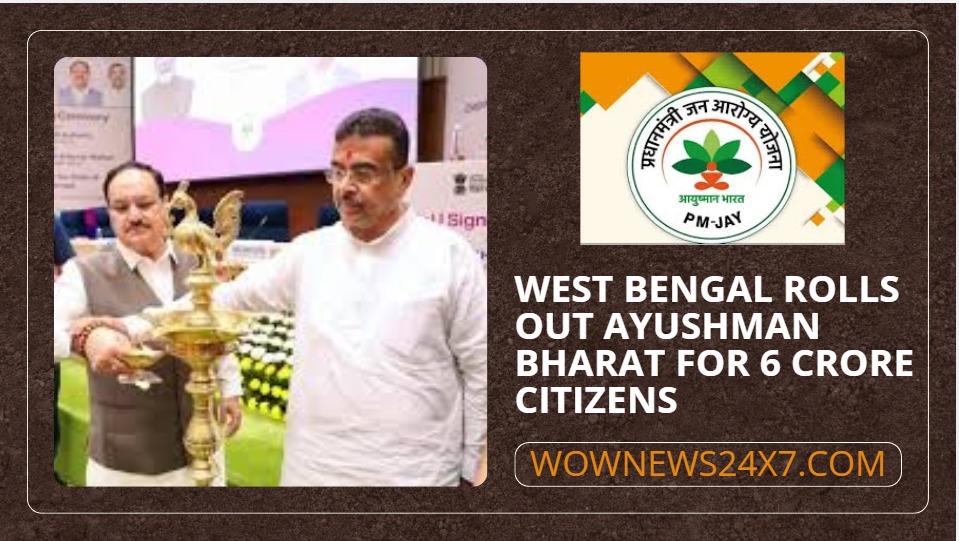
West Bengal has officially implemented the Ayushman Bharat PM-JAY scheme following a historic MoU between the National Health Authority and the state government. The rollout extends up to ₹5 lakh in annual cashless health insurance to 1.43 crore families, completing the nationwide integration of India's flagship health assurance framework.
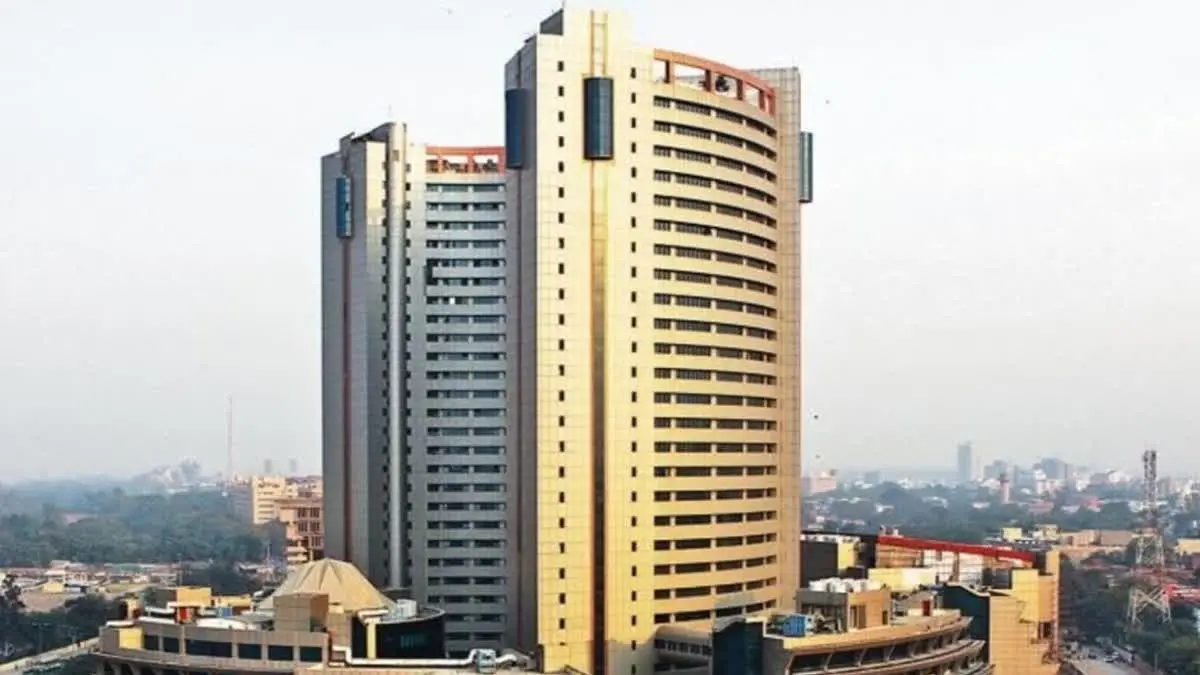
In a major healthcare policy shift, West Bengal has officially rolled out the central government’s flagship health insurance scheme, Ayushman Bharat Pradhan Mantri Jan Arogya Yojana (AB PM-JAY). The formal integration occurred on Monday, June 8, 2026, when the National Health Authority signed a historic Memorandum of Understanding (MoU) with the Government of West Bengal at Vigyan Bhawan in New Delhi. The agreement ends a multi-year administrative impasse, making West Bengal the 36th and final State/Union Territory to adopt the initiative, thereby completing the nationwide footprint of the world's largest government-funded health assurance programme. The rollout will extend an annual cashless cover of up to ₹5 lakh per family for secondary and tertiary hospital treatments to approximately 1.43 crore families across the state.
Broad Eligibility Matrix Encompasses Low-Income Families
According to the official announcement by the Ministry of Health and Family Welfare, the newly established eligibility criteria in West Bengal will capture nearly six crore individual citizens. The core beneficiary base is drawn from the dynamic parameters of the Socio-Economic and Caste Census (SECC), specifically targeting low-income, vulnerable, and rural households.
The structural blueprint features distinct inclusions designed to maximize local coverage:
Existing Cardholders: Roughly six crore individuals previously registered under the state's domestic Swasthya Sathi health card initiative are being systematically mapped and transitioned directly into the federal database.
Senior Citizens: A dedicated sub-allocation covers 15.95 lakh households containing senior citizens aged 70 years and above, irrespective of their socio-economic bracket.
Frontline Health Teams: The policy absorbs approximately 3.03 lakh families of Accredited Social Health Activists (ASHAs), Anganwadi Workers, and Anganwadi Helpers into the zero-premium insurance loop.
Streamlined Steps to Verify and Apply for Ayushman Cards
The National Health Authority has activated its localized web interface and biometric verification centers across all 23 districts of West Bengal to coordinate enrollment. Officials have clarified that because the majority of the targeted population is pre-identified via legacy data, the application roadmap focuses primarily on verification and card generation rather than fresh registrations.
Citizens can secure their Ayushman cards by following a standardized administrative sequence. First, individuals must log on to the official central portal or download the dedicated mobile software to input their mobile number and check their structural inclusion status. If the family name appears in the verified pool, the beneficiary must visit a local Arogya Mitras help desk situated inside any empanelled public hospital, or go to a Common Service Centre (CSC). The final step requires presenting an Aadhaar card or a ration card to execute a mandatory biometric e-KYC verification, after which the digital Ayushman card is instantly generated and issued free of cost.
Impact on Citizens, Migrant Workers, and Healthcare Infrastructure
The long-term practical impact of West Bengal adopting the central framework is substantial, particularly regarding geographical portability. Under previous regional health programs, residents could generally only access subsidized care inside state boundaries. The integration with Ayushman Bharat grants West Bengal’s massive migratory workforce instant, cashless medical entry into a network of over 36,000 empanelled public and private hospitals distributed across the entire country.
Financially, the Central Government has pledged an estimated annual contribution of nearly ₹1,000 crore to bankroll the treatment pipelines within the state. This capital influx is expected to significantly reduce out-of-pocket medical expenditure, which historical federal data indicates dropped nationwide from 64.6% prior to 2018 down to 43.4% today. Furthermore, state public hospitals will receive direct financial reimbursements from the central pool for treating cardholders, creating an independent revenue stream to upgrade rural clinical infrastructure.
Quote Section
"According to officials present at the signing ceremony, the administrative apparatus has already initiated database synchronization to ensure that transition friction for regional hospital networks remains absolutely minimal during the initial phase."
Why It Matters
The rollout provides unprecedented financial protection against catastrophic medical crises for low-income families in West Bengal. By standardizing health metrics and introducing absolute portability, the agreement ensures that a laborer from districts like Murshidabad or South 24 Parganas can seek life-saving cardiac or oncological interventions in specialized facilities across New Delhi, Mumbai, or Bengaluru without upfront out-of-pocket costs. For the healthcare sector, it creates an expanded, regulated consumer base that will drive private medical investments into peripheral districts.
Key Facts at a Glance
Nationwide Completion: West Bengal's onboarding makes it the 36th state/UT to join, finalizing the total geographic integration of the Ayushman Bharat network.
Massive Scale: The rollout encompasses 1.43 crore families, translating to approximately six crore individual beneficiaries across the state.
Financial Shield: Provides ₹5 lakh of annual, cashless hospitalization insurance per eligible family for complex medical operations.
Senior Inclusions: Features a dedicated, non-income-linked coverage tier for over 15.95 lakh senior citizens aged 70 and above.
Central Funding: The Union government is projected to supply an estimated ₹1,000 crore annually to sustain the local claim settlement ecosystem.
FAQ Section
Who is automatically eligible for the Ayushman Bharat card in West Bengal?
Families listed in the SECC database, active Swasthya Sathi cardholders, registered frontline ASHA and Anganwadi workers, and any senior citizen aged 70 years or older are eligible for coverage.
Can a beneficiary use the West Bengal Ayushman card in other states?
Yes. One of the central features of the program is nationwide portability, allowing eligible residents to receive cashless treatment at any of the 36,000+ empanelled hospitals across India.
What documents are required to complete the e-KYC application process?
Applicants must present an Aadhaar card or an active family ration card at an approved verification center to confirm their identity and complete biometric e-KYC authentication.
Source: Press Information Bureau, National Health Authority Operational Portals, Ministry of Health and Family Welfare State Allocation Sheets, West Bengal Department of Health Liaison Minutes.