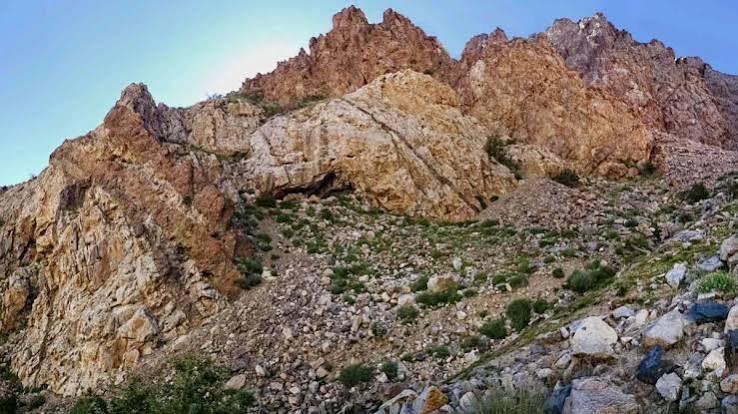
Ancient DNA recovered from a 4,000-meter-high burial cave in Ladakh reveals a lost 1,500-year-old population carrying equal Tibetan and North Indian ancestry. Published in Science Advances, the study proves that high Himalayan passes facilitated trade and genetic exchange as early as 800 BCE, leaving lasting signatures in modern Ladakhi lineages.
LEH, India — An international team of geneticists and archaeologists has revealed the discovery of a previously unknown ancient Himalayan population following the extraction and analysis of DNA from human remains in a high-altitude burial cave in Ladakh. According to research findings published in the peer-reviewed journal Science Advances, human remains recovered from the Abi Srinjamo Bao cave near Yogma Kharbu village show a precise 50–50 genetic blend between ancient Tibetan and North Indian ancestral lines. The study proves that high-altitude Himalayan passes served as active demographic corridors for trade and human migration nearly 3,000 years ago, challenging long-held assumptions that the mountain range acted as an impassable barrier between South Asia and the Tibetan Plateau.
Genetic Analysis and Archaeological Findings at Abi Srinjamo Bao
The human remains analyzed in the landmark study were excavated at an elevation of approximately 4,000 meters (13,000 feet) above sea level in western Ladakh. Radiocarbon dating conducted on the remains of 10 individuals recovered from the site places their deaths between 500 CE and 600 CE, making the samples approximately 1,450 to 1,500 years old.
Due to the cold, arid environment of the high-altitude cave, several specimens exhibited natural mummification, preserving soft tissues including skin, ligaments, and two intact hands.
By measuring the length of inherited chromosomal segments, researchers determined that genetic mixing between the ancestral Tibetan and North Indian populations began roughly 50 generations prior to the cave burials, establishing initial genetic contact around 800 BCE (nearly 2,800 years ago).
Historical Context and Genetic Inheritance in Modern Groups
The timeline established by the researchers indicates that South Asian and Tibetan populations interacted and intermarried centuries prior to written historical records or the 7th-century expansion of the Tibetan Empire.
The North Indian component identified in the DNA matches populations carrying ancestral South Asian, Indus Valley, and Steppe genetic components, proving that the modern North Indian genetic structure was already established and migrating into mountain valleys by 800 BCE.
While the equal 50–50 genetic ratio is virtually absent in modern South Asian populations, scientists confirmed that the genetic signature of this ancient group lives on today in local Himalayan communities. Genetic mapping shows the strongest continuity in modern Ladakhi populations, particularly among the Minero people—who retain over 50 percent of this specific ancient lineage—and the Balti population of the Karakoram region.
Implications for Anthropological Research and Regional Tourism
The discovery redefines the historical understanding of trade networks and demographic mobility across the Trans-Himalayan region. For anthropologists and historians, the data confirms that ancient mountain communities adapted to extreme altitude while maintaining active contact with lowland civilizations.
For local authorities, heritage organizations, and travelers in Jammu & Kashmir and Ladakh, the identification of ancient burial sites emphasizes the necessity of preserving fragile high-altitude archaeological zones against uncontrolled development and climate change.
Official Sources Section
According to official study publications, institutional disclosures, and research releases:
Quote Section
According to researchers and official scientific disclosures:
"According to officials and lead researchers, the genetic evidence recovered from the Ladakh cave proves that the Himalayas served as a dynamic conduit for genetic and cultural exchange between South Asia and the Tibetan Plateau nearly three millennia ago, rather than a physical wall isolating ancient populations."
Why It Matters
This genetic breakthrough fundamentally alters the historical narrative of human settlement in the Himalayas. By proving that ancient populations moved across 4,000-meter mountain passes as early as 800 BCE, the study offers key insights into high-altitude physiological adaptation, human migration patterns, and the genetic origins of modern Himalayan communities in northern India.
Key Facts at a Glance
Major Discovery: 1,500-year-old human remains in a Ladakh cave reveal a distinct population with equal Tibetan and North Indian ancestry.
Location: Excavated from the Abi Srinjamo Bao cave near Yogma Kharbu at an altitude of 4,000 meters.
Ancient Admixture: Genetic analysis indicates initial intermixing between North Indian and Tibetan groups began around 800 BCE.
Modern Descendants: The ancient genetic lineage persists most strongly today among the Minero and Balti peoples of Ladakh.
Frequently Asked Questions (FAQ)
Where was the ancient human DNA discovered?
The DNA was extracted from naturally mummified human remains found in the Abi Srinjamo Bao cave, located near Yogma Kharbu village in western Ladakh at an altitude of 4,000 meters.
How old are the human remains found in the Ladakh cave?
Radiocarbon dating places the remains between 500 CE and 600 CE, making them approximately 1,450 to 1,500 years old.
When did the genetic mixing between Tibetan and North Indian groups begin?
Chromosomal segment analysis shows that genetic contact between the two ancestral groups began around 800 BCE, approximately 50 generations before the individuals were buried in the cave.
Do any modern populations share this ancient genetic profile?
Yes. While the precise 50–50 ancestral balance is rare today, the genetic lineage survives most strongly in modern Ladakhi groups, particularly the Minero and Balti communities.
Source: Science Advances, Max Planck Institute for Evolutionary Anthropology, Archaeological Survey of India