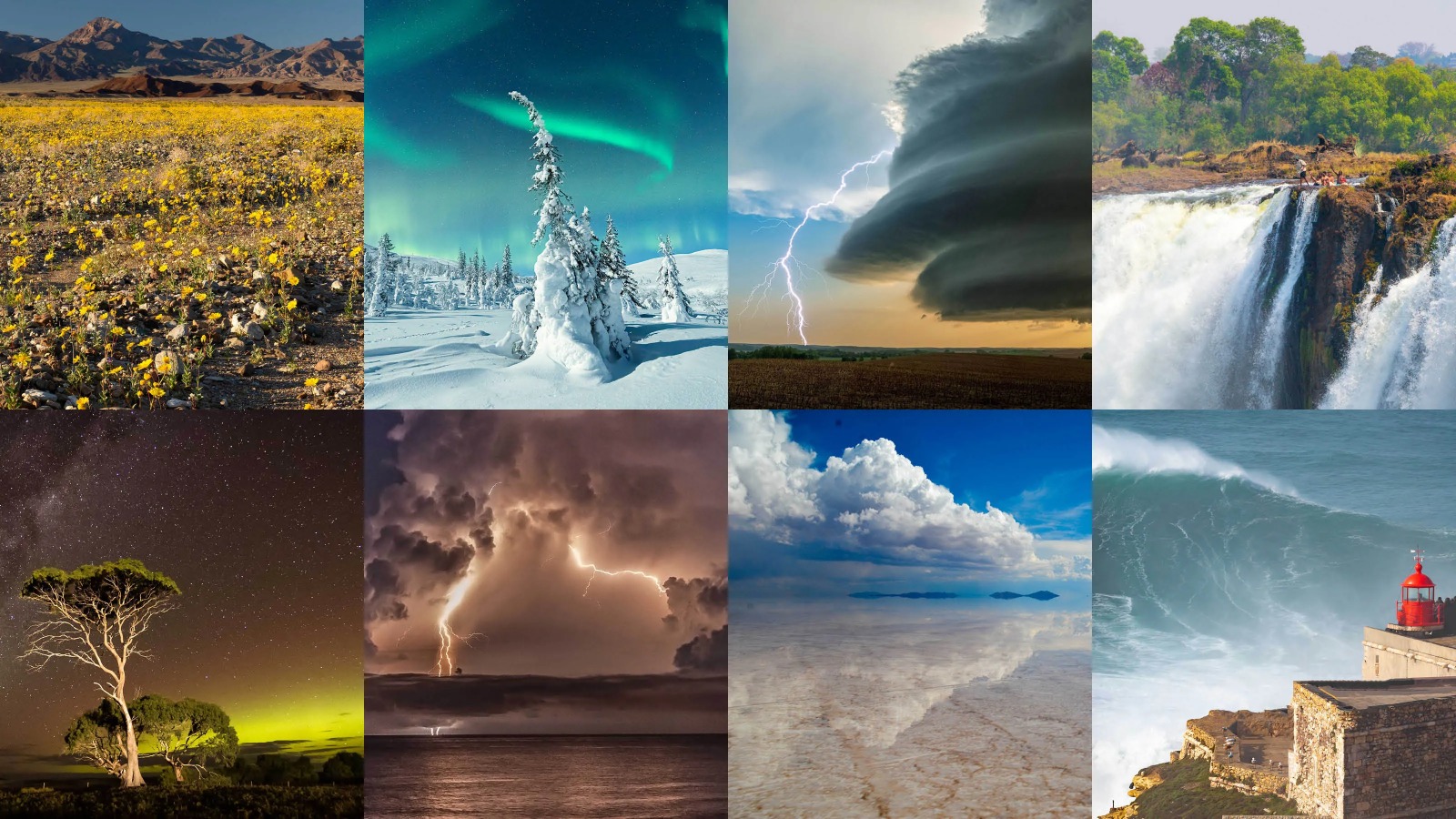
From total solar eclipses arcing over Iceland and Spain to Northern Lights blazing at peak solar maximum, 2026 has emerged as one of the most spectacular years for rare natural phenomena in recent memory. Travellers worldwide are ditching traditional sightseeing in droves to witness Earth's most fleeting, extraordinary, and deeply humbling displays.
A quiet but seismic shift is reshaping the global travel industry, and it has nothing to do with hotels, theme parks, or famous landmarks. Expedia's latest research underscores a booming trend in phenomena tourism, where travellers are drawn to destinations featuring natural wonders like eclipses and the Northern Lights — with 80% of surveyed travellers expressing interest in such experiences. In 2026, with a rare convergence of celestial and terrestrial events, that interest has ignited into a full-scale travel movement.
The Sky Is The Destination
No single event is drawing more global travel planning in 2026 than the total solar eclipse of August 12. The next full solar eclipse is set to occur on August 12, 2026, visible across parts of the Arctic, Greenland, Iceland, and Spain, where the moon will completely block the sun, revealing its fiery corona and creating a genuinely awe-inspiring spectacle.
Running parallel to eclipse fever is the Northern Lights surge. 2026 is the last major opportunity to catch the aurora borealis at its most spectacular, thanks to the current solar maximum — the peak of the sun's roughly 11-year magnetic cycle — meaning more solar storms and even more vibrant auroras of shimmering green, pink, and violet lighting up Arctic skies. The Northern Lights topped Expedia's phenomena survey as the most popular attraction, garnering interest from 61% of all surveyed travellers.
Earth's Ground-Level Wonders
The spectacle is not limited to the sky. The Rainbow Mountains of China, a UNESCO-listed heritage site, draw visitors to platforms built specifically to protect the multi-tonal stripes of terracotta, moss green, soft pink, duck egg blue, and ochre that band the landscape in colours that seem almost digitally rendered.
On Vaadhoo Island in the Maldives, bioluminescent organisms in the shallows produce a glowing ocean surface that resembles a starry sky at night — a phenomenon activated by even the gentlest wave action and best witnessed after dark.
Meanwhile, Australia's Gulf of Carpentaria hosts the Morning Glory — a long, tube-shaped roll cloud stretching up to 62 miles — visible between September and November, drawing not just photographers but glider pilots who surf its powerful updrafts above the remote outback town of Burketown.
Wonder Calendar: What To Catch And Where In 2026
Total Solar Eclipse — August 12, 2026: visible over Iceland, Greenland, and Spain
North Dakota's Aurora Borealis season expects up to 50 viewable nights of Northern Lights in 2026 during solar maximum
Costa Rica's Tortuguero National Park hosts green sea turtle nesting season from July to October each year
Death Valley's rare superbloom — occurring roughly once a decade — transforms the desert in a carpet of yellow, pink, purple, and orange wildflowers between February and July
North Dakota's Sheyenne River rotating ice disks — near-perfect circles of spinning ice forming in winter river eddies — remain one of North America's most mysterious and under-visited phenomena
Geological phenomena including volcanoes, geysers, and hot springs ranked second in Expedia's phenomena survey at 30% interest among global travellers
Why Phenomena Tourism Is More Than A Travel Trend
Unlike iconic landmarks like the Leaning Tower of Pisa, natural phenomena are ever-changing and fleeting, making their beauty all the more rare and captivating — and many travellers feel overwhelmed by digital media and are actively seeking irreplaceable in-person experiences that screens simply cannot replicate. In 2026, the rarest luxury of all turns out to be something entirely free — standing in the right place at the right moment and letting nature do the rest.
Sources: Expedia Unpack '25 Report, Insight Vacations, Smithsonian Magazine, Travel And Tour World, Journeys International, Skift, World Wild Schooling, VAX Vacation Access