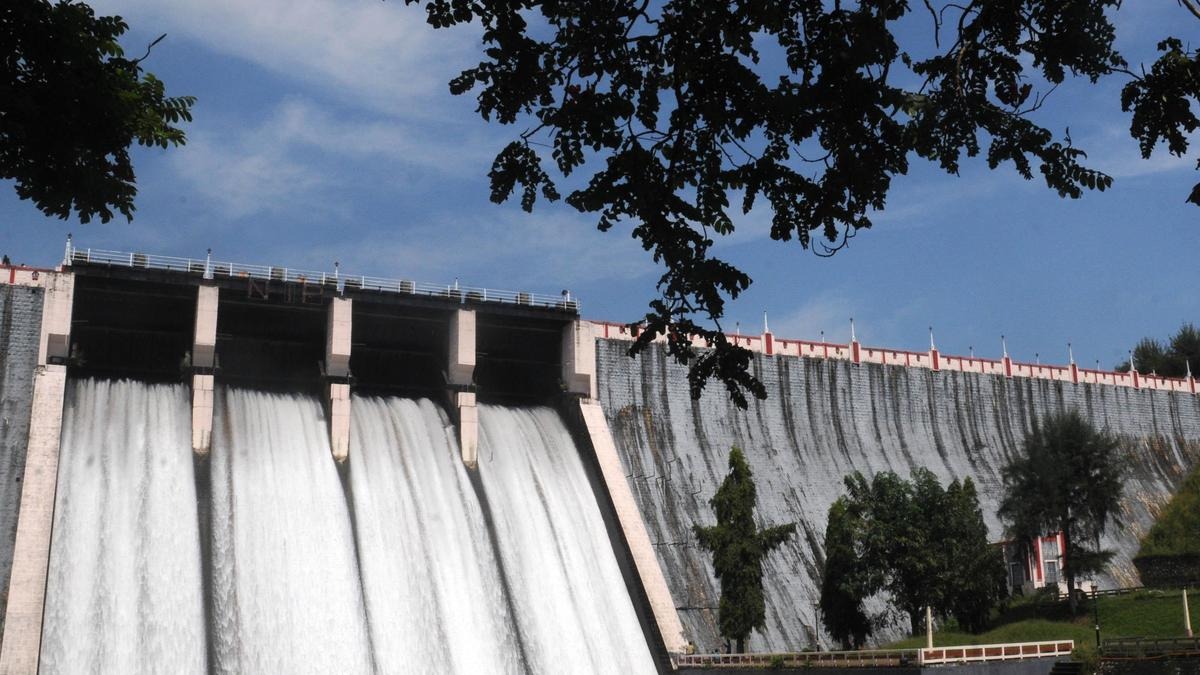
The long-standing river water dispute between Kerala and Tamil Nadu over the Neyyar Irrigation Project centers on legal classification, financial obligations, and water allocation rights. While Tamil Nadu claims Neyyar is an inter-State river entitled to 150 cusecs for Kanyakumari farmers under the States Reorganisation Act, 1956, Kerala maintains the river is entirely intra-State, refusing uncompensated water releases after halting supplies in 2004.
THIRUVANANTHAPURAM — The water dispute between Kerala and Tamil Nadu over the Neyyar Irrigation Project remains a major point of legal and inter-State friction. Originating from Agastya hill in Kerala's Western Ghats, the Neyyar River feeds a reservoir in Thiruvananthapuram district designed to supply agricultural and drinking water needs.
The conflict pits Tamil Nadu’s demand for an uninterrupted supply of 150 cusecs of water for farmers in Vilavancode taluk against Kerala’s position that the river and its canal system are strictly intra-State assets funded entirely by Kerala. The disagreement has been pending before the Supreme Court of India.
Historical Context and Reorganisation of States
The roots of the dispute trace back to the 1950s before the reorganization of Indian States. The former Travancore-Cochin government initiated the Neyyar Irrigation Project to irrigate agricultural lands across regional taluks.
Following the enactment of the States Reorganisation Act, 1956, Vilavancode taluk was transferred from Travancore-Cochin to Tamil Nadu’s Kanyakumari district. Despite the administrative boundary revision, Kerala continued supplying water to Vilavancode through the Neyyar right-bank canal system for decades as a goodwill gesture.
However, in February 2004, Kerala halted water allocation to Tamil Nadu, citing severe water scarcity in Thiruvananthapuram district and the absence of a binding inter-State agreement.
Core Arguments: Inter-State Status vs. Goodwill Gesture
The two neighboring States maintain fundamentally opposing positions regarding river classification and legal obligations:
Tamil Nadu's Stance
Inter-State River Classification: Tamil Nadu contends that because a portion of the river’s catchment area and beneficial command zone extends into Kanyakumari district, Neyyar qualifies as an inter-State river under the States Reorganisation Act, 1956.
Historical Entitlement: Tamil Nadu argues it is legally entitled to 150 cusecs of water to irrigate approximately 9,200 acres of farmland in Vilavancode.
Loss of Supply Impact: In its original suit filed in the Supreme Court in 2012, Tamil Nadu highlighted severe agricultural distress among Kanyakumari farming communities since the 2004 supply stoppage.
Kerala's Stance
Intra-State River Classification: Kerala maintains that the entire length of the Neyyar River and its tributaries flow within its territorial boundaries, making it an intra-State river.
Sole Financial Burden: Kerala argues that Tamil Nadu did not share any of the original capital construction costs or ongoing maintenance expenses of the Neyyar Irrigation Project.
Water Tariffs and Commercial Terms: Kerala informed Tamil Nadu that any future water supply must be contingent on commercial water charges, distribution fees, and a short-term renewable agreement.
Legal Arena and Supreme Court Proceedings
Tamil Nadu approached the Supreme Court of India in 2012 to seek a directive compelling Kerala to resume water supply.
The apex court framed key legal issues to determine whether the Neyyar River can be legally classified as an inter-State river and whether past water releases constituted a statutory obligation under Section 108(2) of the States Reorganisation Act, 1956, or merely an act of goodwill.
Official Sources and Legal Postures
According to official filings and state submissions presented before the Supreme Court:
"Tamil Nadu asserts that the Neyyar is an inter-State river and seeks uninterrupted supply of 150 cusecs for 9,200 acres in Kanyakumari. Conversely, Kerala contends that the project is entirely intra-State, built without financial contribution from Tamil Nadu, and that previous water releases were executed purely as a gesture of goodwill."
Quote Section
According to officials, resolving the Neyyar dispute requires a judicial determination by the Supreme Court on whether historical water sharing under pre-reorganisation administrative setups constitutes a permanent statutory right or an intra-State arrangement subject to modern state water security priorities.
Why It Matters
The Neyyar dispute highlights the wider legal complexities surrounding inter-State water governance in India. For agricultural communities in Kanyakumari, the outcome dictates seasonal crop viability, while for Kerala, the case touches upon state sovereignty over water resources and infrastructure built entirely through domestic state funds.
Key Facts at a Glance
River Origin: Agastya hill in Kerala.
Disputed Volume: 150 cusecs sought by Tamil Nadu for 9,200 acres in Kanyakumari.
Key Event: Kerala halted uncompensated water supply to Tamil Nadu in February 2004.
Core Legal Dispute: Classification of Neyyar as an inter-State vs. intra-State river under the States Reorganisation Act, 1956.
Judicial Forum: Pending before the Supreme Court of India.
Frequently Asked Questions (FAQs)
What is the primary cause of the Neyyar water dispute between Kerala and Tamil Nadu?
The dispute stems from Kerala halting water supply to Tamil Nadu's Kanyakumari district from the Neyyar Dam in 2004, leading to a legal fight over whether the river is an inter-State or intra-State water body.
Why does Tamil Nadu claim rights to Neyyar water?
Tamil Nadu argues that the river's catchment area serves Vilavancode taluk (transferred to Tamil Nadu in 1956) and that its farmers have a historical right to receive 150 cusecs of irrigation water.
Why is Kerala opposed to classifying Neyyar as an inter-State project?
Kerala contends that the entire river flows within its borders, that it funded 100% of the project's construction, and that past water releases were purely a goodwill gesture.
Where is the Neyyar water dispute currently being litigated?
The dispute is being litigated before the Supreme Court of India, which is determining the legal status of the river and statutory obligations under state reorganisation laws.
Source: Official case documents filed with the Supreme Court of India, technical bulletins from the Central Water Commission (CWC), and inter-State water dispute records published by the Ministry of Jal Shakti.