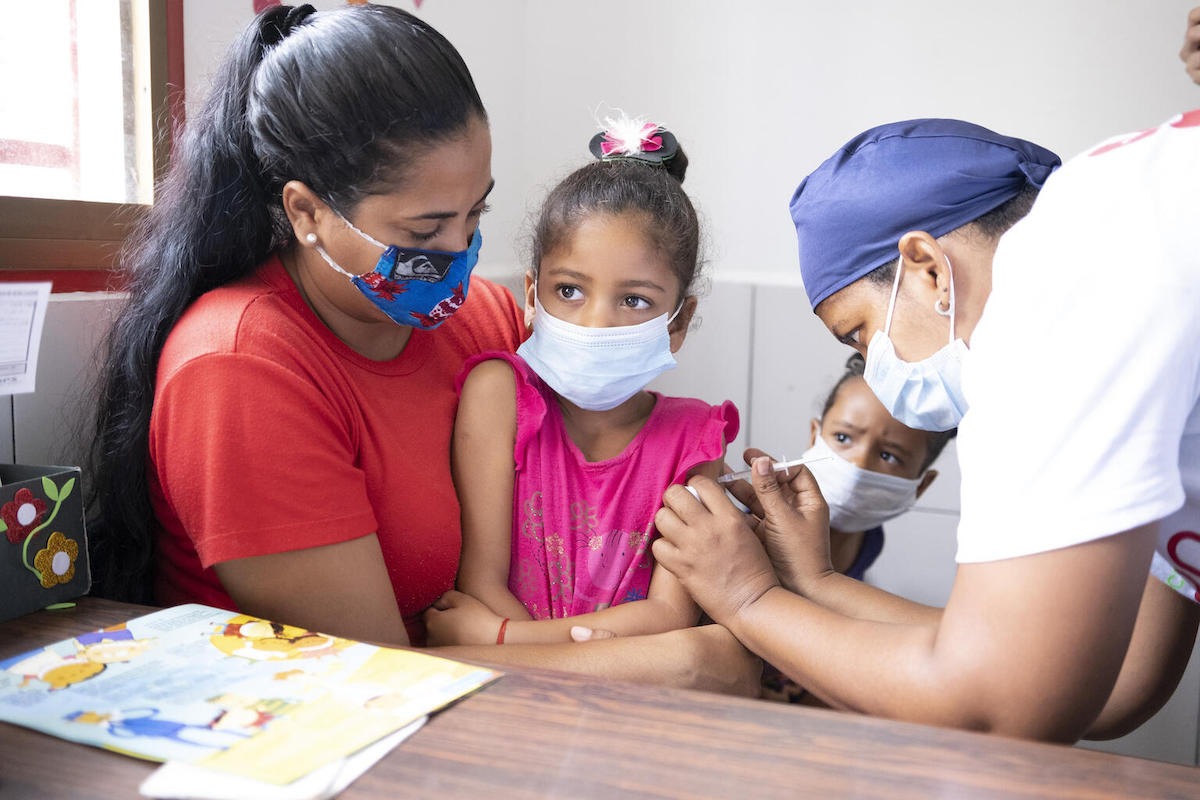
According to the latest WHO-UNICEF WUENIC report, India has officially exited the top 10 list of nations with the most unvaccinated children. The country's zero-dose infant count fell from 909,000 to 679,000, driven by the digital U-WIN platform and micro-targeted health campaigns that pushed overall coverage to 95 percent.
NEW DELHI — In a historic milestone for international public health, the joint United Nations monitoring bodies confirmed that India has officially dropped out of the list of the top 10 countries with the highest number of unvaccinated children. The breakthrough was published on Wednesday, July 15, 2026, within the annual World Health Organization (WHO) and United Nations Children's Fund (UNICEF) Estimates of National Immunization Coverage (WUENIC). Driven by aggressive, targeted domestic immunization campaigns and real-time digital tracking, the absolute number of "zero-dose" children in India infants who have not received a single dose of any routine vaccine declined sharply from 909,000 to 679,000 over the evaluated calendar cycle. This structural advancement marks the first time since the inception of the global WUENIC monitoring registry in 2001 that India has moved out of the highest-burden unvaccinated brackets.
Sharp Declines in Zero-Dose Counts Reshape Healthcare Map
The detailed statistical databases compiled by the World Health Organization (WHO) show an exceptional multi-year improvement trajectory for the South Asian country. As recently as 2023, India housed more than 1.59 million zero-dose children, facing severe post-pandemic backsliding and uneven geographic distribution in regional vaccine access.
The new data shows that the country has successfully trimmed that deficit by more than half through sustained grass-roots mobilization.
The dynamic drop of roughly 230,000 zero-dose infants in the latest data cycle established India as one of the primary macro-drivers behind the broader global reduction in unvaccinated children. Globally, the total count of completely unvaccinated infants dipped by nearly 750,000 to settle at 13.5 million, meaning India's localized improvements accounted for nearly one-third of the entire planetary gain.
Concurrently, the WHO South-East Asia Region maintained its status as the global leader in routine childhood immunization, logging a DTP3 (diphtheria, tetanus, and pertussis) three-dose completion framework of 94 percent, far outstripping the global average of 85 percent.
Targeted Campaigns Untangle Deep Regional Bottlenecks
Public health directors attribute the rapid drop in unvaccinated counts to a major operational shift by the Ministry of Health and Family Welfare. Recognizing that generalized nationwide programs often miss highly isolated sub-populations, the government launched targeted, micro-level campaigns under the intensified Mission Indradhanush framework.
These interventions deployed localized healthcare teams directly into urban slums, transient construction sites, peri-urban communities, and geographically isolated hilly tracts.
Furthermore, the implementation of the digital U-WIN platform a cloud-based national registry that mirrors the successful architecture of the CoWIN platform fundamentally transformed the logistics chain. By digitizing every single infant's vaccination lifecycle, the software allows auxiliary nurse midwives (ANMs) and Accredited Social Health Activists (ASHA) to track individual dropouts in real time.
This systematic follow-up mechanism successfully kept India's vaccine dropout rate children who receive a first dose but miss subsequent booster rounds at an exceptionally low 2 percent, preventing the structural lapses currently stalling immunization coverage across other heavily populated developing nations.
Global Funding Mismatches Threaten Wider Progress
While India's universal immunization numbers registered historical expansions, the broader international overview published by UNICEF shows worrying signs of stagnation. Outside of specific high-performing nations like India, Brazil, and Sudan, global vaccination averages remain locked one percentage point below the pre-pandemic baselines established in 2019.
Nigeria continues to top the worldwide unvaccinated index, housing 2.2 million zero-dose children, followed by the Democratic Republic of Congo and Yemen.
United Nations executives warned that a severe, looming funding crisis could quickly erode these hard-won global health victories. The unexpected dismantlement of primary international aid channels by the United States government in early 2025 left global distribution networks like Gavi, the Vaccine Alliance, scrambling to cover massive budgetary gaps.
Because the financial impact of these international aid shortfalls typically takes several tracking cycles to appear in field data, experts emphasize that middle- and lower-income countries must rapidly expand their domestic health budgets to protect their younger populations from localized outbreaks of highly contagious variants like measles.
Official Sources Section
The statistical indices, demographic charts, and vaccination percentages reviewed within this global update are sourced directly from the joint 2026 WUENIC data archives maintained by the World Health Organization (WHO) and UNICEF. Domestic operational metrics and programmatic outlines are verified through formal updates published by the Ministry of Health and Family Welfare and distributed via the Press Information Bureau (PIB).
Quote Section
"According to officials from the United Nations immunization tracking teams, India's systematic transition away from high-burden unvaccinated rankings is a testament to the country's long-term political commitment to universal healthcare, serving as an operational model for expanding deep-rural logistics grids."
Why It Matters
The fact that India is no longer among the top 10 countries with the most unvaccinated children carries immediate, practical consequences for global health security, urban economic productivity, and family well-being. For local communities, achieving a consistent 95 percent protection rate for core vaccines creates an ironclad wall of herd immunity, drastically reducing the probability of sudden, disruptive outbreaks of highly contagious preventable diseases like measles.
For the national economy, lower infant sickness numbers directly mean reduced out-of-pocket medical expenses for lower-income households, while preventing the long-term cognitive and physical growth delays caused by early childhood infections.
Finally, for international health organizations, India's success proves that deploying digital tracking software alongside grass-roots women healthcare networks can protect vulnerable populations even across vast geographic and cultural divides.
Key Facts at a Glance
Historical Exit: India has officially dropped out of the top 10 global nations with the highest counts of unvaccinated children.
Absolute Volume Dip: The total count of zero-dose infants inside India decreased from 909,000 to 679,000 over the last tracking cycle.
Immunization Excellence: The country successfully pushed its DTP3 and secondary measles vaccine coverage up to a solid 95 percent.
Digital Integration: The implementation of the cloud-based U-WIN national registry allowed field teams to maintain a low 2 percent dropout rate.
Global Contrast: While India logged record expansions, global immunization averages remained stalled due to international funding shortfalls.
FAQ Section
What exactly defines a "zero-dose" child in the UN reports?
A zero-dose child is defined by the WHO and UNICEF as an infant who has completely lacked access to, or has never been reached by, routine immunization services, failing to receive even the first introductory dose of the DTP vaccine.
Which country currently tops the global list for the most unvaccinated children?
According to the latest WUENIC data release, Nigeria tops the global index with approximately 2.2 million zero-dose children, followed by the Democratic Republic of Congo.
How did the U-WIN digital platform help reduce the number of unvaccinated children?
The U-WIN system provides a unified, real-time cloud database that maps every pregnancy and birth across the country, allowing grass-roots health workers to instantly identify, locate, and vaccinate children who have missed their scheduled booster sessions.
Source: 2026 Estimates of National Immunization Coverage released by the World Health Organization (WHO) and UNICEF, alongside programmatic data sheets from the Ministry of Health and Family Welfare.