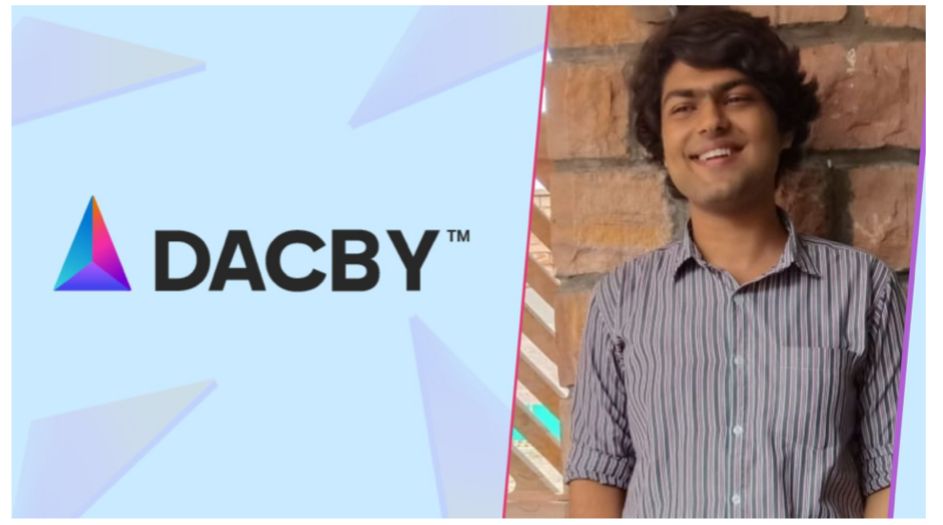
Ayush Chauhan, IIT Jodhpur dropout and founder of DACBY, appeared on Shark Tank India Season 4 with ₹4,000 in his personal bank account. Though no equity deal was secured, Ritesh Agarwal gave him a personal ₹10 lakh fellowship. DACBY then rebuilt from scratch, achieved profitability, and now crosses ₹1.5 crore in monthly revenue.
A PlayStation 4, a College Canteen, and a Problem Worth Solving
- Ayush Chauhan's entrepreneurial instinct showed itself early. In Class 10, his parents gifted him a PlayStation 4. That console did not just give him joy. It gave him community: the world of gamers who traded, shared, sold, and sought devices with intense personal investment and almost no reliable platform to do it safely.
- His first startup attempt came during his first year at IIT Jodhpur, when he and co-founders Bhawna Chaudhary and Chinmay Wahi identified a problem in their college canteen: 45-minute waits with no guarantee of food. They built a solution, launched it, and watched it collapse when the pandemic decimated restaurant operations across India.
- The pivot that followed was the one that stuck. Ayush looked at the gaming market he had always loved and saw a structural gap that no platform was filling properly. OLX existed but offered no quality assurance. Large recommerce players focused on smartphones and laptops, ignoring premium gaming consoles, cameras, VR headsets, and graphics cards. The trust deficit was enormous. Fraud was common. And yet India's gaming market was valued at ₹20,000 crore and growing fast.
In 2022, Ayush dropped out of IIT Jodhpur to build DACBY full-time: a recommerce platform that would buy used gaming electronics directly from customers, perform rigorous quality checks, grade products transparently, and resell them with a guarantee of reliability.
The Shark Tank Moment — ₹4,000 and a National Stage
- DACBY appeared on Shark Tank India Season 4. The pitch was honest to the point of being uncomfortable. Monthly losses of ₹5 to ₹6 lakh. Execution gaps that the Sharks identified clearly. Aman Gupta questioned Ayush's business readiness directly. And Ayush revealed the number that stopped the room: ₹4,000 remaining in his personal bank account.
- No equity deal was offered. But Ritesh Agarwal, founder of OYO, connected with Ayush's story personally. He remembered his own years of struggle in Gurugram as a young founder with nothing. He offered Ayush a personal ₹10 lakh fellowship from his family office, not as a business investment but as human support for a founder who reminded him of himself.
That fellowship was the turning point. After the show, Ayush made a decision that most founders resist: he stopped chasing funding entirely. He fixed the business instead.
Stop Fundraising. Start Executing.
- The most powerful decision DACBY made after Shark Tank was also its most counterintuitive. Rather than use the national visibility to raise more capital, Ayush used it as a structured accountability checkpoint.
- DACBY tightened costs, streamlined sourcing, strengthened its refurbishment process, and adopted a profit-first operating model with a lean team of approximately 25 people. Every rupee was tracked. Every unit was examined. The business was rebuilt around one metric: contribution margin, not growth rate.
- The model itself is deeply sound. DACBY buys high-value electronics directly from sellers, performs in-house quality checks and grading, and resells to consumers and businesses with transparent condition ratings. Unlike marketplace models where quality is inconsistent, DACBY owns the inventory and the refurbishment process, which enables better margins, predictable quality, and repeat customer demand.
The categories it focuses on, gaming consoles, cameras, iPhones, graphics cards, and VR headsets, are premium products with strong resale value and deeply loyal buyer communities.
Forbes India named DACBY one of its Top 100 Startups to Watch in 2023, before the Shark Tank appearance.
Scale and Real-World Impact
- DACBY now crosses ₹1.5 crore in monthly transactions. The company has achieved profitability following its post-Shark Tank rebuild. Ritesh Agarwal publicly acknowledged DACBY's turnaround through a social media post after the company crossed ₹1 crore in monthly revenue, drawing renewed attention to the brand's comeback. DACBY has raised $151,000 in seed funding from India Accelerator and Ratanada Ventures across one round. It operates with a team of approximately 25 members from its Gurugram base. India's used electronics market is valued at over $11 billion and remains heavily fragmented, with trust and quality as the two unresolved problems that DACBY is systematically solving. The company is seeking ₹5 crore in growth capital for its next phase of expansion.
Visibility Starts Conversations. Execution Builds Businesses.
- The sharpest lesson from DACBY's journey is the one Ayush Chauhan lived through in the most public way possible: a difficult moment on national television, with ₹4,000 in his account and every Shark saying no, became the most clarifying experience of his entrepreneurial life.
- He did not need funding in that moment. He needed honesty about what was working and what was not. Shark Tank gave him that. And he used it.
- "Visibility may start conversations, but execution builds businesses," DACBY's post-Shark Tank story demonstrates clearly.
- He started with a PlayStation 4 and a parent's belief. He rebuilt with ₹10 lakh from a founder who believed. And now he is building the most trusted electronics recommerce platform in India, one quality-checked device at a time.
Sources: DACBY Official Website, Tribune India, SharkStartupProduct, Tracxn, NeuSource