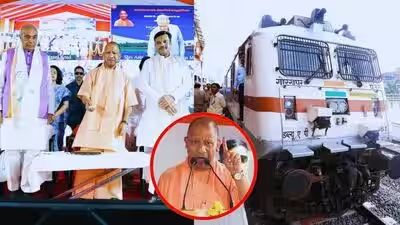
Uttar Pradesh CM Yogi Adityanath and Railway Minister Ashwini Vaishnaw inaugurated the newly converted broad-gauge and electrified Nepalgunj Road-Bahraich rail section on August 31, 2026. The ₹730-crore project restores a vital cross-border transit link, introducing direct train services to Varanasi and boosting regional trade and tourism.
Uttar Pradesh Chief Minister Yogi Adityanath flags off new train services, restoring a vital cross-border rail connection after decades.
BAHRAICH, INDIA — Fulfilling a long-pending regional aspiration, Uttar Pradesh Chief Minister Yogi Adityanath officially flagged off a new direct broad-gauge train service connecting Nepalgunj Road to Varanasi on Monday, August 31, 2026. The inauguration followed the successful completion of the ₹730-crore gauge conversion and electrification project across the 56.15-kilometer Bahraich-Nanpara-Nepalgunj Road section. Joined virtually by Union Minister for Railways Ashwini Vaishnaw from New Delhi, the Chief Minister emphasized that upgrading the corridor from an obsolete meter-gauge network to modern broad-gauge infrastructure will significantly boost cross-border commerce, tourism, and socio-economic integration between India and Nepal.
Modernizing Infrastructure Across the Border Region
The newly operationalized broad-gauge network bridges a historical connectivity gap that has affected the Indo-Nepal border region for decades.
Project Scope: The ₹730-crore initiative involved complete gauge conversion and electrification of the 56-kilometer stretch linking Bahraich, Nanpara, and Nepalgunj Road (Rupaidiha).
Direct Connectivity: Passengers from the Nepalgunj border gateway now have seamless direct train access to major spiritual and commercial hubs, including Varanasi, Ayodhya, Gonda, and Gorakhpur.
Expanded Fleet: Alongside the inaugural Varanasi-bound service, authorities rolled out additional regional train allocations to maximize passenger mobility across adjoining districts.
Solidarity on Display: Prior to flagging off the services, Chief Minister Adityanath and Union Minister Vaishnaw observed a moment of silence to pay tribute to victims of recent natural disasters and floods in neighboring Nepal.
Socio-Economic and Strategic Significance
The restoration of dependable train links carries profound implications for local citizens, traders, and pilgrims. Historically dependent on sluggish meter-gauge tracks or restricted road transport, border communities frequently faced logistical bottlenecks. According to statements from the Ministry of Railways, the upgraded infrastructure facilitates faster cargo movement, encourages cross-border tourism, and integrates remote aspirational districts like Bahraich into India's national railway grid. Market analysts and trade stakeholders note that smoother transit links will directly benefit agricultural exporters and regional retail businesses operating along the international frontier.
Why It Matters
The revival of this cross-border transit corridor streamlines travel for thousands of daily commuters, traders, and pilgrims moving between Nepal and northern India. By slashing transit times and providing direct access to major economic centers like Varanasi, the project serves as a catalyst for regional growth and bilateral trade.
Key Facts at a Glance
Inauguration Date: August 31, 2026.
Route Length: 56.15 kilometers connecting Nepalgunj Road, Nanpara, and Bahraich.
Project Outlay: Approximately ₹730 crore for gauge conversion and electrification.
Key Dignitaries: UP Chief Minister Yogi Adityanath and Union Railway Minister Ashwini Vaishnaw.
Frequently Asked Questions
When did the India-Nepal rail link officially resume?
The upgraded broad-gauge rail service was officially inaugurated and flagged off on August 31, 2026.
Which cities are connected by the newly inaugurated train service?
The new service connects Nepalgunj Road (Rupaidiha) directly to Varanasi, alongside expanded linkages to Bahraich, Gonda, and Gorakhpur.
How much did the gauge conversion project cost?
The 56-kilometer conversion and electrification project was completed at an estimated cost of ₹730 crore.
Where can official schedules for these trains be verified?
Timetables and operational details are accessible through the Press Information Bureau (PIB) and the North Eastern Railway Portal.
Source: Press Information Bureau (PIB), Ministry of Railways, Government of Uttar Pradesh, North Eastern Railway