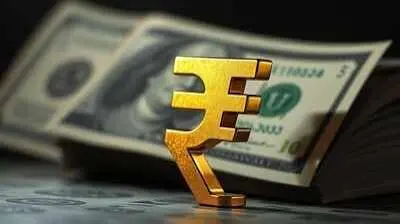
Comparing ₹100 in 1947 to today highlights the profound impact of nearly 80 years of inflation on the Indian Rupee's purchasing power. While the exchange rate and cost of living have evolved dramatically since independence, India's financial ecosystem has modernized into a dynamic, tech-driven global economy.
NEW DELHI — As India marks its 80th Independence Day, economic retrospectives highlight a profound transformation in the country’s financial landscape, centered around the changing value of the Indian Rupee. In 1947, when India gained independence, a sum of ₹100 commanded immense purchasing power, securing essential household goods, gold, and property in quantities unimaginable by modern standards.
Driven by cumulative domestic inflation, post-independence economic restructuring, and shifts in global trade dynamics, the real purchasing power of the rupee has experienced a substantial decline over the past seven decades. Historical economic markers indicate that what ₹100 could purchase in the immediate post-independence era now requires multi-fold capital adjustments, reflecting the country's transition from a developing agrarian economy into a trillion-dollar global powerhouse.
Evolution of Purchasing Power and Currency Dynamics
At the dawn of independence in 1947, the foreign exchange rate stood at approximately ₹3.30 to a US dollar, operating under legacy colonial frameworks tied closely to the British Pound. Over subsequent decades, successive economic shocks—including multi-nation conflicts, global oil crises in the 1970s, and the critical balance-of-payments crisis of 1991—reshaped the valuation of domestic legal tender.
According to historical economic archives and central bank data:
The 1947 Baseline: In the late 1940s, consumer prices for basic commodities like rice, wheat, and dairy were measured in fractions of a rupee, making a 100-rupee note a substantial store of generational wealth.
Decadal Erosion: Persistent inflation compounded over the decades, reducing the real internal purchasing power of the currency by over 98% from the mid-20th century to the present day.
Exchange Rate Trajectory: The USD-INR exchange rate shifted steadily from near parity and early post-colonial bands of ₹3.30/$ to roughly ₹85–90/$ by 2026, reflecting differential inflation rates between India and its major trading partners.
Official Sources Section
Quote Section
According to statements released by economic analysts and financial historians tracking the trajectory of the Indian currency:
"The transformation of the rupee from a colonial-linked token to a modern sovereign digital-enabled currency mirrors India's economic journey from post-independence scarcity to contemporary global market prominence."
Why It Matters
Understanding the historical shift in the value of money is crucial for investors, policymakers, and everyday citizens navigating long-term financial planning. While inflation systematically erodes nominal cash values over decades, it underscores the vital importance of shifting household savings away from idle cash toward productive asset classes like equities, mutual funds, and modern financial instruments to preserve generational wealth.
Key Facts at a Glance
Starting Baseline (1947): The exchange rate was approximately ₹3.30 per US dollar.
Primary Driver of Change: Long-term domestic consumer price inflation spanning nearly 80 years.
Structural Evolution: Transition from fixed-rate parity systems to a managed float, accompanied by decimalization in 1957 (1 Rupee = 100 Paise).
Modern Context: Digital integration via UPI and Central Bank Digital Currency (CBDC) running alongside robust foreign exchange reserves exceeding $707 billion.
FAQ Section
How much has the purchasing power of ₹100 dropped since 1947?
Due to cumulative inflation over nearly eight decades, the internal purchasing power of ₹100 has dropped by over 98%, meaning goods that once cost fractions of a rupee now require significantly higher outlays.
Why did the rupee-to-dollar exchange rate change from 1947 to today?
The shift from ~₹3.30 per dollar in 1947 to current levels near ₹85–90 is driven by differential inflation rates, global trade deficits, oil price shocks, and macroeconomic adjustments following independence.
Did India always use the rupee in its current decimal format?
No. Prior to decimalization in 1957, India used an anna-pice system where one rupee was divided into 16 annas or 64 pice, before shifting to the standard 100-paise structure.
How do modern Indians protect their savings against inflation?
With traditional cash holdings losing real value over time, modern households increasingly allocate savings toward equities, mutual funds, real estate, and gold to beat long-term inflation.
Source: Reserve Bank of India, Ministry of Statistics and Programme Implementation, Economic Times