India's space sector now features 440 startups registered on the DPIIT portal. Regulator IN-SPACe has granted 113 activity authorisations to 52 private entities, including 18 startups. Backed by $618.5 million in private investment, domestic space companies plan over eight commercial rocket launches across the next two financial years.
NEW DELHI — India’s space technology sector now accounts for approximately 440 registered startups on the Department for Promotion of Industry and Internal Trade (DPIIT) Start-up India portal. The figures were disclosed by Union Minister of State for Atomic Energy and Space, Dr. Jitendra Singh, in a written reply to the Rajya Sabha, reflecting the rapid expansion of non-government entities participating in national and global space operations following policy reforms initiated in 2020.
IN-SPACe Approvals and Startups Expansion
According to government figures presented to Parliament, the Indian National Space Promotion and Authorisation Centre (IN-SPACe) has issued 113 authorisations to 52 Non-Government Entities (NGEs) to undertake specialized space activities. Among these authorized entities, 18 are startups directly involved in developing launch vehicles, satellite constellations, propulsion systems, and orbital hardware.
The list of 18 authorized space technology startups includes:
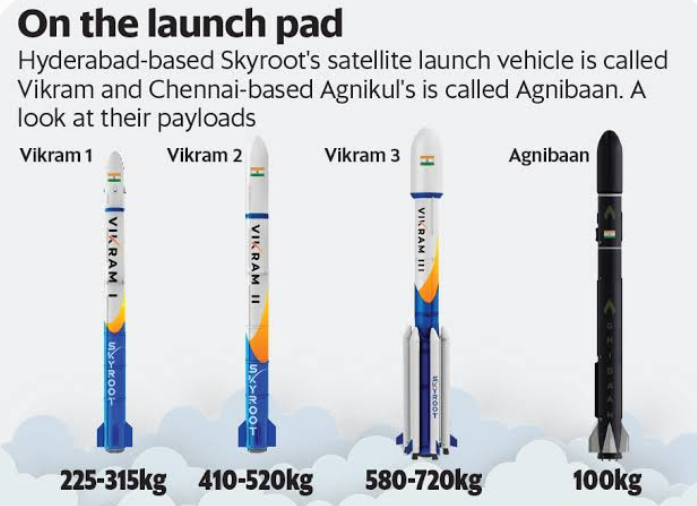
Launchers and Propulsion: Agnikul Cosmos, Skyroot Aerospace, Bellatrix Aerospace, and Manastu Space Technologies.
Satellite Developers and Payloads: PixxelSpace India, Dhruva Space, GalaxEye Space Solutions, Akshath Aerospace, Azista BST, HEX20Labs India, and Space Kidz India.
Space Awareness and Logistics: Digantara Research and Technologies, OrbitAID Aerospace, PierSight Space, Cosmoserv Space India, Inorbit Space Telecommunications, NSpace Tech India, and TakeMe2Space Technologies.
Commercial Launch Manifests and Infrastructure Access
Private space companies are scaling up operational capabilities, with more than eight commercial rocket launches planned over the next two financial years.
The Ministry stated that two commercial rocket launches by private firms are proposed for FY 2026–27. While the official launch manifest for FY 2027–28 remains subject to final approval by IN-SPACe, over six additional private launches are anticipated during that period.
Non-government entities access infrastructure managed by the Indian Space Research Organisation (ISRO), including launch pads at the Satish Dhawan Space Centre in Sriharikota. Applications submitted via the IN-SPACe digital platform follow a Standard Operating Procedure (SOP) and undergo technical readiness reviews by an expert committee.
| Metric / Indicator | Official Government Status |
| Total Registered Space Startups | ~440 (DPIIT Start-up India Portal) |
| IN-SPACe Authorisations Granted | 113 authorisations to 52 entities (18 startups) |
| Technology Transfer Agreements | 118 agreements across 83 technologies via NSIL |
| Private Investment Surge | Increased from $100.5M (FY22) to $618.5M (by March 2026) |
| Private Commercial Launches | 2 planned for FY26-27; >6 expected in FY27-28 |
Technology Transfer and Financial Frameworks
To support commercialization, NewSpace India Limited (NSIL) has signed 118 Technology Transfer Agreements covering 83 ISRO-developed technologies. Transferred capabilities encompass:
Launch Systems: Small Satellite Launch Vehicle (SSLV) technology and Indian Mini Satellite-1 (IMS-1) bus.
Sensors and Guidance: ISRO Laser Gyro (ILG), Ceramic Servo Accelerometers (CSA), and X-band Mini-SAR.
Communications: Tri-band antenna feeds and Low Temperature Co-Fired Ceramic (LTCC) Multi Chip Modules.
Cumulative private investment in India's space sector reached $618.5 million by March 31, 2026, up from $100.5 million in FY 2021–22. Government backing includes a ₹1,000 crore Venture Capital Fund dedicated to space startups and a ₹500 crore Technology Adoption Fund (TAF) to aid indigenous technology deployment.
Official Sources Section
Statements, regulatory figures, and launch projections cited in this report originate from official parliamentary disclosures provided by Dr. Jitendra Singh, Minister of State for Atomic Energy and Space, to the Rajya Sabha, alongside published filings from IN-SPACe, NewSpace India Limited (NSIL), and the DPIIT Start-up India Portal.
Quote Section
"The applications for usage and access to ISRO infrastructure are processed as per standard SOP based on applications received by IN-SPACe on its Digital Platform, with readiness aspects reviewed by an Expert Committee," stated Dr. Jitendra Singh in his written parliamentary reply.
Why It Matters
The growth of India's space startup ecosystem alters global satellite deployment economics, expands private payload launching options, and integrates domestic companies into global aerospace supply chains. For commercial clients, defense partners, and satellite operators, the transition provides localized manufacturing, lower launch costs, and access to ISRO-validated technologies under a streamlined regulatory framework.
Key Facts at a Glance
440 Registered Space Startups: Official count on the DPIIT Start-up India Portal.
18 Authorized Startups: Part of 52 private entities holding 113 total IN-SPACe activity approvals.
8+ Upcoming Private Launches: Two commercial launches set for FY 2026–27, with more than six scheduled for FY 2027–28.
$618.5 Million Investment: Private sector capital cumulative total reached by March 31, 2026.
83 ISRO Technologies Transferred: Commercialized across 118 signed agreements via NSIL.
FAQ Section
How many space technology startups operate in India?
As per official DPIIT Start-up India portal records, around 440 space technology startups are registered in the country.
Which agency regulates and authorizes private space activities in India?
The Indian National Space Promotion and Authorisation Centre (IN-SPACe) serves as the single-window autonomous agency regulating and authorizing non-government space ventures.
Can private companies use ISRO's launch facilities?
Yes. Private firms submit applications through the IN-SPACe digital platform to access ISRO infrastructure, including the Satish Dhawan Space Centre in Sriharikota, following standard readiness evaluations.
What funding mechanisms exist for Indian space startups?
The Indian government established a dedicated ₹1,000 crore Venture Capital Fund alongside a ₹500 crore Technology Adoption Fund (TAF) to assist early- and growth-stage space tech enterprises.
Source: Rajya Sabha Parliamentary Disclosures, Department for Promotion of Industry and Internal Trade (DPIIT), Indian National Space Promotion and Authorisation Centre (IN-SPACe), NewSpace India Limited (NSIL).