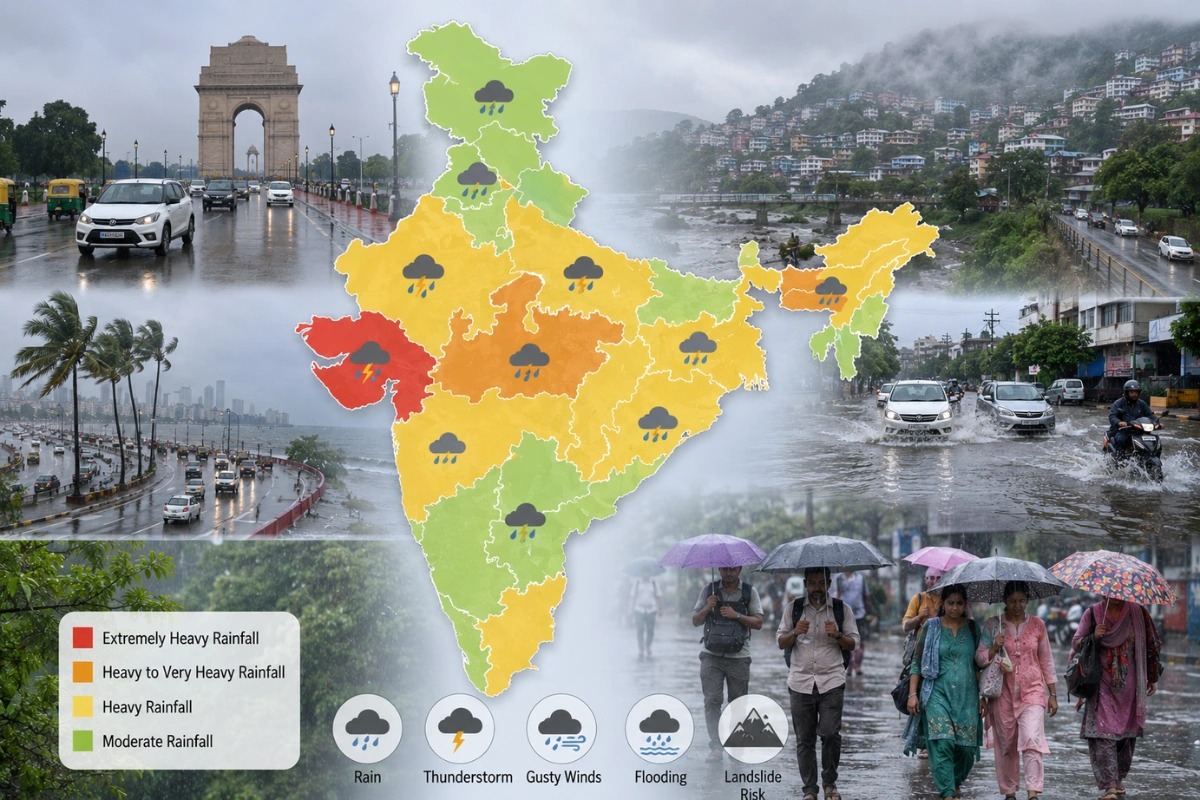
The India Meteorological Department (IMD) issued a severe weather alert on July 27, 2026, forecasting heavy to extremely heavy rainfall and wind gusts up to 80 kmph across northern, central, and eastern states. Authorities in Odisha, Chhattisgarh, Uttarakhand, and Himachal Pradesh have advised precautions against flash floods, landslides, and infrastructure damage.
NEW DELHI — The India Meteorological Department (IMD) issued a national weather alert on Monday, July 27, 2026, warning of intense monsoon conditions accompanied by heavy to extremely heavy rainfall, severe thunderstorms, and gusty winds reaching up to 80 kmph across multiple states. According to official bulletins released by the weather agency, active low-pressure systems over central and eastern India are driving a major precipitation spell expected to impact transport networks, power infrastructure, and low-lying agricultural zones.
State disaster management authorities in Odisha, Chhattisgarh, Madhya Pradesh, Uttarakhand, and Himachal Pradesh have been placed on high alert. The IMD warned that high wind speeds and sustained downpours could lead to uprooted trees, power line disruptions, severe urban waterlogging, and flash flooding near river channels.
Regional Breakdown of High-Impact Weather Warnings
The meteorological bulletin outlines severe weather hazards across multiple geographical zones for the next 24 to 48 hours:
Eastern and Central India
Odisha and Chhattisgarh face the highest threat level today, with isolated locations expected to record extremely heavy rainfall exceeding 204.5 mm within 24 hours. Neighboring Jharkhand, Gangetic West Bengal, and Bihar are scheduled to experience widespread heavy rainfall, accompanied by lightning strikes and squally winds.
Northern and Himalayan Belts
In the north, persistent monsoon activity is forecast to impact Uttarakhand, Himachal Pradesh, Jammu & Kashmir, and Ladakh throughout the week. Authorities in hilly districts have issued travel advisories warning commuters of potential landslides, mudslides, and sudden river surges. Heavy rainfall is also expected across Punjab, Haryana, Chandigarh, Delhi, and western Uttar Pradesh.
Western and Coastal Regions
Widespread rainfall continues across the western coast, covering Konkan & Goa, Madhya Maharashtra, and the Gujarat region. Coastal shipping lanes along the Arabian Sea and Bay of Bengal face squally conditions, with surface wind speeds peaking between 50 and 80 kmph, prompting fisherfolk advisories to stay clear of deep sea operations.
Operational Impact on Transport, Agriculture, and Citizens
The severe weather alert carries immediate operational consequences across public sectors:
Urban Infrastructure: Local municipal bodies in metropolitan centers have deployed mobile de-watering pumps to manage traffic disruptions caused by submerged underpasses and waterlogged roadways.
Energy Networks: Power distribution companies have stationed emergency repair crews to fix damaged distribution lines caused by wind-driven tree collapses.
Aviation and Railways: Regional airports and railway divisions are monitoring visibility parameters and track conditions, with short delays expected on long-distance routes passing through central India.
Agriculture: Farmers in flood-prone districts have been advised to drain excess water from standing crops and temporarily pause field sprays to prevent nutrient run-off.
Official Source Statements and Emergency Directives
Official weather warnings and emergency guidelines were released by national and state meteorological authorities.
According to officials: "Intense monsoon systems are producing widespread heavy downpours and squally winds reaching 80 kmph in vulnerable sectors. Members of the public are advised to restrict unnecessary travel during peak rainfall periods, avoid open fields during thunderstorm activity, and adhere strictly to localized disaster management directives."
Why It Matters
Accurate monsoon forecasts are critical for safeguarding life, public infrastructure, and agricultural supply chains. Early advisories regarding 80 kmph winds and localized torrential downpours allow municipal authorities to clear drainage channels, preposition emergency rescue teams, and prevent casualties in landslide-prone mountain terrains. For commercial transport operators, real-time weather monitoring prevents vehicle strandedness along major highway corridors.
Key Facts at a Glance
Alert Level: Heavy to extremely heavy rainfall forecast across multiple states on July 27, 2026.
Wind Warnings: Gusty surface winds reaching up to 80 kmph expected in severe thunderstorm zones.
Highest Impact States: Odisha, Chhattisgarh, Uttarakhand, Himachal Pradesh, and Madhya Pradesh.
Hilly Region Risks: Landslides, mudslides, and localized river inundation in Himalayan states.
Public Advisories: Fisherfolk warned against sea venture; citizens urged to avoid waterlogged routes.
Frequently Asked Questions (FAQ)
Which states are under the heaviest rain alert today?
Odisha and Chhattisgarh are under the highest alert level today for isolated extremely heavy rainfall, alongside heavy to very heavy rain warnings for Uttarakhand, Himachal Pradesh, Madhya Pradesh, and Konkan & Goa.
How strong will the wind speeds be during this monsoon spell?
The IMD warned that wind speeds could reach between 50 kmph and 80 kmph in areas affected by thunderstorms and squally weather.
Is there a threat of landslides in northern India?
Yes. Due to continuous rainfall, state authorities in Himachal Pradesh, Uttarakhand, and Jammu & Kashmir have warned residents and travelers of potential landslides and flash floods.
Where can citizens verify live official weather updates?
Real-time weather bulletins, radar maps, and regional alerts can be verified on the official portal of the India Meteorological Department (IMD) and the National Disaster Management Authority (NDMA).
Source: Official weather bulletins, regional radar reports, and press releases published by the India Meteorological Department (IMD), the National Disaster Management Authority (NDMA), and the Press Information Bureau (PIB).