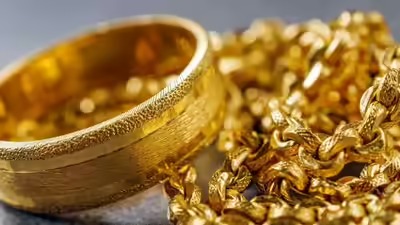
Those mysterious numbers stamped on your gold jewellery - 916, 750, 585 - are not design codes but purity marks telling you exactly how much real gold your piece contains. They are globally used fineness marks, closely linked to karats, and matter for pricing, resale value and authenticity checks.
These three-digit numbers represent parts of pure gold per 1,000 parts of the alloy. In simple terms, they quantify “how much is gold and how much is other metals” like copper, silver or zinc. Understanding them helps you compare pieces, avoid overpaying and speak the same language as jewellers and appraisers.
Understanding Gold Fineness Numbers
The fineness number is a decimal form of purity.
For example:
- 916 means 916 parts gold + 84 parts other metals
- 750 means 750 parts gold + 250 parts other metals
- 585 means 585 parts gold + 415 parts other metals
They express the percentage of gold more precisely than just saying “22K” or “18K”.
How 916, 750, 585 Map To Karats
Gold purity is traditionally expressed in karats out of 24. The common mapping is:
- 916 = 22K gold (about 91.6 percent pure)
- 750 = 18K gold (about 75 percent pure)
- 585 = 14K gold (about 58.5 percent pure)
So, if you see “916” on a bangle, you are effectively looking at 22 karat jewellery.
Why Higher Or Lower Purity Is Used
Pure 24K gold (999) is very soft, bends easily and is not ideal for everyday wear. Adding other metals:
- Makes the jewellery harder and more durable
- Changes the colour slightly (redder, yellower, or paler)
- Can reduce price per gram, making pieces more affordable
That is why:
- 916 (22K) is popular for traditional Indian jewellery
- 750 (18K) is common in branded, designer and diamond jewellery
- 585 (14K) is widely used for daily wear, Western style and intricate pieces
Hallmarking And Authenticity
Apart from 916, 750 or 585, genuine hallmarked jewellery often carries:
- The BIS or relevant national hallmark logo (in India, for example)
- Purity mark (916 / 750 / 585 etc.)
- Jeweller’s identification mark
- Assaying centre mark
These marks signal that the piece has been tested at an authorised centre and certified for purity, reducing the risk of under-carat gold.
Price And Resale Implications
Gold jewellery is typically priced on:
- Gold purity (916 will be costlier per gram than 750 or 585)
- Weight (net gold weight plus any stones)
- Making charges and applicable taxes
At resale or exchange, the buyer will first look at purity and then apply their own deductions for wastage, stones and margins. Higher purity (like 916) generally commands better value per gram, but daily wear practicality may favour 750 or 585.
Smart Gold Buyer Insights
- Know that 916 means 22K, 750 means 18K and 585 means 14K gold
- Always check for both hallmark logo and the purity number on the piece
- Match invoice purity (22K / 18K / 14K) with the fineness mark (916 / 750 / 585)
- Choose higher karat for investment value, mid range karat for everyday durability
- At resale, remember purity, not just brand name, drives gold value per gram
Sources: PIB, YouTube, Yes Calculator