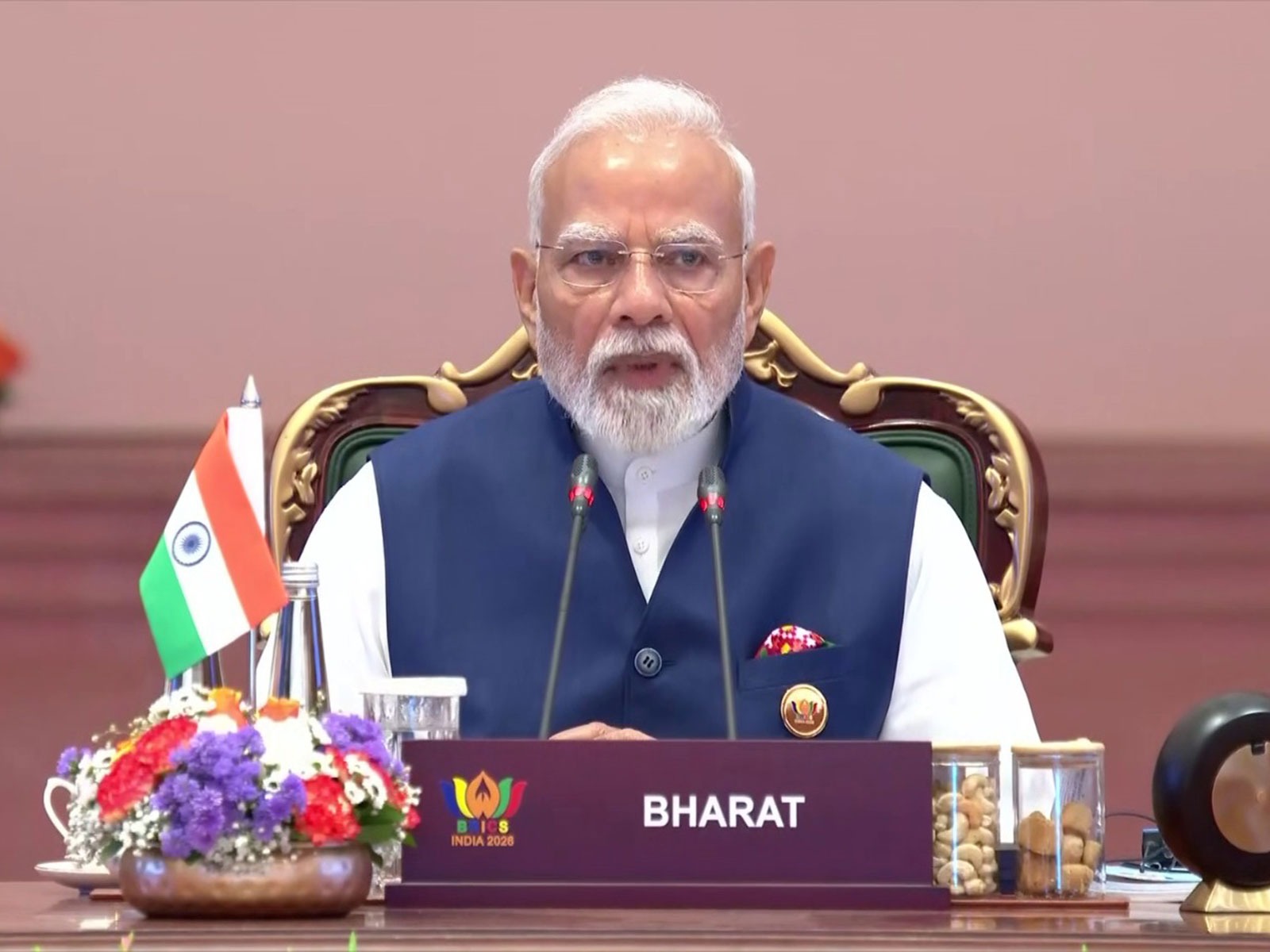
The ruling party launched a national campaign on Thursday to celebrate Prime Minister Narendra Modi turning 76 and marking 25 years in executive power. Officials highlighted massive economic growth and successful poverty alleviation, noting that continuous leadership provides essential regulatory predictability to attract global institutional capital and investments.
Modi
Marks 76th Birthday, 25 Years in Public Office
The BJP
launched a nationwide outreach campaign Thursday to mark the Prime Minister's
quarter-century in executive government.
NEW DELHI -
Narendra Modi turned 76 on Thursday, a birthday that also marks 25 unbroken
years in executive office: first as Gujarat's Chief Minister starting October
2001, then as Prime Minister since May 2014. To mark the occasion, the ruling
Bharatiya Janata Party and its National Democratic Alliance partners kicked off
a monthlong outreach drive called "Seva Sankalp Abhiyan,"
running from September 17 to October 17, built around blood donation camps,
sanitation initiatives, and messaging on two decades of welfare programs.
A
Quarter-Century Without a Break
What makes
this milestone notable isn't just the birthday; it's the continuity. Modi has
held uninterrupted executive authority for 25 years, a stretch few
democratically elected leaders can manage. Party disclosures say the outreach
campaign is built to spotlight two things in particular: digital direct benefit
transfers and the infrastructure spending rolled out over that period.
The
symbolism extends to the states. In Odisha, Chief Minister Mohan Charan Majhi
directed local units to light lamps as part of what the party is calling the "Ashirwad
Ka Diya" initiative, a coordinated, grassroots gesture meant to
demonstrate organizational reach at the constituency level.
Macroeconomic
Shifts Under Sustained Leadership
Government
and party officials are reflecting on the Birthday to push a specific economic
storyline: that federal welfare programs have moved roughly 250 million people
out of multidimensional poverty over the past decade, alongside sustained
spending on rural sanitation and digitization aimed at formalizing India's
informal labour sector.
Party
leadership, in disclosures reviewed for this report, framed the broader
trajectory this way: Modi transformed India from "fragile five" to a
fast-growing economy, with India's global stature and respect having risen
under Modi, with 25 crore families brought out of poverty.
Separately,
macroeconomic data cited by officials, places India among the fastest-growing
major economies globally. This marks a major shift from what analysts once
labelled as the "fragile five," a term coined in 2013 to
describe emerging markets seen as overly dependent on volatile foreign
investment.
Why
Markets Watch Political Anniversaries
There's a
reason that milestones like this attract attention from more than just
political observers. Sustained, uninterrupted executive tenure tends to signal
regulatory predictability and that matters to institutional investors weighing
long-term bets on Indian manufacturing subsidies or infrastructure
privatization. Global rating agencies often treat political continuity as a
rough proxy for policy stability, which in turn affects how comfortable foreign
capital feels committing to multi-year projects in the country.
Why It
Matters
Continuous
executive tenure tends to reassure corporate capital allocators betting on
long-term regulatory stability. As the government marks 25 years of
uninterrupted leadership across two offices, institutional investors are
watching for signs of continuity in manufacturing incentives and infrastructure
policy – the two factors that typically shape the pace of foreign direct
investment into critical sectors.
Key Facts
at a Glance
- Milestone: Modi turns 76 alongside 25
years in continuous executive office
- Campaign window: "Seva Sankalp
Abhiyan" runs nationwide, September 17–October 17
- Political timeline: 25 years spans Gujarat Chief
Minister (2001) through Prime Minister (2014–present)
- Party claim: Government welfare programs
credited with lifting an estimated 250 million people out of
multidimensional poverty
FAQ
Q: When
exactly did Modi's 25-year run in office begin?
A: He became Gujarat's Chief Minister in October 2001, then moved to the Prime
Minister's office in May 2014, with no gap in executive authority between the
two roles.
Q: What
is the "Seva Sankalp Abhiyan" campaign?
A: A monthlong BJP outreach initiative featuring blood donation drives and
sanitation programs, timed to mark the 25-year milestone.
Q: Why do
investors pay attention to a political anniversary like this?
A: Long, stable executive tenures are generally read as a signal of policy
continuity, which tends to lower perceived risk for foreign capital deployed in
developing economies.
Q: Where
does the "250 million lifted out of poverty" figure come from?
A: It's a statistic the party has cited from government poverty metrics as part
of its anniversary messaging; it hasn't been independently verified in this
report.
SOURCE: Bharatiya Janata Party / Prime Minister's Office / Ministry of Finance