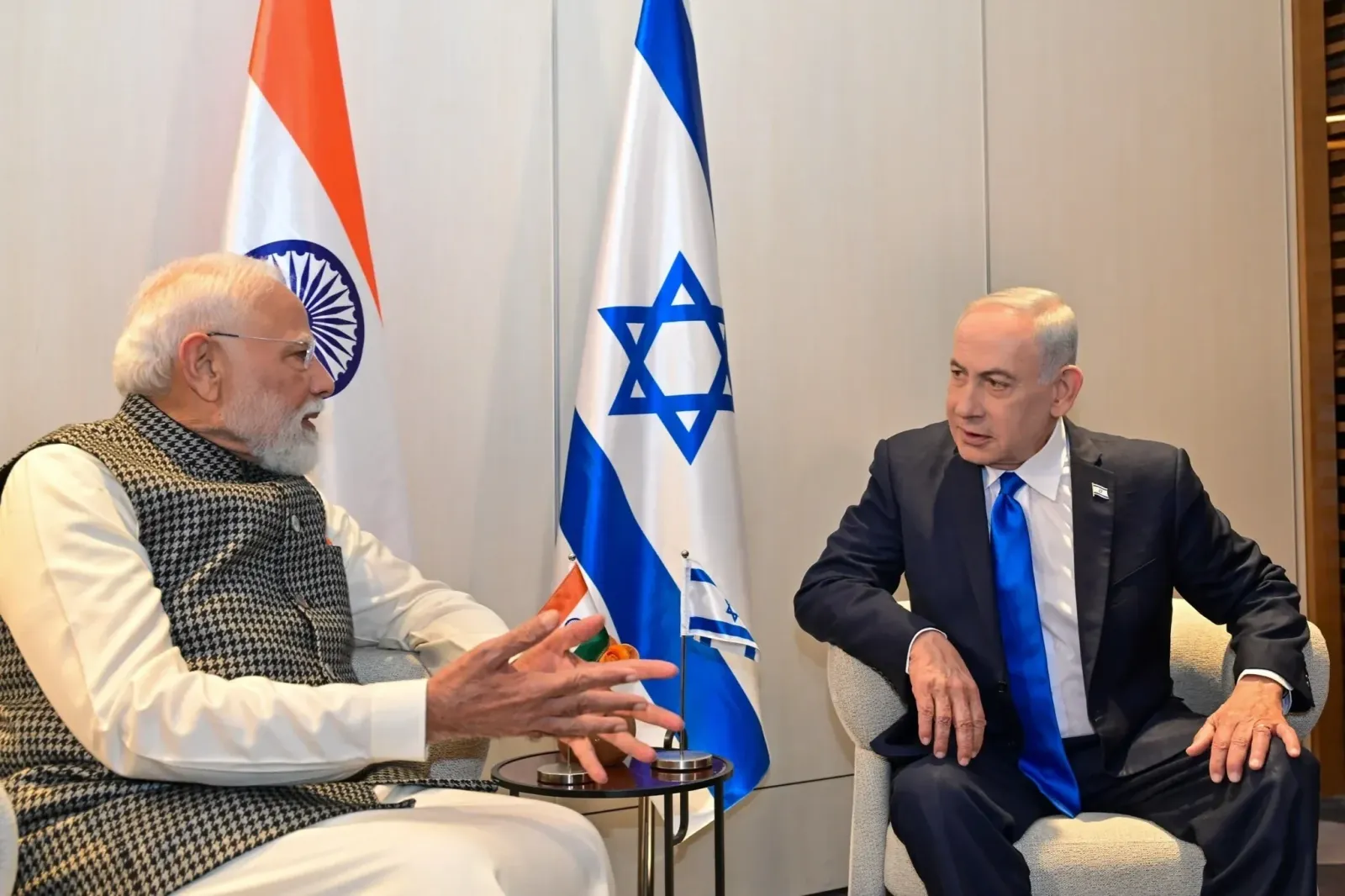
Prime Minister Narendra Modi spoke with Israeli Prime Minister Benjamin Netanyahu via telephone to review the India-Israel Special Strategic Partnership and discuss developments in West Asia. As the Indian and Israeli prime ministers discuss situation in the Middle East, both leaders reaffirmed commitment to bilateral trade, defense cooperation, and regional de-escalation.
NEW DELHI — Indian Prime Minister Narendra Modi received a phone call on August 6, 2026, from Israeli Prime Minister Benjamin Netanyahu as the Indian and Israeli prime ministers discuss situation in the Middle East and review progress under the India-Israel Special Strategic Partnership. According to press releases issued by the Prime Minister's Office (PMO) in New Delhi and official diplomatic statements, the two leaders exchanged views on ongoing security developments in West Asia and reiterated their shared commitment to deepening bilateral cooperation across trade, technology, and defense channels. The dialogue highlights New Delhi's active diplomatic engagement in regional de-escalation efforts while preserving vital strategic and economic interests in West Asia.
Strategic Review and Bilateral Partnership Framework
During the telephonic discussion, both leaders expressed satisfaction over the sustained momentum in the India-Israel Special Strategic Partnership. The exchange covered key priority sectors, including defense technology transfers, cybersecurity, financial integration, and agricultural innovation.
According to the PMO release, the conversation built upon prior high-level engagements between New Delhi and Tel Aviv, reaffirming a shared zero-tolerance approach toward international terrorism. Both leaders agreed to maintain close contact as regional diplomatic consultations continue.
| Key Engagement Metric | Official Details / Parameters |
| Participants | Prime Minister Narendra Modi & Prime Minister Benjamin Netanyahu |
| Primary Focus | West Asia security developments & Strategic Partnership review |
| Trade Context | Round two of Free Trade Agreement (FTA) negotiations |
| Diplomatic Status | Sustained high-level strategic communication |
Regional Context and Free Trade Agreement Progress
The telephonic conversation follows recent bilateral economic developments, including the conclusion of the second round of negotiations for a proposed India-Israel Free Trade Agreement (FTA). The trade pact aims to expand market access, streamline cross-border investments, and diversify supply chain resilience between South Asia and the Middle East.
The call occurred amidst complex geopolitical dynamics across West Asia, where maritime trade channels and regional airspace security remain critical priorities for international commerce. India maintains extensive diplomatic ties across the region, balancing strategic security cooperation with Israel alongside energy and diaspora security partnerships across the Gulf Cooperation Council (GCC) states.
Impact on Citizens, Trade, and Energy Security
For international investors, shipping logistics firms, and energy markets, open communication channels between New Delhi and regional capitals provide diplomatic predictability. India's diplomatic posture emphasizes the safety of commercial shipping lanes through the Red Sea and Persian Gulf, which are vital for domestic crude oil imports and export cargo transit.
Furthermore, over nine million Indian citizens live and work across West Asian nations. Continuous diplomatic dialogue between Indian leadership and regional heads of state ensures robust coordination regarding the protection, welfare, and transit security of non-resident workers and international travelers.
Official Sources Section
Diplomatic releases, bilateral meeting summaries, and trade progress reports cited in this news report were compiled from official announcements published by the Prime Minister's Office (PMO India), press briefings archived on the Ministry of External Affairs (MEA), and public updates from the Ministry of Foreign Affairs of Israel.
Official Quote Section
According to official briefings released by government communications desks in New Delhi, executive leadership reiterated commitment to long-term regional stability.
The Prime Minister's Office stated in an official press release: "The two leaders reviewed sustained progress in the India-Israel Special Strategic Partnership and reaffirmed their commitment to further strengthening the bilateral cooperation across various sectors for the mutual benefit of the two countries. PM Netanyahu and PM Modi exchanged views on the recent developments in West Asia and agreed to remain in touch."
Why It Matters
As the Indian and Israeli prime ministers discuss situation in the Middle East, maintaining direct executive dialogue helps prevent regional escalation, protects critical maritime trade routes, and safeguards millions of Indian expatriates working across the region. It also advances bilateral economic milestones, including the proposed Free Trade Agreement.
Key Facts at a Glance
High-Level Dialogue: PM Narendra Modi and PM Benjamin Netanyahu held a phone call on August 6, 2026.
Regional Security: The Indian and Israeli prime ministers discuss situation in the Middle East to review West Asian developments.
Economic Progress: Follows the second round of negotiations for the proposed India-Israel Free Trade Agreement.
Strategic Continuity: Both leaders reaffirmed a zero-tolerance policy against terrorism and agreed to maintain close contact.
Frequently Asked Questions (FAQ)
What was discussed when the Indian and Israeli prime ministers discuss situation in the Middle East?
The leaders reviewed the India-Israel Special Strategic Partnership, evaluated recent security developments in West Asia, and discussed bilateral economic and defense ties.
Status of the India-Israel Free Trade Agreement (FTA)?
India and Israel recently concluded the second round of negotiations for a comprehensive FTA aimed at boosting bilateral trade, investment, and supply chain integration.
How does this dialogue affect regional economic stability?
Direct executive dialogue supports de-escalation efforts, protects commercial shipping lanes, and safeguards the welfare of millions of Indian nationals residing across West Asia.
Where can citizens inspect official diplomatic releases?
Official press releases and foreign policy statements are published on the web portal of the Prime Minister's Office (PMO India) and the Ministry of External Affairs (MEA).
Source: Official press releases from the Prime Minister's Office (PMO India), diplomatic disclosures from the Ministry of External Affairs (MEA), and updates from the Ministry of Foreign Affairs of Israel.