Italy announced the temporary suspension of its Schengen border arrangements with Spain following a border rush at the Spanish North African enclave of Ceuta. The border surge resulted in at least 57 migrant deaths and prompted emergency security measures across Southern Europe, triggering political tension within the European Union.
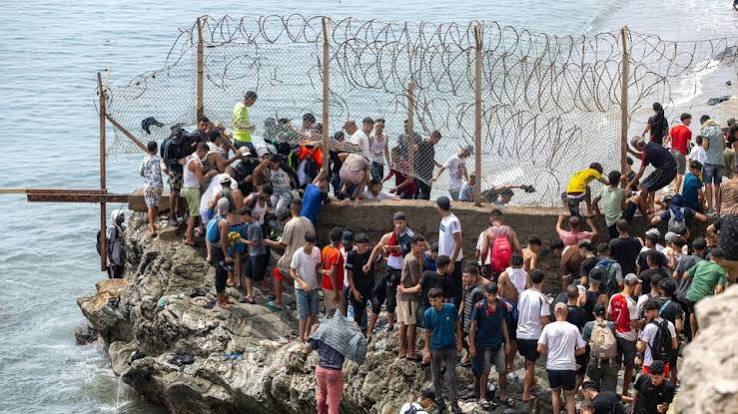
ROME — The government of Italy announced late Friday, July 31, 2026, that Italy suspends Schengen agreement with Spain on a temporary basis following a deadly border rush at Spain's North African enclave of Ceuta. According to official reports from Spanish emergency services and the Italian Ministry of Foreign Affairs, at least 57 migrants died in water drownings and crushes along the Tarajal beach breakwater during an unprecedented influx of an estimated 50,000 to 60,000 people over a 24-hour period.
The decision by Italian Prime Minister Giorgia Meloni and Foreign Minister Antonio Tajani to reintroduce internal border checks marks a significant escalation in European Union migration policy disputes. The emergency action comes as Spanish authorities work alongside Moroccan security forces to process, shelter, and repatriate thousands of individuals who crossed into European territory.
Fatalities and Mass Influx at the Ceuta Frontier
The crisis escalated dramatically when tens of thousands of migrants—primarily young Moroccan nationals—attempted to bypass breakwater fences and swim around coastal barriers separating the Moroccan town of Fnideq from the autonomous Spanish city of Ceuta. Ceuta regional president Juan Jesús Vivas described the situation as "absolutely unsustainable," noting that the volume of arrivals equaled nearly 70 percent of the city's permanent population of 85,000.
Spanish emergency officials in Ceuta confirmed that 57 bodies were recovered from the water and shoreline. While many victims drowned in heavy surf, others suffered fatal injuries in crushes along the border fences. Local humanitarian organizations reported that temporary reception facilities were completely overwhelmed, leaving thousands sleeping in public squares and streets before rapid returns to Morocco were initiated.
| Key Event Metric | Official Figures & Details |
| Confirmed Fatalities | 57 bodies recovered on the Spanish side |
| Estimated Border Crossings | 50,000 to 60,000 within a 24-hour window |
| Voluntary / Forced Repatriations | Over 37,000 returned to Morocco by Friday evening |
| Italian Diplomatic Action | Temporary suspension of Schengen border neutrality with Spain |
Spanish Prime Minister Pedro Sánchez traveled to Ceuta on Friday, describing the coordinated mass movement as a violation of Spain's territorial integrity and promising full state support to restore border stability.
Causes Behind the Surge and Misinformation Networks
Spanish government officials attributed the sudden influx to human trafficking networks exploiting a recent judicial ruling. Earlier in the month, a Spanish Supreme Court decision restricted immediate summary rejections for migrants intercepted specifically at sea without due formal process.
According to statements from Prime Minister Sánchez, organized smuggling rings deliberately misrepresented the legal scope of the Supreme Court ruling across social media channels, convincing thousands that arriving via water would guarantee legal residence rights within the European Union. However, European Commission officials clarified that special border rules apply to Ceuta and Melilla, which restrict onward movement into mainland Europe and allow immediate border checks.
Rationale for Italian Schengen Suspension
In explaining why Italy suspends Schengen agreement with Spain, Italian Foreign Minister Antonio Tajani stated that internal border controls were a necessary measure to defend public order and European security. Italian authorities expressed concern that unmonitored secondary movements through Southern Europe could lead to security risks across the Mediterranean region.
The European Commission confirmed that while member nations may temporarily reinstate internal border controls under article provisions during exceptional security threats, formal written notification to European partners remains required. Spanish Foreign Minister José Manuel Albares summoned the Italian ambassador to Madrid in response to Rome's unilateral declaration, calling the diplomatic escalation unnecessary given that Ceuta's geographic status prevents direct land transit to mainland Europe.
Practical Impact on Travelers, Businesses, and EU Mobility
The diplomatic dispute and border enforcement measures create direct operational consequences:
For European Travelers: Passengers traveling between Italian and Spanish airports or maritime ports face increased passport inspections and potential transit delays.
For Logistics and Freight Operators: Reintroduced border checks could slow cross-border commercial transport and supply chain schedules between Southern European hubs.
For European Migration Policy: Re-imposing internal border controls highlights ongoing friction among EU member states regarding collective border defense and asylum distribution frameworks.
Official Sources Section
According to official governmental statements, diplomatic releases, and international briefings:
Quote Section
According to official executive updates and regulatory statements:
"According to officials, Italy announced that Italy suspends Schengen agreement with Spain as an unavoidable security choice to defend national borders and maintain public order following the emergency situation in Ceuta."
Why It Matters
The decision where Italy suspends Schengen agreement with Spain underscores the fragile nature of passport-free movement within Europe when external borders face severe pressure. As a tragedy resulting in 57 deaths unfolds, the political fallout exposes unresolved legal and security disagreements between Mediterranean EU member states.
Key Facts at a Glance
Casualty Toll: At least 57 migrants lost their lives attempting to reach Ceuta.
Scale of Crisis: Between 50,000 and 60,000 people breached or attempted to breach the frontier within 24 hours.
Diplomatic Action: Italy suspends Schengen agreement with Spain to reinstitute emergency border monitoring.
Repatriation Status: Spanish authorities report that over 37,000 individuals have already been returned to Morocco.
Frequently Asked Questions (FAQ)
Why did Italy suspend its Schengen agreement with Spain?
Italy introduced temporary border checks citing public security concerns following the arrival of tens of thousands of migrants in the Spanish enclave of Ceuta.
How many people died during the Ceuta border rush?
Emergency officials confirmed that at least 57 people died from drowning and crushes along the coastal breakwater.
What caused the sudden surge of migrants toward Ceuta?
Spanish officials pointed to human trafficking networks spreading false information regarding a recent Supreme Court ruling on maritime asylum procedures.
Where can citizens review official statements regarding border controls?
Official updates are accessible through the portals of the Ministry of Foreign Affairs of Italy, the Ministry of the Interior of Spain, and the European Commission.
Source: Ministry of Foreign Affairs of Italy | Ministry of the Interior of Spain | European Commission