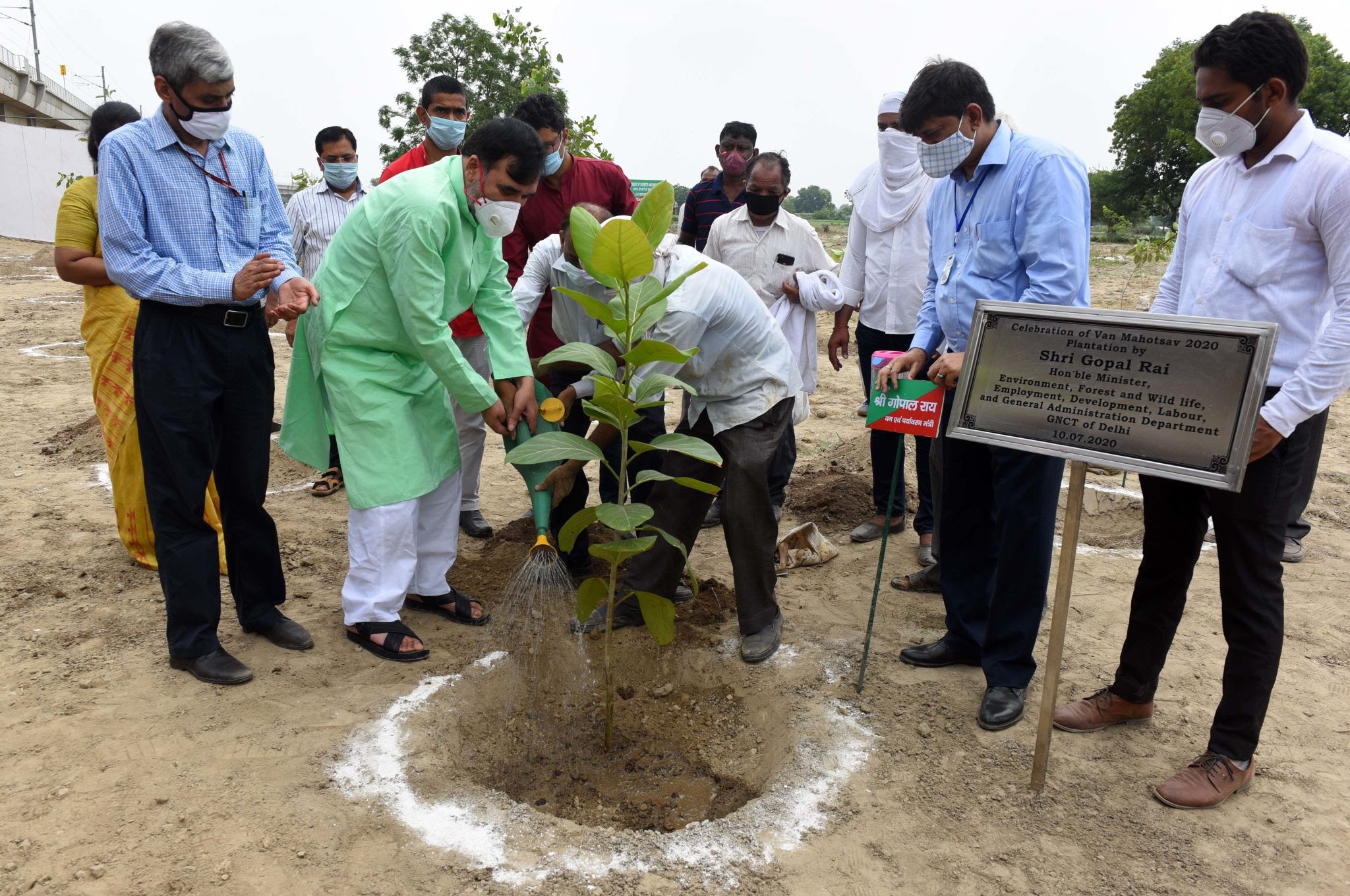
The Delhi Development Authority (DDA) successfully planted 100,000 saplings across the National Capital Territory as part of a major Independence Day plantation drive on August 1, 2026. The green initiative aims to expand Delhi’s urban forest canopy, combat air pollution, and restore ecological biodiversity along major parks and green belts.
NEW DELHI — The Delhi Development Authority (DDA) planted 100,000 saplings across multiple zones in the National Capital Territory on Saturday, August 1, 2026, launching a special Independence Day plantation drive. The large-scale environmental initiative was executed across biodiversity parks, city reserves, Yamuna floodplains, and residential green belts to enhance urban ecology and combat rising air pollution levels ahead of the winter season.
This extensive plantation effort aligns with the central government's broader "Ek Ped Maa Ke Naam" national campaign and Delhi's annual greening targets, underscoring the authority's commitment to expanding green cover across the capital.
Strategic Distribution and Selection of Indigenous Tree Species
The urban afforestation drive was carried out simultaneously across all major administrative zones of the capital, including Dwarka, Rohini, Vasant Kunj, Yamuna Biodiversity Park, and the Asola Bhatti Wildlife Sanctuary buffer regions.
To ensure long-term ecological survival and water conservation, DDA horticulture officials focused on planting native, drought-resistant, and high-oxygen-yielding tree species. These included Neem, Peepal, Jamun, Pilkhan, Gulmohar, Amaltas, and Arjun. Horticulture experts selected native varieties specifically suited to Delhi's soil conditions, which require minimal groundwater after initial establishment while offering maximum air filtration benefits.
According to official DDA releases, special emphasis was placed on the Yamuna riverfront restoration zones, where native riverine species were planted to stabilize embankment soil and mitigate seasonal flood risks.
Integration with Community Participation and School Networks
Beyond administrative execution, the DDA structured the Independence Day plantation drive as a participatory civic event. Resident Welfare Associations (RWAs), eco-clubs from public and private schools, non-governmental environmental organizations, and youth volunteers participated across designated planting sites.
The urban body provided tree guards and organic compost to local RWAs to ensure post-plantation survival rates. Official monitoring teams will track the growth and health of the newly planted saplings over the next three years using geo-tagging technology and periodic physical audits.
Environmental Impact on Delhi Residents and Urban Microclimate
Delhi faces severe atmospheric pollution during autumn and winter months due to a combination of meteorological inversions, vehicular emissions, and regional agricultural residue burning. Rapid urbanization has also elevated surface temperatures, creating pronounced urban heat island effects in densely populated sectors.
The addition of 100,000 saplings contributes directly to Delhi's long-term environmental resilience. Mature urban canopy reduces ambient temperatures by 2 to 4 degrees Celsius through evapotranspiration, traps coarse particulate matter (PM10 and PM2.5), and aids in groundwater recharge during monsoon downpours.
For citizens and morning walkers, expanded green spaces along DDA parks offer immediate recreational and health benefits, while long-term air quality gains help reduce respiratory health burdens across the capital.
Official Sources
According to official releases published by the urban development authority and government communications channels:
Delhi Development Authority (DDA): Confirmed the successful completion of the 100,000 sapling target across biodiversity reserves, parks, and Yamuna floodplains under its horticulture department.
Ministry of Housing and Urban Affairs (MoHUA): Highlighted the drive as part of urban greening benchmarks set for metropolitan regions under national sustainability guidelines.
Department of Environment and Forests, Delhi: Supported site allocation and native species selection guidelines to maximize survival rates in urban micro-habitats.
Quotes
"According to officials, the Independence Day plantation drive is designed not only to achieve numerical targets but to establish self-sustaining green corridors that protect Delhi's air quality and urban biodiversity."
"Organizers stated that geo-tagging and continuous horticulture maintenance will ensure high survival rates for the 100,000 saplings planted across all capital zones."
Why It Matters
For Delhi Residents: Expanded tree canopy reduces local surface heat, improves micro-air quality, and creates cleaner public recreational spaces.
For Urban Environment: Planting 100,000 saplings helps absorb atmospheric carbon, traps airborne dust particles, and enhances soil water retention.
For Local Infrastructure: Greening along Yamuna floodplains and roadside belts prevents soil erosion and mitigates urban flooding risks during heavy monsoon rains.
For Civic Governance: Sets a measurable benchmark for community-led environmental conservation and multi-agency greening campaigns.
Key Facts at a Glance
Target Achieved: 100,000 saplings planted across Delhi in a single Independence Day plantation drive.
Key Locations: Yamuna floodplains, Dwarka, Rohini, Vasant Kunj, and city biodiversity parks.
Species Selected: Native trees including Neem, Peepal, Jamun, Pilkhan, Gulmohar, and Amaltas.
Monitoring Mechanism: Geo-tagging and a three-year post-plantation maintenance protocol to maximize survival rates.
Civic Engagement: Active participation from local RWAs, school eco-clubs, and environmental volunteers.
Frequently Asked Questions
What was the main objective of the DDA plantation drive?
The main objective was to expand Delhi's green cover, improve air quality, combat urban heat island effects, and celebrate Independence Day through environmental stewardship.
Which types of trees were planted during the drive?
The DDA prioritized native Indian species such as Neem, Peepal, Jamun, Pilkhan, Gulmohar, and Amaltas, which thrive in local weather conditions and provide high ecological benefits.
How will DDA ensure the survival of the 100,000 saplings?
DDA horticulture teams will monitor sapling growth using geo-tagging technology, regular watering schedules, protective tree guards, and continuous soil nourishment over a three-year maintenance window.
Where were the saplings planted in Delhi?
Plantations were conducted across DDA-managed parks, Yamuna floodplain restoration zones, green belts in Dwarka and Rohini, and buffer zones near wildlife sanctuaries.
Source: Delhi Development Authority (DDA), Ministry of Housing and Urban Affairs, Department of Environment, Govt. of NCT of Delhi