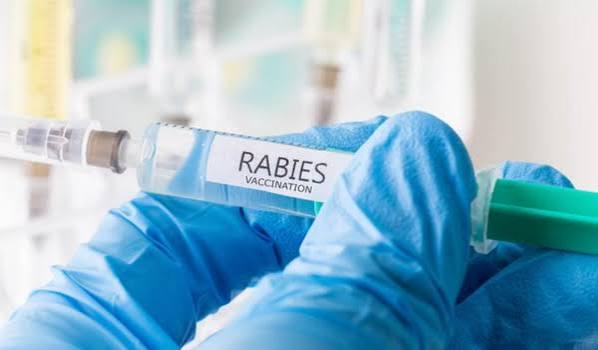
Indian Immunologicals has clarified that rabies vaccine Abhayrab vials flagged as substandard by the government are counterfeit products not manufactured by the firm. Following a CDL test failure in Delhi, the company has asked regulators to trace the illicit source and protect public health channels.
NEW DELHI — Indian Immunologicals Ltd (IIL) has announced that vials of its widely used Abhayrab rabies vaccine bearing batch number KE25012—recently flagged as substandard by government authorities—were not manufactured by its Human Biologicals Institute division. The company has formally requested regulatory authorities to trace the source of the seized products and initiate legal action against those responsible.
The controversy emerged following an enforcement action by the Central Drugs Standard Control Organisation (CDSCO), which seized the vaccine vials from an unlicensed residential premises in Mukherjee Nagar, New Delhi. The samples were subsequently dispatched to the Central Drugs Laboratory (CDL) in Kasauli for statutory testing.
Regulatory Findings and Discrepancies
Testing conducted by CDL Kasauli classified the field sample as "not of standard quality" and misbranded after it failed to meet mandatory potency requirements. Although the sample cleared baseline sterility, moisture, and identity evaluations, laboratory analysts flagged 17 distinct visual and technical inconsistencies when comparing the seized vials against official retention samples submitted by IIL.
Noted discrepancies included variations in packaging text, label artwork, cap color, license details, and a failure to pass digital QR code verification. These findings prompted the Drugs Controller General of India (DCGI) to issue an alert, instructing state regulators to maintain strict vigilance over the batch and investigate whether the items constitute spurious drugs under the Drugs and Cosmetics Act.
According to regulatory filings, company statements, and official communications:
Batch in Question: Abhayrab batch number KE25012.
Seizure Location: Unlicensed residential premises in Mukherjee Nagar, Delhi.
Authentic Distribution: IIL stated that all 83,370 genuine doses of batch KE25012 were routed exclusively through authorized supply chains.
Previous Incident: Marks the second counterfeit or unauthorized product scare involving the vaccine brand in under two years.
Official Sources Section
Quote Section
"According to Indian Immunologicals Ltd, the seized vials bearing batch number KE25012 were not manufactured by the company, and authorities have been urged to track down the illegal source of the misbranded doses."
Why It Matters
For public health networks and patients across India—where thousands of rabies cases are reported annually—ensuring vaccine integrity is critical to post-exposure prophylaxis. The swift disavowal by the manufacturer and ongoing regulatory probe highlight systemic vulnerabilities in unauthorized supply chains, reinforcing the need for strict verification of life-saving immunizations.
Key Facts at a Glance
Product: Abhayrab Human Rabies Vaccine.
Manufacturer Stance: Seized vials are counterfeit/unauthorized iterations not produced by IIL.
Regulatory Action: DCGI flagged potential spurious drug circulation under the Drugs and Cosmetics Act.
Cooperation: IIL has submitted distribution logs and requested a thorough criminal inquiry.
FAQ Section
Why was the Abhayrab vaccine batch flagged by regulators?
Government tests at CDL Kasauli revealed that field samples from batch KE25012 failed potency requirements and displayed multiple packaging inconsistencies compared to genuine factory references.
Did Indian Immunologicals manufacture the flagged vials?
No. IIL explicitly stated that the seized vials recovered from an unlicensed Delhi premises were not produced by its manufacturing division.
Where were the substandard vaccine vials discovered?
The disputed vials were seized by drug enforcement inspectors from an unlicensed residential location in Mukherjee Nagar, Delhi.
Where can stakeholders monitor official drug safety alerts in India?
Periodic safety notifications and regulatory circulars are published directly through the CDSCO Portal.
Source: Central Drugs Standard Control Organisation, Indian Immunologicals Ltd, The Economic Times, The Week Health Desk