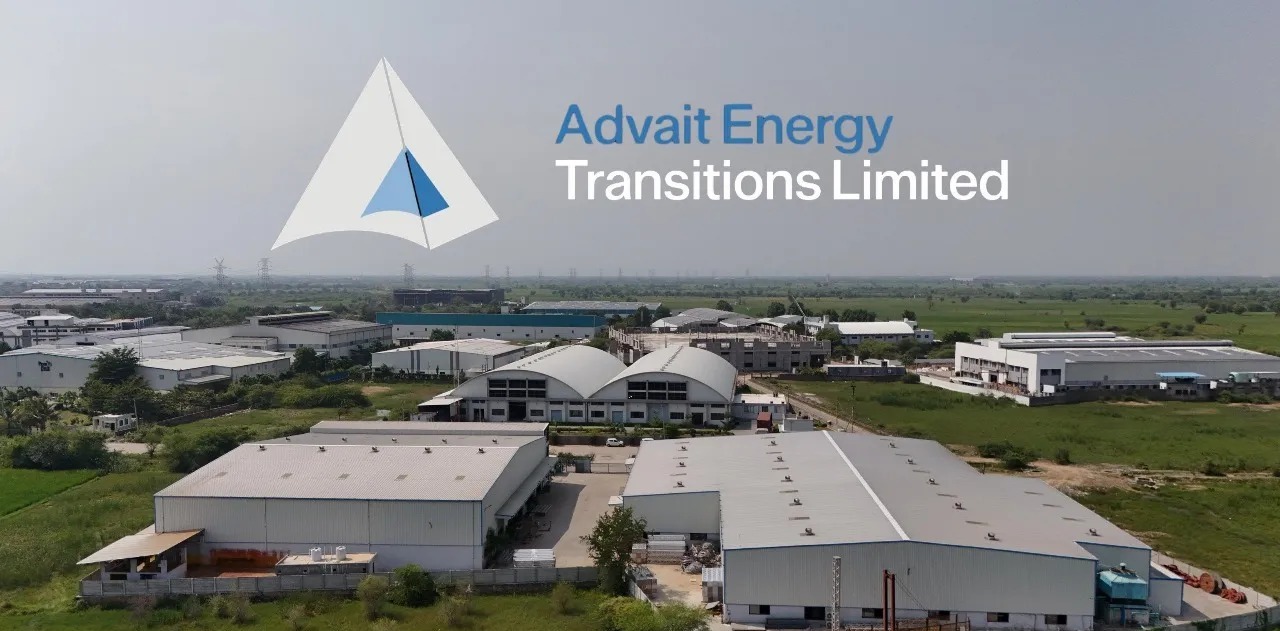
Advait Energy Transitions Limited has signed a landmark Battery Energy Storage Purchase Agreement with GUVNL for a 150 MW / 300 MWh standalone project in Gujarat. Operating at a tariff of ₹210,000 per MW per month with federal viability funding, the facility will provide critical grid stabilization within an 18-month deployment window.
AHMEDABAD, India — Indian clean-tech developer Advait Energy Transitions Limited has formally executed a milestone Battery Energy Storage Purchase Agreement (BESPA) with state electricity procurement agency Gujarat Urja Vikas Nigam Limited (GUVNL). The regulatory finalization, confirmed on Tuesday, June 2, 2026, marks the legal execution phase for a 150 megawatt (MW) / 300 megawatt-hour (MWh) standalone Battery Energy Storage System (BESS) project in Gujarat. The development marks a key stage in India’s commercial deployment of utility-scale storage infrastructure under central financial viability mechanisms.
Tender Origins and Commercial Tariffs
The signing of the purchase agreement officially consolidates the competitive selection results from GUVNL’s Phase-VIII grid-scale storage auction. Advait Energy Transitions emerged as the lowest (L1) bidder in the global competitive bidding round, securing its 150 MW capacity allocation at a set contract tariff of ₹210,000 per MW per month.
The structural arrangement outlines a long-term, fixed-income framework for the project developer upon official commissioning. Under the terms of the Phase-VIII allocation, the project receives capital backing through national Viability Gap Funding (VGF) allocations. This framework awards up to ₹1.8 million per MWh from the Power System Development Fund (PSDF) to offset initial installation and cell import costs.
Technical Performance and Grid Interconnection Mandates
The commercial project specifications call for highly responsive performance capabilities to support the regional state transmission utility. The utility-scale battery site must remain available to state load dispatchers to execute two complete, on-demand charge-and-discharge cycles every 24 hours. This operational rhythm helps shift surplus afternoon solar generation into evening consumer peak windows.
To fulfill grid performance benchmarks, the corporate entity must satisfy several rigorous criteria:
Availability Guardrails: The company must guarantee an annual system availability rate of no less than 95%.
Charging Capacity: System components must operate at a sustained 0.5 C-rate, meaning the setup can fully charge or discharge its complete capacity within a two-hour window.
Operational Control: The system must support modular controls, allowing dispatchers to manage power loads in blocks ranging from 50 MW/100 MWh up to the full 150 MW threshold.
Localization Rules: To comply with domestic technology guidelines, the energy management system (EMS) software must be developed indigenously within India, and local components must comprise at least 20% of the total project value.
Supply Chain Integration and Corporate Scaling
The project execution timeline requires full operational commissioning within 18 months from the official execution date of the purchase agreement. To support this target and protect against cell import volatility, Advait's specialized subsidiary, Advait Greenergy Private Limited, is accelerating its own manufacturing investments.
The subsidiary is setting up an automated 5 gigawatt-hour (GWh) battery packaging facility. The first 2.5 GWh assembly phase is scheduled to begin operations in late 2026 under a technology layout agreement signed with engineering partner Wuhan Huagong International Development (HGTECH). This facility will use robotic welding and AI-driven quality checks to assemble local storage modules, helping the company secure its component supply chain for upcoming utility installations.
Official Sources Section
Project capacities, tariff values, performance criteria, and localized software rules are drawn directly from official regulatory disclosures submitted by the company under SEBI equity protection guidelines. Legal review timelines and state utility bidding specifications are validated via official daily orders archived by the Gujarat Electricity Regulatory Commission.
Quote Section
"According to officials, the standalone installation will be fully integrated with the State Transmission Network under a direct-metered framework. Organizers stated that the primary objective is to make advanced storage infrastructure available on an on-demand basis, allowing the state to balance the intermittent nature of regional wind and solar generation profiles."
State procurement coordinators detailing the engineering scope of the utility storage agreement.
Why It Matters
Executing grid-scale battery contracts carries immediate practical implications for industrial energy consumers and renewable energy investors. By establishing large-scale, standalone storage systems, regional grids can mitigate the voltage instabilities and frequency drops that often occur when large amounts of solar or wind power are brought online. For clean-energy developers, this grid evolution provides an asset baseline that reduces the risk of forced generation curtailments, ensuring that green energy produced during off-peak hours can be stored and sold effectively during peak demand periods.
Key Facts at a Glance
Project Scale: The finalized contract secures a standalone battery storage infrastructure project with a capacity of 150 MW / 300 MWh.
Revenue Terms: The project tariff is locked in at a monthly rate of ₹210,000 per MW, inclusive of applicable taxes.
Financial Backing: The project utilizes financial support through a Viability Gap Funding allocation of ₹1.8 million per MWh.
Performance Mandate: The contract requires the operator to support two complete daily charge-and-discharge cycles with a minimum annual system availability of 95%.
Execution Limit: The enterprise has an 18-month execution window from the formal agreement signing date to bring the facility online.
FAQ Section
What specific government entity serves as the buyer for this battery energy storage capacity?
The capacity is being procured directly by Gujarat Urja Vikas Nigam Limited (GUVNL), the state-level apex power pooling and distribution holding company in Gujarat.
What does a 0.5 C-rate indicate regarding the facility's battery storage operations?
A 0.5 C-rate signifies that the storage system's battery packs are engineered to safely complete a full charge or a full discharge cycle over a continuous two-hour period.
Where can public investors track the company's official corporate compliance filings?
Corporate compliance announcements, financial balance sheets, and regulatory disclosures are archived publicly on the official Bombay Stock Exchange portal.
Source: Bombay Stock Exchange, Gujarat Electricity Regulatory Commission.