Aeroflex Industries Limited scaled its annual liquid cooling SFN skid assembly capacity to 9,000 units on July 1, 2026. Funded by a 97.56 crore rupee capex program, the expansion integrates advanced robotic automation to meet the high-density thermal management requirements of expanding AI and high-performance data centers.
NAVI MUMBAI, India — Indian flexible flow solutions manufacturer Aeroflex Industries Limited has successfully expanded the annual production capacity of its specialized liquid cooling SFN skid assemblies to 9,000 pieces per annum. The capacity milestone, officially commissioned on July 1, 2026, marks a major volume step-up for the Navi Mumbai-headquartered company as it scales its higher-margin product pipeline.
The structural expansion represents a strategic response to the massive data center build-out across India and global markets, where rising rack densities driven by Artificial Intelligence (AI) and High-Performance Computing (HPC) have pushed traditional air cooling mechanisms past their operational limits. By scaling up its high-value manufacturing lines, Aeroflex intends to solidify its position as a critical tier-1 component supplier within the rapidly expanding hardware architecture supply chain.
Meeting High-Density Thermal Demands in AI Infrastructure
The production increase builds on a phased development blueprint designed by the company's engineering division to handle the technical parameters of modern cloud infrastructure. Standard electronic servers generate significant thermal loads, but high-density AI clusters require specialized cooling networks to maintain chip efficiency and prevent structural breakdowns.
Aeroflex’s Secondary Fluid Network (SFN) skid assemblies form the foundation of liquid cooling loops, ensuring leak-free distribution of specialized dielectric fluids under strict temperature and pressure profiles. The step-up to a 9,000-unit annual run-rate follows an earlier first-phase operational expansion to 6,000 units completed in April 2026, demonstrating an aggressive deployment of capital to capture immediate enterprise sales pipelines.
Operational Execution Funded via Strategic Capex
The physical ramp-up across Aeroflex's primary manufacturing installations is backed by a structured capital expenditure (capex) allocation program totaling 97.56 crore rupees ($11.7 million equivalent). This structural funding program, approved by corporate shareholders, was deployed via a balanced combination of 42.56 crore rupees drawn from internal cash accruals and 55.00 crore rupees raised through a successful preferential share issue.
Beyond merely increasing raw assembly floor footprints, the capital allocation focuses heavily on internal process automation. The company has integrated advanced robotic welding lines, automated precision testing stations, and a new annealing facility to maximize throughput velocity while ensuring the zero-defect tolerances required by mission-critical data center applications.
Impact on Industrial Consumers and Stock Investors
For Data Center Operators: Expanded domestic component supply lines minimize reliance on long-lead overseas components, accelerating the construction timelines of next-generation hyper-scale facilities.
For Capital Market Investors: The ongoing transition into the high-value AI ecosystem has significantly boosted market sentiment, with prominent institutional backers keeping the stock under steady accumulation.
For Engineering Supply Chains: The specialized manufacturing push sets a benchmark for local engineering firms seeking to pivot from traditional industrial supply roles toward technical technology infrastructure.
Official Regulatory Updates
According to Company Announcements
In regulatory filings submitted to the domestic stock exchanges on July 1, 2026, the executive board of Aeroflex Industries confirmed that the expanded manufacturing blocks have successfully entered their active production cycle.
The corporate compliance statement detailed:
"The commissioning of our expanded liquid cooling SFN skid assembly line marks an important advancement in our strategic diversification checklist. Our automated facilities are positioned to satisfy the high volume demands of leading domestic and international tech infrastructure clients while continuing to maintain a debt-free corporate balance sheet."
Why It Matters: Commercial and Strategic Value
The practical implications of reaching an annual output of 9,000 pieces span both corporate finance metrics and broader industrial readiness. From a commercial perspective, liquid cooling assemblies command significantly higher profit margins compared to standard industrial corrugated stainless-steel hoses and braided fittings.
Management projections suggest the phased capacity scale-up could add substantial fresh revenue inflows over coming financial quarters as hardware dispatches move toward full utilization targets. Strategically, executing this expansion entirely on schedule reinforces the company's operational credibility as global technology conglomerates actively look for reliable hardware partners to support their localized sovereign AI infrastructure goals.
Key Facts at a Glance
New Production Capacity: Scaled up to 9,000 pieces per annum for liquid cooling SFN skid assemblies, effective July 1, 2026.
Expansion Funding Mix: Supported by an integrated 97.56 crore rupee capex plan combining internal cash reserves and a preferential stock issue.
Primary Application: Thermal management and fluid regulation systems for high-density AI data centers and supercomputing servers.
Process Upgrades: Complemented by robotic welding automation and automated testing systems to elevate line yield quality.
Frequently Asked Questions (FAQ)
What exactly is a liquid cooling SFN skid assembly?
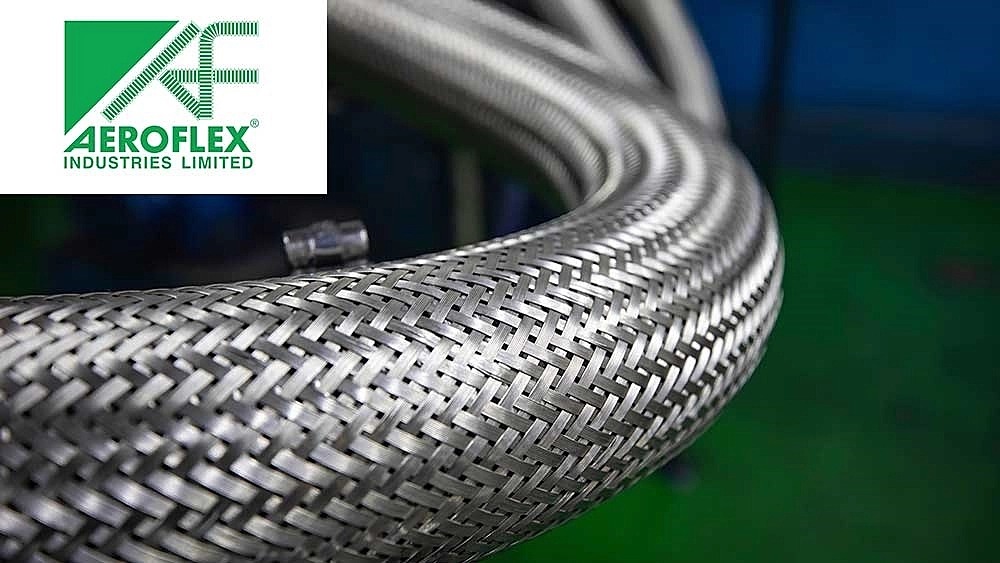
A Secondary Fluid Network (SFN) skid assembly is a modular industrial system consisting of high-precision valves, flexible metallic piping, and automated flow controls. It regulates the continuous circulation of coolant fluids directly to server racks, replacing traditional air fans in modern data centers.
Why is Aeroflex shifting its manufacturing focus toward liquid cooling?
Traditional industrial hoses face lower generic margins. Pivoting toward specialized liquid cooling systems lets Aeroflex tap into high-growth AI infrastructure pipelines, generating superior product realizations and capturing stronger multi-year demand visibility.
How is Aeroflex funding this heavy engineering expansion?
The company is financing the upgrades through a combination of 42.56 crore rupees in internal cash flows and 55.00 crore rupees raised via a targeted preferential share placement, preserving its debt-free capital status.
Source: Official operational disclosures filed with the Securities and Exchange Board of India (SEBI), listing compliance documentation on the National Stock Exchange of India (NSE), and investor presentation briefings published by Aeroflex Industries Limited.