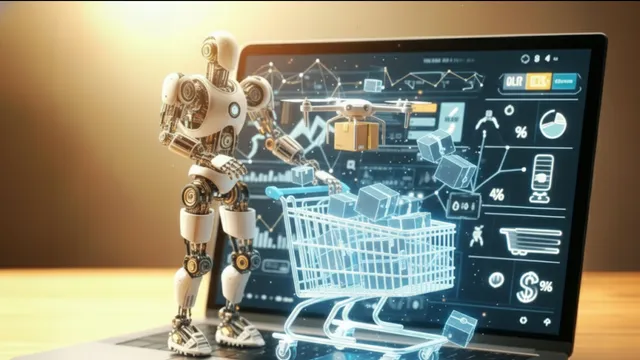
Over 92% of urban Indian shoppers have used artificial intelligence tools to assist purchases, according to recent NIQ industry data. As India's digital commerce market heads toward $345 billion by 2030, the intersection of conversational AI assistants and rapid delivery networks is redefining digital retail discovery and automated transactions.
NEW DELHI / MUMBAI — A massive shift in consumer shopping behavior is underway across India, with 92% of surveyed urban Indian consumers having used at least one artificial intelligence tool while shopping online over the past month, according to findings unveiled at the NIQ Insight Summit India. The rapid rise of AI shopping assistants is fundamentally altering product discovery, price comparison, and purchasing decisions, establishing India as one of the fastest-growing global testbeds for agentic commerce and algorithm-guided retail.
Convergence of AI Shopping Assistants and Quick Commerce
The acceleration in adoption comes as Indian shoppers increasingly treat generative AI tools as trusted purchasing companions. Data presented by consumer intelligence firm NielsenIQ (NIQ) indicates that 93% of consumers express strong interest in deploying AI-driven tools to manage household purchases, while 87% report high comfort levels with receiving algorithmically generated product recommendations.
This behavioral evolution intersects with India’s booming quick-commerce sector, where 82% of urban consumers actively utilize rapid delivery platforms and 65% express a willingness to pay premium delivery fees for orders fulfilled within 30 minutes. As delivery timelines compress, AI shopping assistants are being embedded directly into e-commerce interfaces to streamline decision-making, evaluate specifications, and trigger instant checkout workflows.
The Rise of Agentic Commerce and Enterprise Implementation
Retail conglomerates, marketplace giants, and domestic platforms are shifting capital expenditure toward agentic AI systems that perform multi-step consumer tasks autonomously. Rather than simply displaying keyword-matched inventory catalogues, conversational AI assistants can synthesize customer reviews, compare conflicting specifications across competing products, track 90-day price trends, and interpret subjective purchase prompts.
Major digital marketplaces operating in India—such as Amazon with its custom LLM-powered assistant Rufus and domestic players optimizing conversational interfaces—have witnessed rapid user adoption. Digital assistants are increasingly handling open-ended consumer queries, assisting with budget allocations, and resolving complex technical evaluations, which industry data correlates with a higher likelihood of purchase completion during active shopping sessions.
Economic Projections and Market Impact
According to macroeconomic projections shared by NIQ, India's broader e-commerce ecosystem is expanding roughly 2.5 times faster than global peer averages and is projected to reach $345 billion by 2030.
Impact on Brands and Retailers: The primary competitive focus for consumer brands is pivoting from search engine optimization to recommendation engine visibility and algorithmic relevance at the point of consumer intent.
Impact on Consumers: Shoppers gain access to real-time price history analysis, curated feature comparisons, and hyper-personalized discovery, reducing research friction.
Impact on Digital Supply Chains: Real-time consumer intent data captured by AI models enables predictive inventory stocking at urban micro-fulfillment centers and dark stores.
Official Sources
According to market research datasets presented at the NIQ Insight Summit India by NielsenIQ executives, along with platform disclosures by the Ministry of Electronics and Information Technology (MeitY) and Department for Promotion of Industry and Internal Trade (DPIIT), consumer digital commerce integration is outpacing traditional adoption cycles across metropolitan and Tier-1 Indian markets.
Quote Section
"The biggest competitor facing businesses in India today isn't another company. It's the speed of change. What makes India unique is the convergence of one of the world's fastest-growing quick commerce ecosystems and a consumer base that is rapidly embracing AI as a trusted shopping companion," stated Didem Sekerel Erdogan, EEMEA and India E-Commerce Leader at NIQ.
"According to e-commerce industry analysts, as discovery, evaluation, and purchase converge into a single AI-guided interface, brand success will hinge on algorithmic relevance and direct consumer trust."
Why It Matters
The widespread adoption of AI shopping assistants marks a structural evolution from manual search-and-scroll online shopping to curated, conversational discovery. For businesses, staying visible requires structuring product metadata for machine reasoning rather than simple keyword indexing. For consumers, delegated AI interactions save time and provide objective price and review analysis before financial transactions occur.
Key Facts at a Glance
Adoption Rate: 92% of surveyed urban Indian consumers used an AI shopping tool in the preceding month.
Market Projection: India's total e-commerce sector is forecast to reach $345 billion by 2030.
Consumer Willingness: 93% of consumers are interested in AI tools managing routine household purchases.
Quick Commerce Synergies: 82% of urban consumers utilize rapid delivery apps, creating fertile ground for automated commerce.
Frequently Asked Questions (FAQ)
What is an AI shopping assistant?
An AI shopping assistant is a software tool or conversational bot powered by large language models that helps consumers find products, compare features, analyze prices, and make purchase decisions based on natural language queries.
Why is AI-guided shopping expanding so rapidly in India?
High smartphone penetration, rapid digital payment adoption, widespread quick-commerce usage, and growing consumer trust in algorithmic recommendations have created ideal conditions for fast adoption.
How do AI assistants help consumers evaluate products?
AI assistants summarize thousands of customer reviews, analyze historical price fluctuations, compare technical specifications side-by-side, and suggest relevant items based on specific use cases or budgets.
Sources: NielsenIQ (NIQ) Consumer Insights, Department for Promotion of Industry and Internal Trade, and Ministry of Electronics and Information Technology.