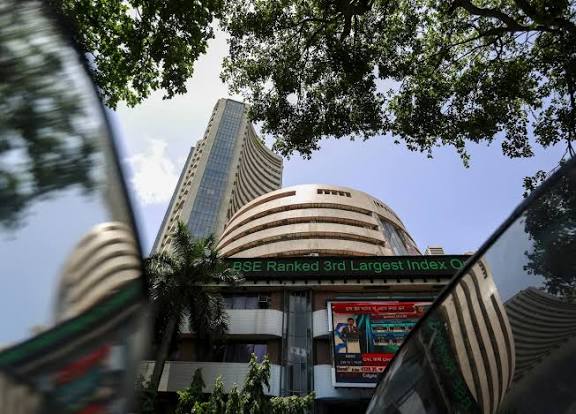
India's BSE Sensex closed 0.24% lower after extending an intraday loss of 0.05%, while the Nifty 50 dropped 0.52%, deepening its 0.24% intraday decline. The downturn on Wednesday was driven by late-session selling across banking and technology shares amid derivative expiry positioning and cautious global market sentiment.
MUMBAI — India’s benchmark equity indices closed in negative territory on Wednesday, with the BSE Sensex and the NSE Nifty 50 surrendering early morning gains to settle significantly lower. The 30-share BSE Sensex dropped 0.24% by the closing bell, deepening an earlier intraday loss of 0.05%, while the broader 50-share NSE Nifty 50 shed 0.52%, extending its intraday drop of 0.24%. The late-session sell-off reflected institutional risk aversion across major banking, information technology, and consumer heavyweights amid fluctuating global crude oil benchmarks and heightened geopolitical uncertainties.
Benchmark Indices Extend Intraday Selling Pressure
Trading on Dalal Street opened with cautious consolidation, but sustained selling pressure during the final trading hours pulled both frontline indices toward intraday lows. The decline on the Bombay Stock Exchange saw the BSE Sensex fall by 0.24%, compounding minor morning contractions as key index components faced steady profit-booking. On the National Stock Exchange of India, the Nifty 50 index experienced a sharper decline of 0.52%, pressured by broad-based liquidations across large-cap and mid-cap counters.
Market breadth tilted in favor of declines as market participants adjusted open positions ahead of scheduled monthly derivatives expirations. High-frequency selling during the closing price auction mechanism further exacerbated the downward trajectory of the Nifty 50, pulling index heavyweights below crucial short-term moving average support levels.
Sectoral Performance and Market Breadth
Across sectoral indices, weakness was evident across financial services, consumer goods, and technology counters, while defensive sectors showed selective resilience:
Information Technology: Major IT exporters faced downward momentum following global cues and lingering enterprise spending concerns in key North American markets.
Auto and FMCG: Automobile manufacturers and fast-moving consumer goods companies traded lower amid rising input cost assessments and selective volume profit-booking.
Metals and Energy: Commodity and energy counters witnessed mixed trading sessions influenced by international price swings in Brent crude and industrial metals.
Macroeconomic Headwinds and Investor Sentiment
The market retreat comes as domestic and foreign portfolio investors navigate multiple macroeconomic crosscurrents. While domestic liquidity inflows via systematic investment plans (SIPs) continue to provide underlying structural support to Indian bourses, global macro developments have driven intermittent risk-off sentiment.
Participants cited firm international energy prices and foreign institutional investor (FII) reallocations toward alternate emerging markets as factors moderating domestic equity valuations. In addition, global interest rate expectations and regional trade developments have prompted market participants to adopt a disciplined stance, favoring portfolio consolidation over aggressive directional exposure.
Impact Across Portfolios, Retail Investors, and Corporates
The downward session carries distinct practical implications for various financial market participants:
Retail and Mutual Fund Investors: Steady daily pullbacks encourage long-term mutual fund investors to maintain rupee-cost averaging strategies while avoiding leveraged derivative bets during volatile expiry weeks.
Institutional Fund Managers: Asset allocators continue to rotate capital from high-multiple cyclical sectors into defensive value opportunities to protect portfolio returns.
Listed Corporate Borrowers: Secondary market consolidations influence market sentiment for ongoing primary market initial public offerings (IPOs) and qualified institutional placements (QIPs).
Official Sources
According to official closing bell bulletins and market data published by the Bombay Stock Exchange (BSE) and the National Stock Exchange of India (NSE), total trading turnover reflected active institutional rebalancing across cash and equity derivative segments. Comprehensive regulatory surveillance remains active under frameworks established by the Securities and Exchange Board of India (SEBI) and the Reserve Bank of India (RBI).
Quote Section
"According to equity analysts, the market's retreat highlights healthy consolidation after recent trading rallies, as institutional desks pare exposure in interest-rate-sensitive stocks ahead of major global economic data releases."
"Market observers noted that while domestic institutional capital continues to cushion deep drawdowns, benchmark indices remain sensitive to short-term foreign portfolio outflows and commodity volatility."
Why It Matters
Daily benchmark movements on the BSE Sensex and Nifty 50 serve as an immediate barometer of macroeconomic confidence, corporate valuation health, and domestic retail sentiment in India. Understanding the catalysts behind market pullbacks enables individual and institutional market participants to calibrate risk management protocols, identify sustainable support thresholds, and maintain disciplined asset allocation frameworks across diversified financial portfolios.
Key Facts at a Glance
BSE Sensex Close: Ended 0.24% lower, extending earlier intraday losses of 0.05%.
Nifty 50 Close: Closed 0.52% down, expanding intraday losses from 0.24%.
Primary Laggards: Information technology, FMCG, and automotive stocks.
Market Factor: Institutional rebalancing, derivative contract expiry dynamics, and global macro crosscurrents.
Frequently Asked Questions (FAQ)
How much did the BSE Sensex and Nifty 50 fall today?
The BSE Sensex closed 0.24% lower after extending an intraday drop of 0.05%, while the NSE Nifty 50 ended down 0.52%, extending an earlier intraday loss of 0.24%.
What factors drove the decline in Indian equity markets?
The downward movement was driven by late-session selling across financial and technology shares, portfolio rebalancing ahead of derivative expiries, and cautious global market sentiment.
Which sectors experienced the most selling pressure?
Information technology, automotive, and FMCG sectors faced the most pronounced selling during the trading session.
Sources: Bombay Stock Exchange (BSE), National Stock Exchange of India (NSE), Securities and Exchange Board of India (SEBI), and Reserve Bank of India (RBI).