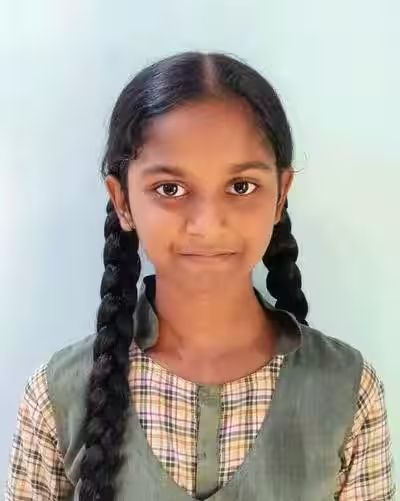
Fourteen-year-old Kandula Jessie, a carpenter's daughter studying at a government school in Andhra Pradesh, has been selected for Mission ShakthiSAT. Competing against thousands globally, she will train in New Delhi for the international all-girls lunar satellite project, inspiring future generations of women in STEM.
A 14-year-old carpenter's daughter from a government school in Andhra Pradesh breaks barriers by securing a coveted spot in a global lunar satellite mission.
In a remarkable triumph of perseverance over economic hardship, 14-year-old Kandula Jessie from Andhra Pradesh has been selected as one of 20 Indian participants for Mission ShakthiSAT, the world's first global all-girls lunar CubeSat mission. According to official reports released in July 2026, the rigorous selection process drew nearly 12,000 registrations from young aspiring scientists across 108 countries.
Jessie, a Class X student at the Zilla Parishad Girls High School in Dowleswaram, East Godavari district, stands out as the sole representative from her state in the final Indian cohort. Supported by her dedicated physical science teacher and the school's Atal Tinkering Lab, Jessie balanced her daily secondary school curriculum with demanding online coursework spanning complex space technology modules.
Overcoming Obstacles and Rigorous Training
According to official educational updates and school disclosures, Jessie's journey to the international space program was forged through exceptional resilience. Coming from a modest background where her father works as a carpenter, she transitioned to a government school due to financial constraints.
Despite initial hurdles with advanced space science concepts and international evaluation interviews conducted entirely in English, Jessie successfully completed complex modules covering satellite systems, propulsion, thermodynamics, and payload development. Beginning August 23, she is scheduled to participate in hands-on training sessions in New Delhi, working alongside international scientists in preparation for the student-built lunar CubeSat launch.
Impact on Students, Public Education, and STEM Aspirants
For government school students and rural communities across India, Jessie's selection shatters long-standing socioeconomic barriers and proves that world-class scientific opportunities are accessible through sheer dedication. Educators and policy analysts note that initiatives like Mission ShakthiSAT play a vital role in encouraging young women to pursue deep-tech careers and aerospace engineering.
For aspiring youth, her success serves as a powerful reminder of the transformative power of public education and institutional support systems, inspiring a new generation of female scientists to aim for the stars.
Why It Matters
Breaking socioeconomic boundaries to enter aerospace technology demonstrates that talent and determination outweigh financial constraints. Jessie's participation in a global lunar mission underscores the importance of fostering inclusive STEM education for young women across all communities.
Key Facts at a Glance
Selected Candidate: Kandula Jessie, a 14-year-old Class X student from Dowleswaram, Andhra Pradesh.
Program Scale: Mission ShakthiSAT attracted nearly 12,000 registrations from girls across 108 countries, selecting only 20 Indian participants.
Training Milestone: Scheduled for hands-on satellite development training in New Delhi starting August 23.
Launch Objective: Contributing to payload development and mission operations for a student-built lunar CubeSat.
Frequently Asked Questions
What is Mission ShakthiSAT?
Mission ShakthiSAT is recognized as the world's first global all-girls lunar CubeSat mission, designed to train young women in satellite construction, space technology, and payload development.
How many Indian students were selected for the final program?
Out of nearly 12,000 global applicants, exactly 20 Indian participants were selected, with Kandula Jessie being the sole representative from Andhra Pradesh.
What are the next steps in Jessie's training?
She will travel to New Delhi for intensive, hands-on training alongside space scientists and participate in National Space Day celebrations.
Source: Space Kidz India, The Times of India, NDTV India, Ministry of Education