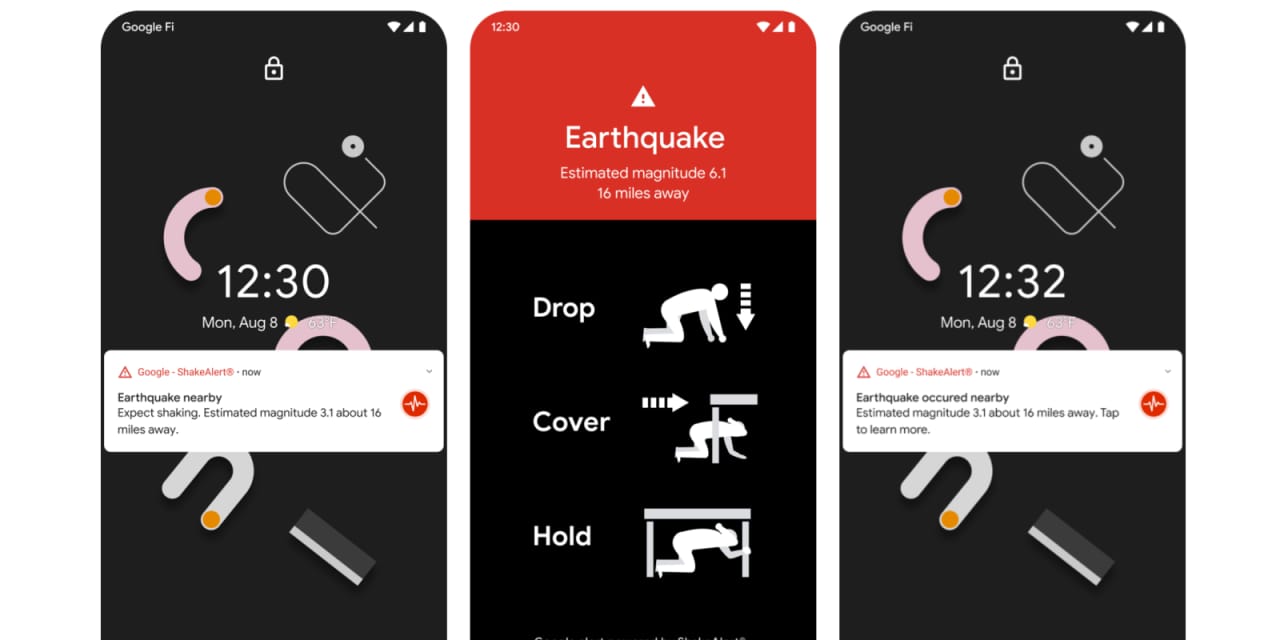
Google’s Android Earthquake Alerts System transforms millions of smartphones into a real-time seismic detection network. By using internal accelerometers to sense initial, fast-moving waves, the system pushes out alerts to users seconds before damaging tremors arrive. The feature is fully active in India for devices running Android 5 and above.
NEW DELHI — Millions of active smartphones now function as a global, decentralized seismic monitoring network through the Google Android Earthquake Alerts System. Recent seismic events, including twin earthquakes in South America, have highlighted the technology's capability to deliver localized warnings seconds before visible ground tremors begin. By leveraging embedded hardware inside everyday mobile devices, the technology bypasses the traditional constraints of limited ground-based infrastructure. The network is fully functional and operational across India, offering supplementary emergency alerts alongside existing government frameworks.
The Science of Speed: How Android Phones Detect Tremors
The Android Earthquake Alerts System utilizes built-in components to identify early indicators of seismic activity. Every modern smartphone contains an accelerometer—a miniature sensor primarily engineered to measure proper acceleration and orient screen rotation. When a device remains stationary, this sensor is sensitive enough to detect the specific kinetic signatures produced by an earthquake's initial subsurface energy release.
Earthquakes transmit energy through the earth's crust in distinct phases. Primary waves, known as P-waves, are the fastest-traveling seismic waves, moving at roughly 6 kilometers per second. While P-waves cause minimal physical damage, they are followed by slower, highly destructive secondary waves, or S-waves, which travel at approximately 3 to 4 kilometers per second and cause violent ground shaking.
When an individual Android phone detects a vibration characteristic of a P-wave, it instantly transmits an anonymous, high-speed data packet containing a generalized location to Google's central detection servers. Because electronic data travels at the speed of light, the server can compile, analyze, and cross-reference thousands of incoming smartphone signals simultaneously. If a dense cluster of devices in a localized area registers identical data at the exact same moment, the system confirms an active earthquake and instantly pushes out a mass notification to users in the projected path of the slower-moving S-waves.
Two Distinct Alert Tiers for Public Safety
The crowdsourced system is calibrated to issue two separate tiers of safety alerts depending on the calculated severity and distance from the epicenter. Both alert types are triggered only for events registering a magnitude of 4.5 or greater:
"Be Aware" Alert: Designed for individuals located in zones expected to experience light or weak shaking. This alert manifests as a standard, low-priority smartphone notification. It respects the user's active volume, vibration, and "Do Not Disturb" profiles, providing a non-intrusive informational heads-up.
"Take Action" Alert: Reserved for users in areas projected to face moderate to extreme ground acceleration. This critical safety alert is engineered to override active smartphone profiles. It lights up the screen, bypasses "Do Not Disturb" settings, and emits a loud, distinct audio signal. The display simultaneously presents immediate, full-screen instructions, advising users to drop, cover, and hold on.
Global Integration and Availability in India
The supplemental warning system has been active across India since late 2023 for all mobile devices running Android 5 or higher. In regions like California, Oregon, and Washington, Google links directly into the United States Geological Survey (USGS) ShakeAlert ground-sensor network. However, across India and 97 other nations, the system operates primarily via crowdsourced smartphone telemetry to bridge infrastructure gaps.
A comprehensive, peer-reviewed evaluation published in the journal Science analyzed three years of global telemetry data from the system. The study concluded that the network successfully identifies an average of 312 earthquakes per month globally. Data indicates that among surveyed recipients who felt subsequent tremors, approximately 36% received the notification before the physical shaking reached their exact location, giving them precious seconds to move away from heavy infrastructure, ladders, or hazards.
Official Sources Section
The technical architecture, operational data, and regional availability details presented in this report are verified by official documentation from Google Safety & Security, data published within the peer-reviewed journal Science, and historical seismic advisories compiled by the U.S. Geological Survey (USGS).
Quote Section
Detailing the mechanics of the digital warning network, Google technical documentation explains:
"We're essentially racing the speed of light (which is roughly the speed at which signals from a phone travel) against the speed of an earthquake. And lucky for us, the speed of light is much faster! This allows our system to process data and issue warnings to downstream communities before the damaging shockwaves arrive."
According to officials monitoring the real-world performance of crowdsourced networks, the technology is designed to operate in tandem with, rather than replace, official state resources. Emergency response experts emphasize that a few seconds of advance notice can dramatically reduce minor injuries during a sudden seismic event.
Why It Matters
For citizens, travelers, and urban emergency planners, a reliable mobile alert system provides a crucial safety margin where dedicated physical seismometer networks are sparse or unavailable. While a warning of 10 to 15 seconds cannot prevent structural damage to property, it grants individuals enough time to take basic protective postures, step away from hazardous environments, or halt delicate machinery, mitigating injuries during the critical initial moments of an emergency.
Key Facts at a Glance
Crowdsourced Seismology: Google's network utilizes the internal accelerometers of millions of active Android smartphones to detect early seismic vibrations.
Active in India: The Android Earthquake Alerts System has been fully operational across India since 2023 for devices running Android 5 and above.
Dual Alert System: The technology divides warnings into a standard "Be Aware" notification for light tremors and a high-priority, full-screen "Take Action" alert for destructive shaking.
Speed Advantage: Because digital signals travel at the speed of light, alerts are delivered to surrounding areas before slower-moving, destructive secondary waves (S-waves) arrive.
Frequently Asked Questions (FAQ)
Is the Android Earthquake Alerts System available in India?
Yes. The system has been active and functional across India since 2023. It operates on all Android smartphones running Android version 5 or higher, provided the device has active cellular data or Wi-Fi connectivity and location services turned on.
Does my phone predict an earthquake before it actually happens?
No. The system does not predict earthquakes before they occur. Instead, it detects the actual initial, fast-moving primary waves (P-waves) at the epicenter using nearby phones and quickly alerts users located further away before the slower, destructive secondary waves (S-waves) reach them.
How do I make sure this feature is turned on inside my Android device?
Users can verify or modify their settings by navigating to their phone's main Settings menu, selecting "Safety & Emergency," and tapping on "Earthquake Alerts" to ensure the toggle is switched to the active position.
Does this system replace official government disaster alert platforms?
No. Google's Android alerts are designed to act as a supplemental, secondary layer of public information and do not replace official emergency broadcast systems or local government disaster management notices.
Source: Google Android System Resource Portals, U.S. Geological Survey (USGS) Early Warning Assessments, cience Journal: "Global earthquake detection and warning using Android phones"