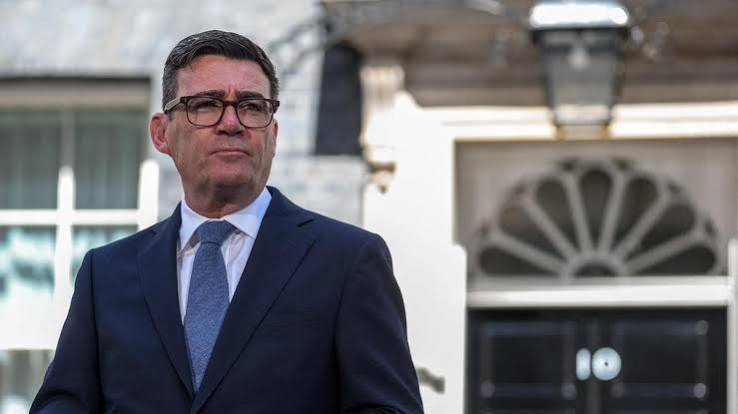
Andy Burnham officially became the UK's seventh Prime Minister in a decade on July 20, 2026. Succeeding Keir Starmer, he vowed to implement a "10-year plan" to restore national stability, decentralize power from London, reindustrialize the economy, and bring essential services under stronger public control to address the cost-of-living crisis.
LONDON — Andy Burnham officially became the Prime Minister of the United Kingdom on July 20, 2026, following a formal invitation from King Charles III to form a government. His appointment follows the resignation of Keir Starmer, who stepped down after a two-year tenure as the country’s leader.
Speaking outside 10 Downing Street, Burnham acknowledged the political turbulence that has seen him become the seventh person to hold the office in just over a decade. He framed his premiership as a "moment for reflection and new resolution," vowing to move away from the divisive political point-scoring of recent years in favor of a more collaborative approach to governance.
A New Social and Political Agenda
Prime Minister Burnham signaled a departure from the previous administration's strategy, outlining an ambitious vision to "rewire" the nation. Central to his agenda is a commitment to decentralization, drawing on his experience as the Mayor of Greater Manchester, where he championed regional devolution and public control of essential services.
"We will take power out of here and carry it into every postcode in the land," Burnham stated in his inaugural address. He promised that his administration would focus on building a new economy by bringing life’s essentials back under stronger public control to ensure affordability for citizens. Additionally, he issued an immediate instruction to his new government to launch a drive to end rough sleeping, a priority he had previously pursued at the regional level.
Economic Stabilization and Foreign Policy
While Burnham has promised significant structural change, he has also sought to reassure international markets and domestic stakeholders of his commitment to fiscal discipline. He confirmed his administration would adhere to existing borrowing limits and emphasized a need for "sovereign capabilities" in key strategic sectors, including artificial intelligence, quantum technology, energy, and shipbuilding.
In his first hours as Prime Minister, Burnham engaged in a series of diplomatic calls with key international partners, including U.S. President Donald Trump, Ukrainian President Volodymyr Zelenskyy, and NATO Secretary General Mark Rutte. He reaffirmed his unwavering support for Ukraine and emphasized the need for Britain to regain its position of stability on the global stage.
Why It Matters
Burnham’s transition to the premiership marks a significant shift in the direction of the Labour government. By focusing on a "10-year plan" and reindustrialization, the new administration aims to address deep-seated issues such as the cost-of-living crisis and the decline of public services. For investors and the public, the coming weeks will be critical as the new cabinet is formed and the first legislative measures are unveiled to address the nation's economic challenges.
Key Facts at a Glance
New Leadership: Andy Burnham became the 7th Prime Minister in a decade on July 20, 2026.
Political Shift: Promising a "new political model" and a "circuit breaker" for Britain.
Immediate Priorities: Addressing the cost of living, ending rough sleeping, and building more council homes.
Governance Style: Commitment to decentralizing power and enhancing public control of essential services.
FAQ
Who did Andy Burnham succeed as Prime Minister?
Andy Burnham succeeded Keir Starmer, who resigned after two years in office.
What is the core of Burnham’s "new political model"?
Burnham has pledged to make politics more collaborative and focused on problem-solving, with a heavy emphasis on decentralizing power from London to regional areas.
What are the primary economic goals of the new government?
Key goals include reindustrializing Britain, strengthening public control of essential utilities, increasing council housing, and maintaining fiscal discipline while investing in sovereign capabilities.
Source: GOV.UK, Reuters, The Hindu