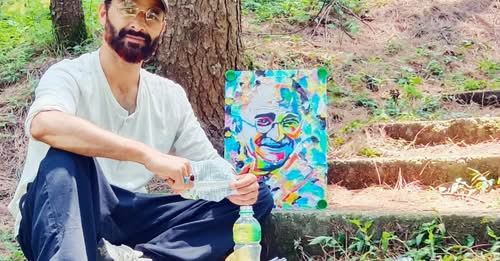
Kashmiri artist Mudasir Rehman Dar has created a portrait of Mahatma Gandhi using only discarded plastic waste. The project, part of his "Art for Cause" initiative, aims to promote environmental sustainability and encourage the public to reduce single-use plastic consumption through the creative repurposing of trash.
SRINAGAR — A contemporary artist from south Kashmir’s Kulgam district has achieved widespread attention for creating a unique portrait of Mahatma Gandhi using only discarded polythene bags and plastic waste. The project, executed without the use of traditional brushes, paint, or ink, serves as a poignant reminder of the necessity for sustainable waste management and recycling.
Mudasir Rehman Dar, a resident of Kulpora village, completed the artwork as part of his ongoing "Art for Cause" initiative. By meticulously selecting, cutting, and arranging discarded plastic materials, Dar has transformed everyday trash into a detailed representation of the Father of the Nation.
Promoting Environmental Awareness
Dar’s choice of subject and medium is deeply intentional. According to the artist, the portrait draws inspiration from Gandhi’s core values of simplicity, cleanliness, and responsible living. The artwork is designed to convey a strong message against the indiscriminate use of single-use plastics—a growing concern in India’s environmental landscape.
The installation aligns with several national campaigns, including "Swachh Bharat" and "Kabaad Se Jugaad," which emphasize the importance of repurposing waste. Dar has been a vocal advocate for environmental preservation, frequently using his art to raise public awareness regarding climate change, biodiversity loss, and the importance of responsible waste management.
A Message in Every Piece
The portrait serves as more than just a creative exercise; it acts as a tool for community sensitization. Dar has previously exhibited his waste-material installations in schools, parks, and along village roadsides.
The artist’s initiative carries a clear message for the public, often accompanied by the slogan: "Shehar Ko Na Karo Maila, Haath Mein Le Chalo Thaila" (Do not litter the city; carry a bag in your hand). Through his work, Dar encourages citizens to reconsider their relationship with waste and adopt more environmentally responsible daily practices.
Official Sources
Details of this artistic initiative were reported by the Daily Excelsior, highlighting the artist's efforts in Srinagar and Kulgam. The project falls under broader regional efforts to promote sustainable development and creative environmental education in Jammu and Kashmir.
Quote Section
"According to officials," initiatives like Dar’s are vital for grassroots engagement in environmental issues. The artist himself emphasized that the artwork serves as a reminder to rethink humanity's relationship with waste and encourages a shift toward more sustainable, eco-friendly habits.
Why It Matters
For citizens, the project demonstrates that creativity can be a powerful engine for social and environmental change. By turning non-biodegradable waste into a symbol of national heritage, Dar challenges the public to visualize the impact of their waste and encourages active participation in recycling efforts.
Key Facts at a Glance
Artist: Mudasir Rehman Dar (Kulgam, South Kashmir).
Medium: Discarded polythene bags and plastic waste (no paint or brushes used).
Theme: Environmental awareness, recycling, and Gandhian ideals of simplicity.
Initiative: "Art for Cause."
FAQ
Why did the artist choose plastic waste for the portrait?
The artist used plastic waste to highlight the environmental damage caused by single-use plastics and to demonstrate that discarded materials can be transformed into meaningful art through recycling.
What is the core message of the artwork?
The portrait promotes the "Say No to Plastic" message and encourages citizens to adopt sustainable waste management practices to keep surroundings clean.
Where can these artworks be seen?
Mudasir Rehman Dar frequently displays his installations in public spaces, including schools, village roadsides, and parks in Jammu and Kashmir, to educate the community.
Source: Daily Excelsior