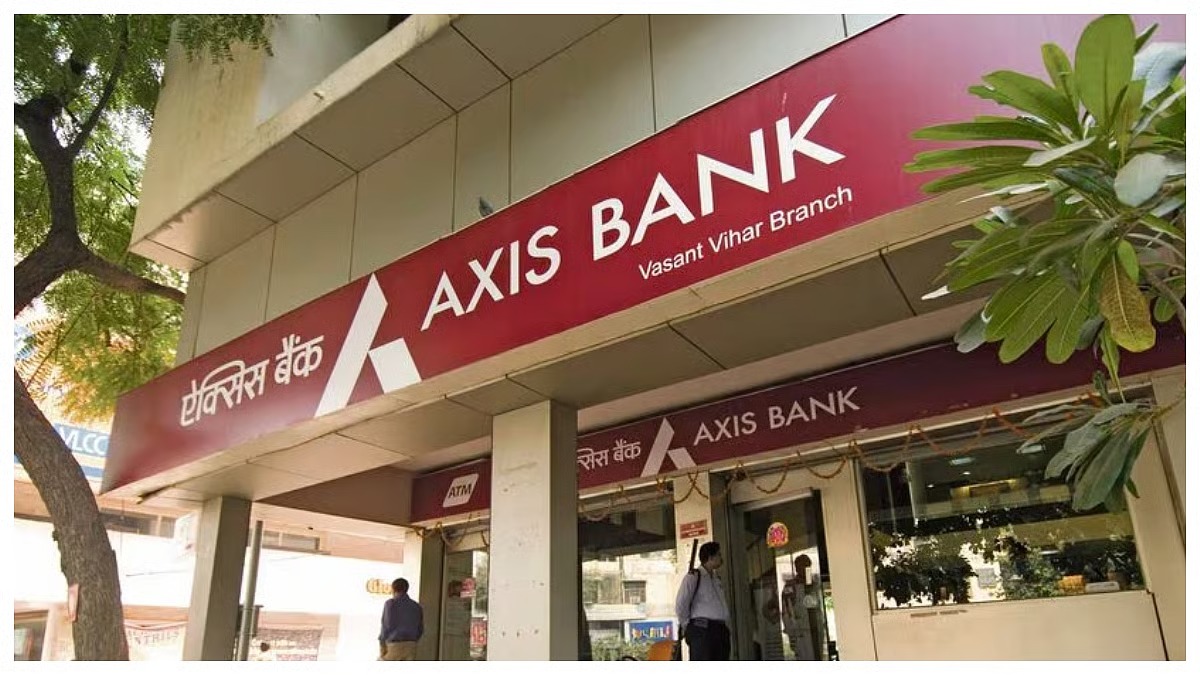
Axis Bank Limited reported a 23% rise in net profit to ₹7,114 crore for Q1 FY27. Despite these gains, the bank’s share price declined by nearly 6% on July 20, 2026, amid sector-wide banking volatility and concerns regarding margin compression.
MUMBAI — Shares of Axis Bank Limited faced significant downward pressure on Monday, July 20, 2026, falling approximately 6% in intraday trade despite the private sector lender reporting a robust 23% year-on-year increase in standalone net profit for the quarter ended June 30, 2026.
The decline in Axis Bank’s stock price mirrored a broader retreat in the NIFTY Bank index, which slipped nearly 2% during early morning trade. While the bank’s profit growth was notable, market participants responded cautiously to the quarterly performance, leading to a dip from the previous close of ₹1,328.50 to an intraday low of ₹1,249.10 on the National Stock Exchange (NSE).
Quarterly Performance and Market Reaction
Axis Bank reported a standalone net profit of ₹7,114 crore for the first quarter of the 2026–2027 fiscal year. Despite this 23% year-on-year growth, the bank’s net interest income (NII) saw a more modest rise of 8%, accompanied by a compression in margins, which analysts suggest may have contributed to the cautious investor sentiment.
The market’s reaction highlights the volatility currently impacting India’s major private lenders. As of July 20, 2026, the NIFTY Bank index was led lower by heavyweight lenders, including Axis Bank and HDFC Bank, with both stocks tumbling over 4% post-earnings announcement.
Regulatory Filings: Issue Proceeds and Capital
In addition to its financial results, Axis Bank continues to manage its ongoing capital requirements. On July 7, 2026, the bank announced the pricing of Additional Tier 1 (AT 1) Notes under its Global Medium Term Notes (GMTN) programme, aiming to raise U.S.$100 million in a new tranche to consolidate its existing series.
The bank maintains strict adherence to regulatory disclosure norms regarding the utilization of issue proceeds. While specific deviation statements are often tied to periodic filings, the bank regularly submits documentation to the stock exchanges to ensure transparency regarding the deployment of funds raised through such financial instruments.
Why It Matters
For investors and stakeholders, the recent price movement reflects the high expectations placed on India’s leading private banks. While Axis Bank demonstrated strong profit growth, the compression in margins and broader market headwinds have tempered enthusiasm. The bank's ability to maintain stable operations while navigating the evolving interest rate environment remains a key factor for long-term growth and investor confidence in the Indian banking sector.
Key Facts at a Glance
Net Profit: Reported at ₹7,114 crore, a 23% increase year-on-year.
Stock Performance: Axis Bank shares fell approximately 6% on July 20, 2026.
Net Interest Income (NII): Increased by 8% for the quarter.
Capital Activity: Successfully priced a U.S.$100 million tranche of AT 1 Notes on July 7, 2026.
FAQ
What triggered the decline in Axis Bank's share price?
Despite a 23% year-on-year profit growth, investors reacted to margin compression and broader banking sector volatility, leading to a price drop on the NSE.
How did Axis Bank perform in Q1 FY27?
The bank reported a standalone net profit of ₹7,114 crore and an 8% increase in net interest income.
Has the bank provided updates on its issue proceeds?
Yes, Axis Bank routinely files disclosures regarding the utilization of issue proceeds and capital raises, such as its recent AT 1 Note issuance, to comply with exchange regulations.
Source: