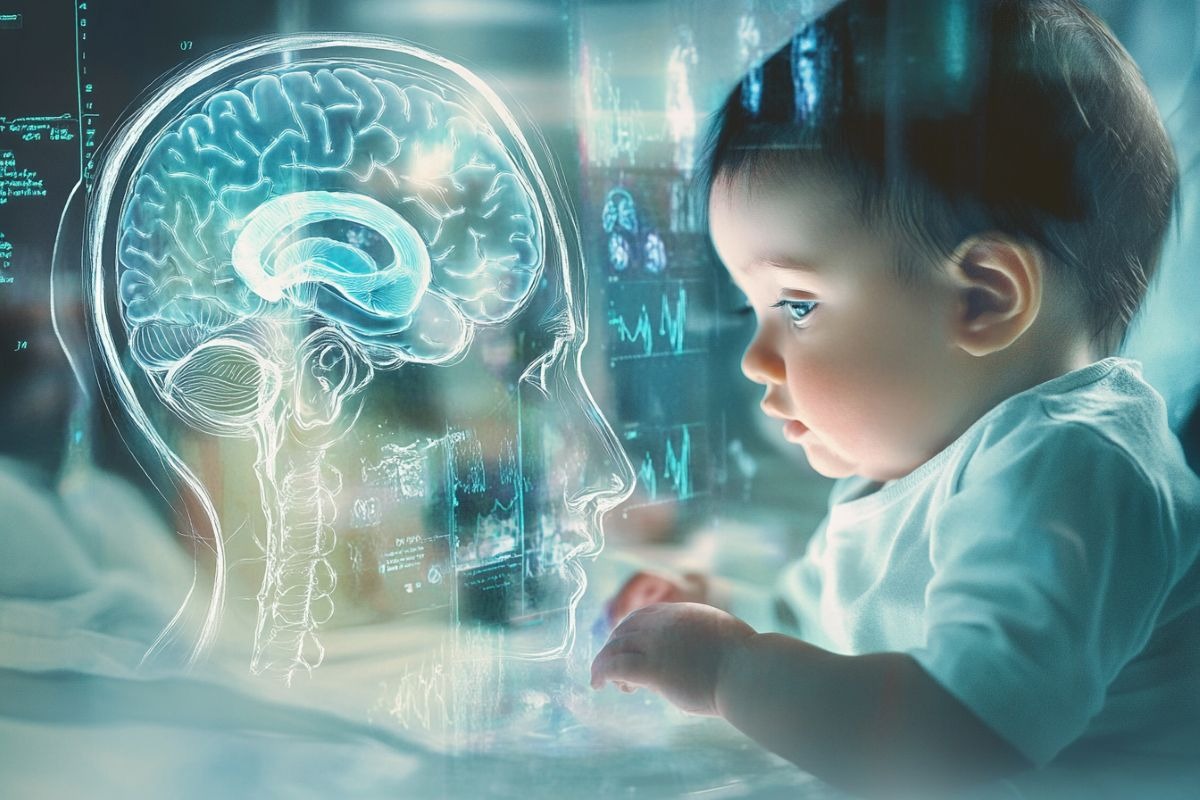
Scientific research demonstrates that while infants begin forming basic memories within their first year of life, true lifelong autobiographical memories typically begin forming between ages 3 and 3.5. The neurological phenomenon known as childhood amnesia prevents earlier infant experiences from being retrieved long-term due to ongoing brain maturation.
WASHINGTON — Developmental psychologists and neuroscientists confirm that while human infants begin forming basic implicit memories within months of birth, children typically begin forming lasting, explicit autobiographical memories between 3 and 3.5 years of age. Research published by cognitive research institutions shows that although toddlers routinely remember people, routines, and places, the neurological mechanisms required to convert early experiences into permanent lifelong memories do not fully stabilize until early childhood.
The findings clarify the long-standing mystery of "childhood amnesia" the widespread inability of adults to recall personal events from the first two to three years of life. As neuroscientists map the maturation of memory systems within the brain, the research provides clear insights into how language, emotional significance, and brain structure interact to form permanent memories.
The Neurological Engine: Why Early Infant Memories Fade
Contrary to historical misconceptions that infants cannot store information, research demonstrates that babies possess robust short-term and procedural memory systems. Infants as young as two to six months can recognize familiar faces, remember cause-and-effect actions, and retain learned behaviors over several days or weeks. However, these early recollections are generally temporary.
Neuroscientists attribute childhood amnesia primarily to the development of two critical brain regions:
The Hippocampus: Located in the temporal lobe, the hippocampus is responsible for encoding and consolidating episodic (event-based) memories. In infants and toddlers, the rapid growth of new neurons (neurogenesis) in the hippocampus continually overwrites older neural connections, making early memories inaccessible later in life.
The Prefrontal Cortex: Responsible for higher-level cognitive processing, self-awareness, and contextual framing, the prefrontal cortex matures gradually throughout childhood. Without a fully integrated prefrontal cortex, young children struggle to organize memories into a cohesive personal timeline.
Language and the "Cognitive Self" as Memory Catalysts
Alongside brain development, cognitive psychologists highlight language acquisition as a pivotal milestone for forming permanent memories. Before children learn to speak, memories are stored visually, auditorily, or emotionally without narrative structure. Once children acquire vocabulary around age 2 to 3, they begin translating experiences into verbal stories.
Research indicates that a child's ability to talk about an event while it is happening significantly increases the likelihood that the memory will survive into adulthood. Furthermore, developing a "sense of self" understanding oneself as an individual distinct from others allows children to tag memories as personal history, forming the baseline for lifelong autobiographical recall.
Emotional Significance and Memory Retrieval
Not every experience from early childhood has an equal chance of becoming a permanent memory. Studies show that emotional weight acts as a catalyst for memory consolidation. Significant life milestones such as the birth of a younger sibling, moving to a new house, or experiencing a minor injury are far more likely to be retained than routine daily activities.
Psychologists also note that family conversations play a substantial role. When parents discuss past events with children using rich, descriptive detail a practice known as "elaborative narrative style" children develop stronger memory retrieval skills and retain earlier memories longer into adulthood.
Official Source Statements and Scientific Disclosures
Findings on memory retention, neurological maturation, and developmental psychology are published across peer-reviewed neuroscience journals and developmental health institutions.
According to officials: "Scientific evidence shows that while infants continuously encode information from birth, the neural circuitry required to consolidate and retrieve long-term autobiographical memories typically stabilizes between ages 3 and 3.5. Childhood amnesia is not a failure of learning, but a reflection of dynamic brain growth and cognitive reorganization during early human development."
Why It Matters
Understanding when children form lasting memories provides valuable guidance for parents, educators, and pediatric health professionals. While children may not explicitly remember specific events from their first two years, early positive interactions, emotional bonding, and enriching environments fundamentally shape brain development and emotional well-being. Recognizing that true autobiographical memory begins around age 3 highlights the importance of verbal engagement, supportive routines, and shared storytelling during early childhood development.
Key Facts at a Glance
Average Age of Onset: Lifelong autobiographical memories typically begin forming between 3 and 3.5 years of age.
Childhood Amnesia: The phenomenon where adults cannot retrieve personal memories from before age 2 to 3 due to brain maturation.
Infant Memory: Babies form basic, temporary implicit memories (recognizing faces and routines) within months of birth.
Core Drivers: Maturation of the hippocampus, language development, and emotional significance dictate memory survival.
Parental Role: Shared family conversations and descriptive storytelling help reinforce early long-term recall.
Frequently Asked Questions (FAQ)
At what age do children start forming lifelong memories?
Scientific studies indicate that most people's earliest lasting memories date back to between 3 and 3.5 years of age.
Why can't adults remember events from when they were babies?
This is known as childhood amnesia. It occurs because the brain regions responsible for storing explicit memories—specifically the hippocampus and prefrontal cortex—are still developing and reorganizing rapidly during infancy.
Can babies form any memories at all?
Yes. Infants form short-term and procedural memories early on, allowing them to recognize familiar voices, learn motor tasks, and identify caregivers. However, these memories are rarely retrievable in adulthood.
How does language affect childhood memory?
Language provides a narrative framework that helps children organize, store, and retrieve memories verbally. Events experienced after a child learns to speak about them are much more likely to be retained long-term.
Source: Research reports and publications released by the National Institutes of Health (NIH), the American Psychological Association (APA), and peer-reviewed studies indexed in PubMed Central.