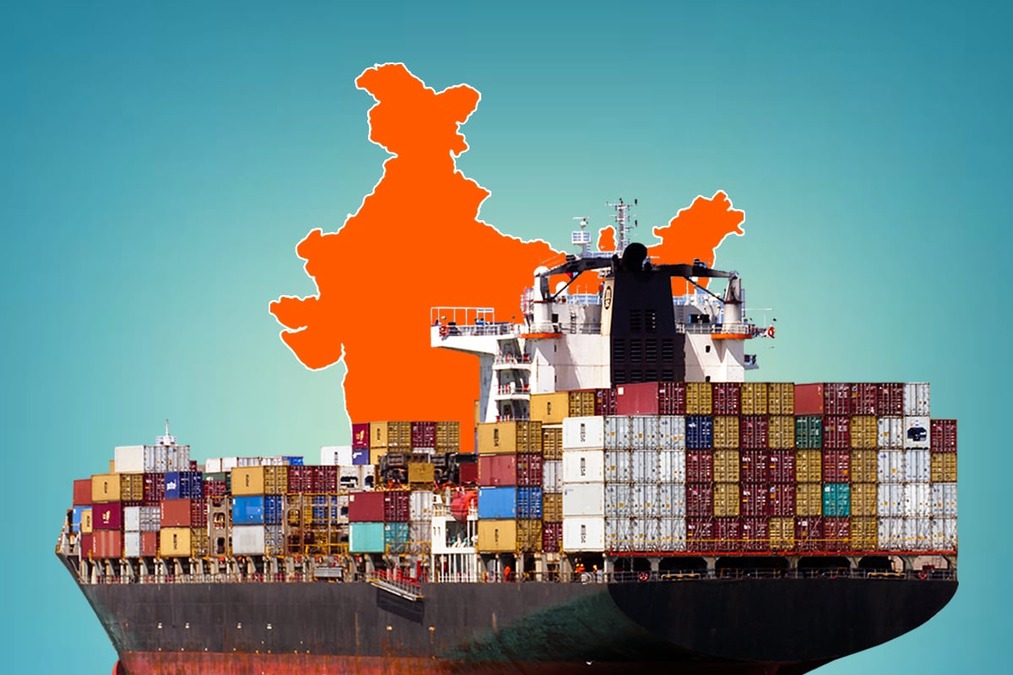
India's merchandise trade deficit shrank to $26.86 billion in August, performing better than the anticipated $32 billion poll estimate. Driven by resilient exports and bolstered by a strong $17.45 billion services trade surplus, the latest external trade metrics provide vital support for macroeconomic stability and currency resilience.
India's merchandise trade deficit narrowed to $26.86 billion in August, cushioned by a robust services trade surplus estimated at $17.45 billion.
In New Delhi, official foreign trade figures released for August 2026 revealed that India's merchandise trade deficit contracted to $26.86 billion, coming in narrower than market poll expectations which had projected a deficit closer to $32 billion. According to Reuters calculations based on latest trade data, the deficit reduction was supported by healthy expansion in merchandise exports alongside a steady services trade surplus of $17.45 billion. This dual-track performance offers a reassuring buffer for the country's current account balance amid evolving global macroeconomic headwinds and fluctuating commodity imports.
Analyzing Merchandise Trade and Export Dynamics
According to trade statistics and calculations processed from official records, the narrower merchandise deficit reflects resilient outbound shipments in key manufacturing and engineering sectors. While domestic demand for energy and electronics continued to drive robust import requirements, export growth outpaced general market forecasts.
Economic analysts note that while physical goods trade consistently runs at a deficit, India's strong performance in net services exports—spanning IT software, business process outsourcing, and global capability centers—plays a vital role in counterbalancing the overall current account shortfall. The latest figures underscore the stabilizing impact of the services sector on the country's broader external trade position.
"According to officials and economic analysts, the latest trade figures demonstrate effective export resilience and a continued cushioning effect from buoyant services trade earnings."
Why It Matters
For macroeconomic stability, currency markets, and foreign investors, a narrower-than-expected merchandise trade deficit alleviates pressure on the Indian rupee and supports foreign exchange reserves. For domestic policymakers, the strong services surplus reinforces the strategic importance of high-value technology and professional services exports in maintaining external sector equilibrium.
Key Facts at a Glance
Merchandise Deficit: $26.86 billion for August 2026 (beating poll estimates of $32 billion).
Services Trade Surplus: Estimated at $17.45 billion for the month.
Comparative Outlook: Deficit narrowed compared to prior historical trends and analyst projections.
Primary Oversight: Ministry of Commerce and Industry.
Frequently Asked Questions
What was India's merchandise trade deficit in August 2026?
According to Reuters calculations, India's merchandise trade deficit stood at $26.86 billion.
How did the trade deficit compare to market expectations?
The recorded deficit of $26.86 billion was narrower than the median market poll expectations of around $32 billion.
What was the status of India's services trade surplus?
India maintained a strong services trade surplus calculated at $17.45 billion for August.
Why is the services surplus significant for India's economy?
The robust services surplus helps absorb a substantial portion of the merchandise trade deficit, supporting the country's overall current account balance.
Source: Ministry of Commerce and Industry, Reserve Bank of India (RBI), Press Information Bureau (PIB)