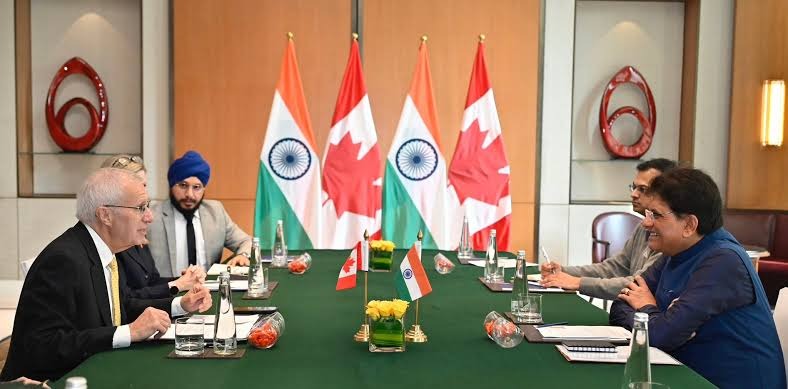
India's trade ministry expects to finalize key economic agreements with Canada and the European Union by the end of 2026, while the New Zealand FTA operationalizes in October. Additionally, upcoming ministerial talks with the USTR aim to reinforce trade corridors with the United States.
India anticipates concluding comprehensive trade deals with Canada and the European Union by the end of 2026, while pushing forward key bilateral dialogues.
In New Delhi, senior trade officials announced on September 15, 2026, that the government is on track to finalize major international commerce agreements with Western partners before the year concludes. According to updates provided by the Ministry of Commerce and Industry, administrative teams are aggressively fast-tracking negotiations with Canada and the European Union to diversify export avenues. Meanwhile, preparations are underway for Commerce and Industry Minister Piyush Goyal to engage with the United States Trade Representative (USTR) during upcoming multilateral sessions to address strategic economic frameworks and market access pathways.
Advancing Global Trade Pacts and Bilateral Pipelines
According to policy outlines reviewed from the Director General of Foreign Trade (DGFT), India's international commercial roadmap focuses heavily on finalizing the Canada Comprehensive Economic Partnership Agreement (CEPA) and operationalizing the newly minted pacts. Government sources confirmed that the landmark Free Trade Agreement with New Zealand is slated to officially take effect in October 2026, granting Indian manufacturers wide-ranging duty-free access across diverse agricultural, engineering, and technological sectors.
Concurrently, trade ministry delegates are preparing for high-level ministerial discussions with the United States Trade Representative (USTR) on the sidelines of the G20 meetings in the United States later this month. While formal bilateral schedules remain under final review, officials emphasize that these talks aim to resolve long-standing tariff concerns and expand cross-border investment flows between the two democracies.
"According to officials and trade ministry briefs, structured negotiations with global economies are progressing rapidly, with multiple bilateral agreements expected to reach full implementation within the current fiscal cycle."
Why It Matters
For Indian exporters, manufacturers, and service providers, the acceleration of free trade agreements with major Western markets unlocks preferential tariff lines, reduces compliance barriers, and secures long-term supply chain predictability. For domestic policymakers, these agreements reinforce macroeconomic stability by diversifying export destinations and attracting foreign institutional investments into core industrial corridors.
Key Facts at a Glance
Canada Trade Deal: Expected to reach full conclusion before the end of 2026.
New Zealand FTA: Scheduled to be operationalized in October 2026.
EU Agreement: Targeted for formal finalization and signing by late 2026.
US Engagement: Ministerial dialogue with the USTR planned alongside upcoming G20 events.
Frequently Asked Questions
When is India expected to conclude its trade deal with Canada?
According to trade ministry updates, India and Canada are committed to finalizing their comprehensive trade agreement before the end of 2026.
When will the India-New Zealand Free Trade Agreement come into force?
Government sources indicate that the trade pact with New Zealand is scheduled to become operational in October 2026.
What are the primary goals of the upcoming meetings with the USTR?
Ministerial talks with the United States Trade Representative focus on mapping out the future path for bilateral trade, resolving market access barriers, and bolstering economic ties.
Where can stakeholders track official updates on India's foreign trade agreements?
Official notifications, tariff schedules, and trade pact texts are published regularly by the Ministry of Commerce and Industry and the Directorate General of Foreign Trade.
Source: Ministry of Commerce and Industry, Press Information Bureau (PIB), Director General of Foreign Trade (DGFT)