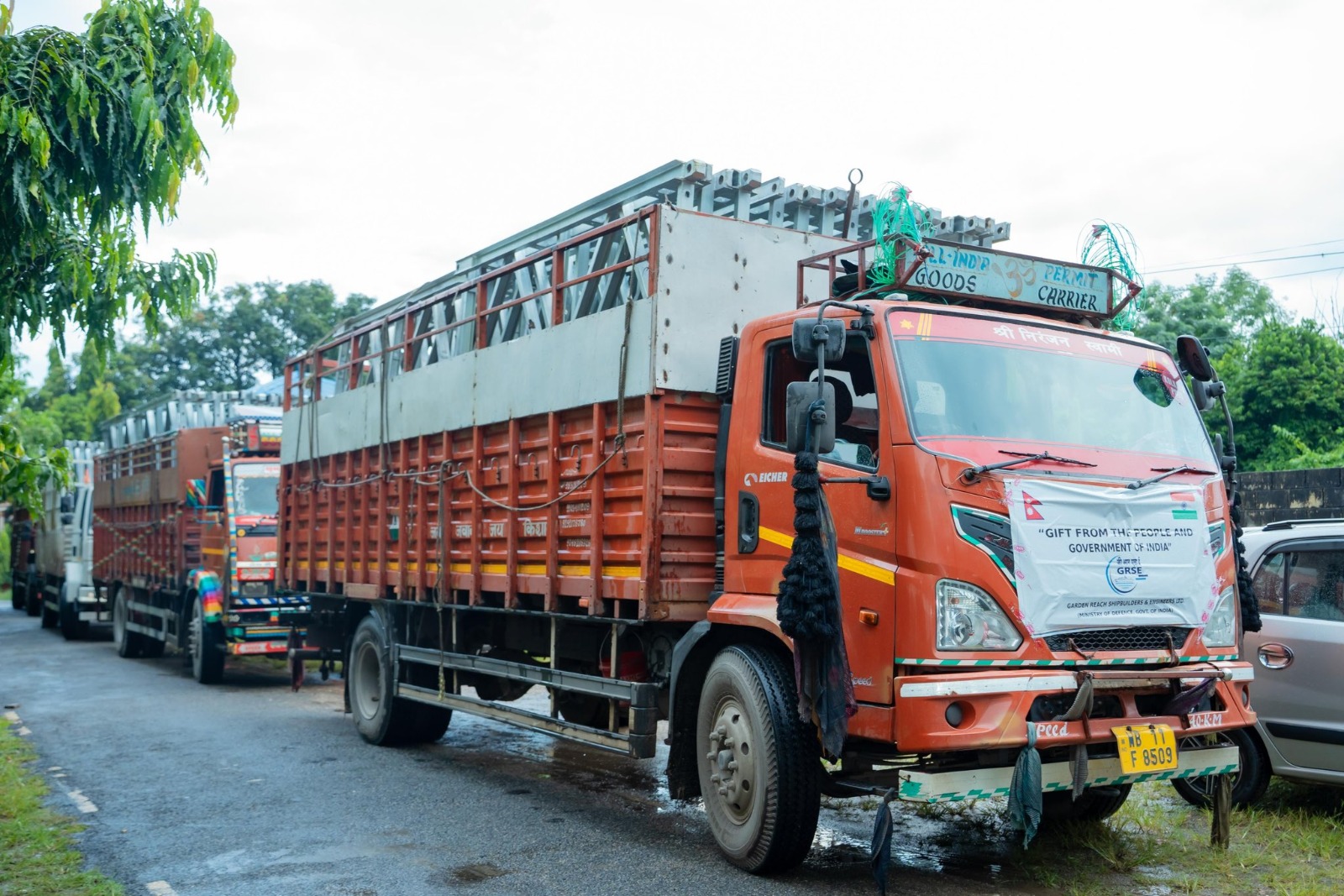
India handed over components for three modular Bailey bridges to Nepal’s Road Division in Hetauda. The 70-meter bridge span is targeted for the flood-hit Betrawati area in Nuwakot, aiming to re-establish critical transport routes severed by devastating Bhotekoshi-Trishuli flash floods that destroyed dozens of local crossings.
Restoring Transport Networks Across Devastated Corridors
As neighboring Nepal grapples with the aftermath of catastrophic flash floods, the Indian government has delivered the first consignment of components for three modular Bailey bridges to help re-establish vital transit routes. Handed over to Nepal’s Road Division Office in Hetauda, the initial shipment features structural parts for a 70-meter bridge intended for immediate deployment in the hard-hit Betrawati area of the Nuwakot district.
The emergency infrastructure support follows a series of destructive flash floods originating from glacial events near the border, which surged through the Bhotekoshi and Trishuli river systems. The disaster washed away numerous motorable bridges and footbridges across districts including Nuwakot and Rasuwa, completely isolating communities and obstructing heavy relief distribution. Because local stockpiles lacked spans long enough to bridge the wide gaps carved out by the rushing waters, Kathmandu appealed to regional partners for specialized, longer-span modular systems.
Impact on Relief Operations and Regional Commerce
The delivery of the prefabricated steel bridges carries immediate practical implications for emergency responders, commercial freight operators, displaced citizens, and regional supply chains. With road networks fractured, the rapid assembly of these temporary crossings allows humanitarian aid, heavy machinery, and medical teams to access cut-off settlements. Furthermore, re-establishing these key transport arteries will revitalize commercial movement and facilitate long-term reconstruction efforts across northern trade corridors.
Official Sources Section
According to official announcements and statements released by the Embassy of India in Kathmandu and regional administrative bodies, the handover ceremony took place in Hetauda with local parliamentary and municipal representatives in attendance.
"According to officials, the delivery of the specialized bridge components marks a critical milestone in rebuilding infrastructure and restoring normal movement across flood-affected corridors in close coordination with local authorities."
Why It Matters
Reopening connectivity in disaster-stricken zones prevents prolonged humanitarian crises and restores economic vitality. Prefabricated Bailey bridges provide a reliable, rapid-deployment solution while permanent civil engineering projects are planned and executed, ensuring isolated populations regain access to markets, schools, and medical facilities.
Key Facts at a Glance
Emergency Deployment: India provided structural components for three modular Bailey bridges to support flood recovery in Nepal.
Initial Consignment: Parts for a 70-meter bridge span were formally handed over at the Road Division Office in Hetauda.
Target Location: The primary installation is designated for the Betrawati area in the Nuwakot district.
Underlying Disaster: Severe flash floods along the Bhotekoshi-Trishuli river corridors destroyed numerous bridges and severed regional transport links.
Frequently Asked Questions
What are Bailey bridges and why are they being used in Nepal?
Bailey bridges are prefabricated, modular steel structures that can be assembled quickly without heavy machinery, making them ideal for rapidly restoring transport links after floods destroy permanent bridges.
Where is the first bridge sent by India being deployed?
The initial 70-meter span components delivered to Hetauda are slated for installation in the flood-hit Betrawati area of Nuwakot district.
Why did Nepal require external assistance for these bridges?
The flash floods washed out wide river crossings exceeding the length of standard short spans available in local domestic inventories, requiring specialized long-span imports.
Where can citizens find updates regarding ongoing infrastructure restoration?
Official updates and progress reports are published through diplomatic briefings by the Embassy of India in Kathmandu and regional disaster management portals.
Source: Embassy of India in Kathmandu, Ministry of External Affairs (MEA), The Kathmandu Post