JBM Auto Limited registered the sale of 157 electric buses in May 2026, securing a 49 percent national market share. The achievement, supported by the integration of regional data into the Vahan database, solidifies the automaker's market leadership as it executes an order book exceeding 10,000 zero-emission public vehicles.
NEW DELHI: In a major development for sustainable mass transit, Indian automotive manufacturer JBM Auto Limited officially recorded the sale and registration of 157 electric buses during May 2026. Data localized through the central government's transportation logging infrastructure reveals that the company secured a commanding 49 percent market share in the electric bus segment for the month. This milestone reinforces the organization's industrial position following an expansive fiscal year and comes amidst accelerated state-level transitions toward fully electrified public utility grids.
Market Leadership and Platform Inclusions Drive High Volumes
The registration of 157 electric buses on the centralized transport portal represents a sharp month-on-month trajectory for JBM Auto, whose monthly segment share climbed significantly from 33 percent reported in April. Industry analysts noted that the sharp rise in reported volumes is partially tied to a structural update on the government’s tracking dashboard.
Beginning in May 2026, state transit registries from Telangana were fully integrated into the national data network, providing a comprehensive and clear view of national fleet deployment metrics. JBM Auto’s performance was supported by the execution of a multi-state order backlog, targeting high-capacity public urban corridors and private logistical hubs.
Manufacturing Capacity and Environmental Impact Performance
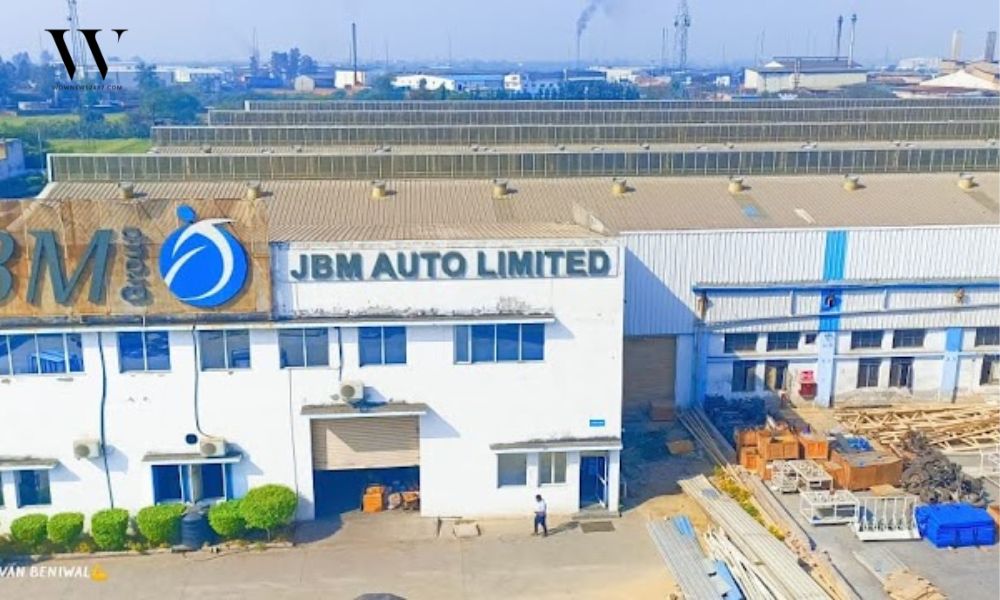
The accelerating vehicle rollouts are backed by the company's dedicated infrastructure footprint. JBM Auto operates the world's largest integrated electric bus manufacturing facility outside of China, located in the National Capital Region (NCR), which maintains an active annual production threshold of up to 20,000 buses.
According to consolidated fleet operations data, the manufacturer's total deployed electric vehicles have collectively surpassed 400 million electric kilometers on public roads. This operational runtime has accommodated more than one billion commuters while mitigating more than one billion kilograms of carbon dioxide ($CO_2$) emissions to date. The modular structural design of the buses utilizes lightweight, high-strength platforms engineered to optimize battery efficiency across diverse geographical topographies.
Impact on Municipalities, Commuters, and Institutional Investors
For urban citizens and daily commuters, the introduction of these clean energy platforms ensures reduced local noise pollution and a substantial contraction in breathable particulate matter along major high-density transit routes.
For business investors and public transport undertakings (STUs), the metrics signify a stabilization of fleet uptime and predictable operational cost structures compared to volatile diesel assets. With a robust forward order book exceeding 10,000 electric buses, the company remains structurally aligned with India’s long-term environmental target of achieving close to 60 percent EV penetration across national bus fleets by the year 2030.
Official Sources Section
The delivery and registration data used in this report are formally validated through the official digital registry updates monitored via the Ministry of Road Transport and Highways (MoRTH) Vahan Dashboard. Production parameters and long-term order frameworks correspond with regulatory disclosures submitted directly to the national equity market desks.
Quote Section
"According to officials and corporate executives, the company's continuous segment expansion highlights its capability to handle large-scale municipal deployment mandates. Nishant Arya, Vice Chairman and Managing Director of JBM Auto, stated that the ongoing growth reflects a clear operational focus on decarbonizing public transport networks while aligning with global safety and efficiency benchmarks in sustainable mobility solutions."
Why It Matters
The surge in high-capacity electric bus adoptions carries practical implications for structural urban planning and municipal budget management. By substituting fossil-fuel-reliant public machinery with localized electric powertrains, municipalities can significantly reduce long-term maintenance overheads. Furthermore, the reliance on high-strength local manufacturing strengthens the domestic industrial supply chain, safeguarding transit systems against import shocks related to foreign energy dependencies.
Key Facts at a Glance
Unprecedented Market Share: JBM Auto captured a dominant 49 percent of India's electric bus market during May 2026.
Monthly Registrations: A total of 157 electric buses were officially logged on the government’s tracking platform.
Data Integration: Fleet data tracking was boosted by the incorporation of Telangana state registry files into the national database.
Massive Order Backlog: The company holds a forward operational pipeline consisting of more than 10,000 electric bus orders.
FAQ Section
What caused the sharp increase in JBM Auto’s market share in May 2026?
The climb to a 49 percent market share was driven by strong order execution and was structurally highlighted by the inclusion of regional transport data from Telangana into the national tracking dashboard.
Where are these electric buses manufactured?
The zero-emission transit vehicles are built at JBM Auto's dedicated facility located in the National Capital Region (NCR), which stands as the largest integrated electric bus plant outside China.
What are the environmental advantages reported by the company?
To date, the active deployment of JBM electric vehicles has successfully eliminated more than one billion kilograms of $CO2$ emissions while covering over 400 million electric kilometers.
Sources: Ministry of Road Transport and Highways (MoRTH) Vahan Dashboard, Official Market Filings from JBM Auto Limited Investor Relations Desk, Industry Performance Reports.