Belarusian First Deputy Foreign Minister Sergey Lukashevich met with Indian Ambassador Ashok Kumar in Minsk to advance a medium-term cooperation roadmap. The high-level dialogue finalized structural preparations for the 12th Intergovernmental Commission, focusing on expanding trade, technology, manufacturing partnerships, and financial synchronization under the BRICS framework.
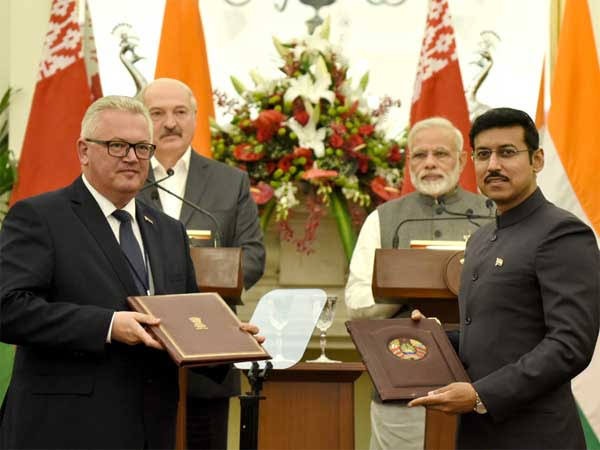
MINSK — The First Deputy Minister of Foreign Affairs of the Republic of Belarus, Sergey Lukashevich, held a high-level diplomatic meeting with the Ambassador Extraordinary and Plenipotentiary of the Republic of India to Belarus, Ashok Kumar, on July 7, 2026. Convened at the Ministry of Foreign Affairs headquarters in Minsk, the bilateral session focused on reviewing the schedule for upcoming high-level political contacts and accelerating the framework for a new medium-term cooperation roadmap between the two nations.
The official encounter serves as a critical stepping stone in deepening trade, industrial, and technology connections between Eastern Europe and South Asia under India's current 2026 BRICS presidency. Both diplomats prioritized final logistical and legal preparations for the upcoming 12th session of the Belarusian-Indian Intergovernmental Commission. This specialized intergovernmental forum is mandated to expand joint economic initiatives, remove non-tariff barriers, and drive institutional partnerships across manufacturing, science, healthcare, and cultural exchanges.
Expanding the Legal Framework and Economic Roadmap
According to official briefings released by the Press Service of the Ministry of Foreign Affairs of Belarus, a primary focus of the diplomatic assembly was the structural expansion of the legal agreements underpinning bilateral relations. The upcoming medium-term cooperation roadmap is being designed to offer a predictable, multi-year framework for corporate and state-backed entities navigating import-export regulations between Minsk and New Delhi.
The text of the bilateral agenda emphasizes structural integration across several core industrial domains:
Manufacturing and Industry: Modernizing engineering supply lines and joint vehicle assembly capabilities.
Science and Technology: Facilitating institutional data exchanges, software deployment, and digital security architectures.
Agriculture and Fertilizers: Safeguarding potash and fertilizer supply chains to preserve regional food security.
Healthcare and Pharmaceuticals: Streamlining regulatory approvals for medical technology and essential pharmaceutical distribution.
The synchronization of these portfolios directly complements previous high-level ministerial interactions earlier in the 2026 fiscal cycle. Notably, Lukashevich's recent participation in the BRICS Foreign Ministers' Meeting in New Delhi laid the groundwork for independent cross-border payment mechanisms and advanced Belarus's entry process into the New Development Bank (NDB).
Geopolitical Alignment and BRICS Integration Context
The strategic dialogue between Minsk and New Delhi arrives amid a broader reconfiguration of Eurasian commercial corridors. Belarus has consistently expressed its intent to align its local manufacturing sector with fast-growing Asian economies, utilizing India’s prominent position within the BRICS framework to insulate its domestic market from unilateral western coercive economic policies.
Data from the Ministry of Commerce and Industry of India highlights that baseline trade volumes between the two countries possess substantial headroom for growth, with both leadership groups aiming to clear a near-term target of doubling mutual trade turnover. Direct aviation infrastructure, such as the regular flight routes operated by Belavia between Minsk and New Delhi, continues to support this economic momentum by facilitating seamless business, tourism, and educational travel.
Official Sources Section
The diplomatic positions, regulatory goals, and structural timelines detailed in this report are sourced directly from official press communiqués issued by the Ministry of Foreign Affairs of the Republic of Belarus. Supplementary geopolitical variables and trade data points were validated using official tracking records provided by the Ministry of External Affairs of India and public archival notifications from the Belarusian state news agency, BelTA.
Quote Section
"According to officials from the Belarusian Ministry of Foreign Affairs press service, particular attention during the session was dedicated to establishing a resilient legal framework for economic relations. The upcoming intergovernmental commission in Minsk is slated to formalize these specific industrial targets."
Why It Matters
For private sector businesses and international trade investors, the formalization of a medium-term cooperation roadmap yields structural transparency, lowering compliance risks and clarifying tariff lines across cross-border joint ventures. For ordinary citizens and agricultural consumers, stable Belarusian-Indian ties protect the logistical continuity of vital agricultural inputs like potash fertilizers and specialized machinery, helping stabilize food production costs. Furthermore, closer alignment within the expanding BRICS architecture accelerates the development of alternative payment networks, offering businesses secure financial routing options.
Key Facts at a Glance
Bilateral Convening: First Deputy Foreign Minister Sergey Lukashevich hosted Indian Ambassador Ashok Kumar in Minsk on July 7, 2026.
Core Institutional Goal: Accelerating final administrative drafts for a comprehensive, medium-term cooperation roadmap.
Upcoming Summit: Finalizing organizational logistics for the 12th session of the Belarus-India Intergovernmental Commission.
Multilateral Synergy: Leverages diplomatic ties built during India’s 2026 BRICS presidency and the recent BRICS ministerial meetings in New Delhi.
FAQ Section
What is the primary purpose of the meeting between Minister Lukashevich and Ambassador Kumar?
The meeting was held to review high-level bilateral contact schedules, expand the legal framework of Belarusian-Indian relations, and draft a medium-term economic cooperation roadmap.
What industries are covered under the Belarus-India Intergovernmental Commission?
The commission's 12th upcoming session will specifically cover joint development in economy, trade, manufacturing, industry, science, technology, and culture.
How does Belarus's interaction with BRICS influence its relations with India?
Belarus is leveraging India's active BRICS leadership to integrate into emerging global trade systems, advance its application to join the New Development Bank, and adopt independent cross-border payment platforms.
Where will the next major intergovernmental meeting take place?
Per previous bilateral consultations, the 12th session of the intergovernmental economic commission is scheduled to be hosted in the capital city of Minsk.
Source: