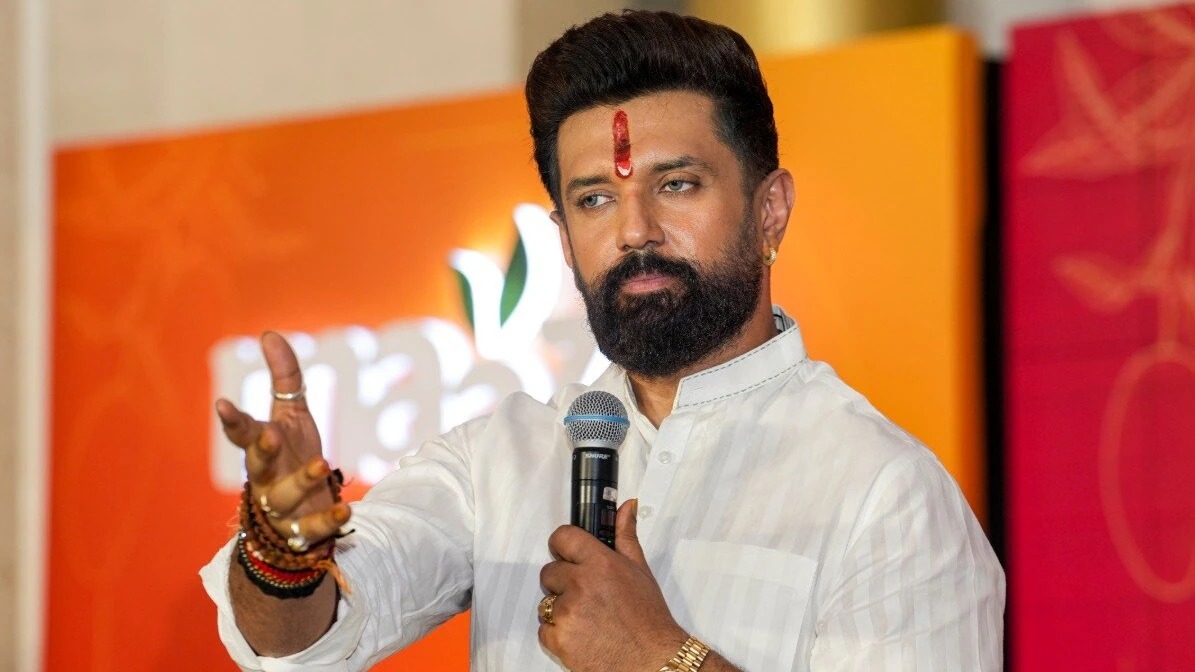
Union Minister Chirag Paswan firmly defended the reservation system, stating it is a fundamental constitutional right rather than charity. Responding to anti-quota protests in New Delhi, Paswan emphasized that quotas cannot be abolished on demand and remain crucial for empowering communities that have faced historical discrimination.
Union Minister Chirag Paswan strongly defended the reservation system, asserting that it is a fundamental constitutional right rather than charity.
NEW DELHI — Amid ongoing political discussions and recent demonstrations in the national capital, Union Minister and Lok Janshakti Party (Ram Vilas) president Chirag Paswan firmly voiced his support for the country's reservation system. Speaking to reporters, Paswan emphasized that quotas cannot be abolished simply based on external demands. His comments came in response to student-led protests under the banner of the 'Reservation Hatao Andolan' at New Delhi's Jantar Mantar, which called for an end to the existing quota framework.
Defense of Social Inclusion and Constitutional Intent
Paswan stressed that reservation was embedded into the Constitution of India by Dr. B.R. Ambedkar specifically to bring marginalized communities—including Scheduled Castes (SC) and Scheduled Tribes (ST)—into the mainstream. He noted that the provisions are designed to address generations of historical discrimination rather than serving as arbitrary concessions or charity.
Highlighting the evolution of these policies, Paswan pointed out that the scope of reservation has gradually expanded over decades to incorporate provisions for economically weaker sections (EWS) from upper-caste communities. Because these frameworks have been systematically strengthened, he argued that they cannot be abruptly dismantled without deep legislative consideration and broader social dialogue.
Dialogue and Public Engagement
Addressing the ongoing demonstrations at Jantar Mantar, Paswan indicated that the government remains open to constructive discussions once protesters formally and systematically present their concerns. He underlined that open dialogue is essential to addressing misconceptions and ensuring that communities understand the continued relevance of social justice frameworks.
Official Sources Section
Statements regarding the government's stance on quotas and public policy updates were compiled from reports by The Indian Express, The Hindu, and coverage via The Times of India.
"According to officials and public statements made by leaders, reservation remains a vital constitutional instrument aimed at fostering social inclusion and uplifting communities that have faced historical disadvantages."
Why It Matters
The debate over reservation touches upon fundamental aspects of social equity, representation, and public policy in India. Clear stances from key political figures shape national legislative priorities and influence public discourse regarding affirmative action and economic inclusivity.
Key Facts at a Glance
Core Statement: Union Minister Chirag Paswan declared that reservations are a constitutional right, not charity.
Context: The remarks were made in response to demonstrations held under the 'Reservation Hatao Andolan' at Jantar Mantar, New Delhi.
Constitutional Background: Framed as an essential tool established by Dr. B.R. Ambedkar to integrate discriminated communities into the mainstream.
Scope: Includes provisions extended over time to support marginalized groups as well as economically weaker sections (EWS).
FAQ Section
What did Chirag Paswan say about the reservation system?
Chirag Paswan stated that reservations cannot be abolished on demand, emphasizing that they are a constitutional right meant to ensure social justice rather than a form of charity.
What triggered these recent statements?
His remarks followed student-led protests and demonstrations organized under the 'Reservation Hatao Andolan' at Jantar Mantar in New Delhi.
Who is eligible for reservations under the current framework?
The system covers Scheduled Castes (SC), Scheduled Tribes (ST), Other Backward Classes (OBC), and economically weaker sections (EWS) from general categories.
Where can citizens track official legislative updates on reservation policies?
Official policy papers, parliamentary debates, and government releases can be reviewed on the Ministry of Social Justice and Empowerment Official Portal.
Source: The Indian Express, The Hindu, Ministry of Social Justice and Empowerment.