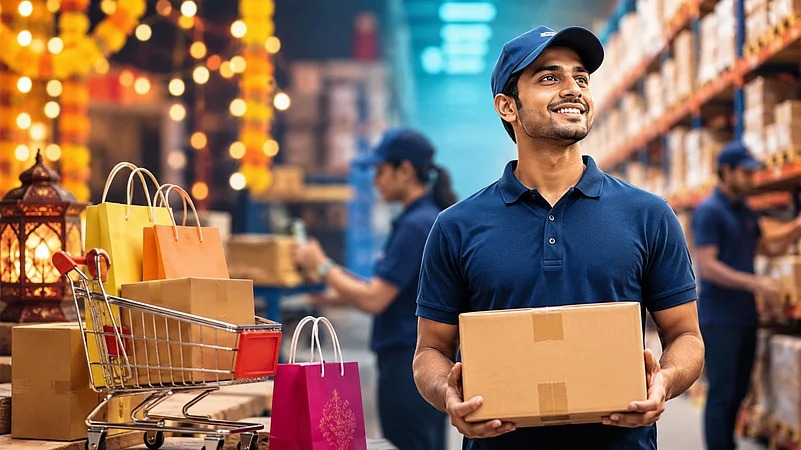
Quick commerce is reshaping India's retail battleground for the festive season, backed by over 5,600 dark stores across 400-plus cities. With FMCG demand projected to rise significantly and hiring up by 20%, rapid-delivery platforms are capturing last-minute gifting, electronics, and gold coin sales through hyper-local fulfillment.
New Delhi — As major metropolitan markets and tier-2 centers across India ramp up preparations for the upcoming festive period, quick commerce platforms are fundamentally altering the country's online shopping battleground. Market analyses from financial trackers and retail associations indicate that quick commerce channels are no longer restricted to last-minute grocery top-ups; instead, they are rapidly absorbing high-value festive demand spanning consumer electronics, gifting categories, gold coins, and traditional sweets. Major players including Blinkit, Zepto, and Swiggy Instamart have collectively scaled their dark store infrastructure past 5,600 units across hundreds of cities to manage the projected volume surge.
Infrastructure Expansion and Micro-Market Planning
According to industry reports and market studies released by sector analysts, the operational strategy for this year's festival cycle relies heavily on micro-market data rather than broad national forecasting.
Dark Store Density: Combined networks of leading rapid-delivery operators now surpass 5,600 dark stores spanning upwards of 400 urban centers, ensuring sub-30-minute delivery capabilities.
SKU-Level Targeting: Platforms are utilizing predictive analytics to stock high-demand items—ranging from festive decor to premium electronics—directly in neighborhood fulfillment hubs ahead of peak dates.
Workforce Upscaling: Labor market indices published by workforce agencies note a 15% to 20% surge in festive-season hiring, with delivery, sorting, and quick-commerce logistics commanding top frontline wages.
The shift allows digital marketplaces to bypass traditional multi-day shipping bottlenecks, capturing consumer spending that traditionally went to neighborhood brick-and-mortar stores.
Competitive Dynamics Across E-Commerce Giants
The rapid delivery model has intensified competition among traditional e-commerce giants and specialized quick-delivery apps. While traditional platforms like Amazon and Flipkart continue to dominate bulk consumer durables and premium smartphone sales through multi-day mega-sales, quick commerce operators are capturing immediate gifting, gourmet hampers, and last-minute ritual requirements. Retail analysts point out that this bifurcation forces brands to split advertising budgets dynamically, weighting digital ad placement heavily toward high-intensity windows such as Dhanteras and the days immediately preceding Diwali.
Impact on Consumers, Brands, and Local Retailers
For urban consumers, the expansion of rapid delivery networks offers unprecedented convenience during high-stress festive weeks, eliminating the need to navigate congested retail districts. For fast-moving consumer goods (FMCG) brands and direct-to-consumer (D2C) manufacturers, maintaining strict inventory parity across multiple quick-delivery applications has become a critical operational requirement to protect market share.
Official Sources Section
Information regarding projected consumer demand growth, dark store expansion metrics, and workforce scaling trends is sourced from market trackers and reports published by Equirus Capital, TeamLease Services, and industry retail databases.
Quote Section
"According to officials," the rapid evolution of hyper-local delivery networks has transformed quick commerce into a core pillar of India's festive retail economy, shifting consumer expectations toward instantaneous fulfillment.
Why It Matters
The dominance of quick commerce during high-demand festive windows redefines supply chain management, forcing brands to adopt decentralized inventory models. Understanding these logistics shifts ensures that manufacturers and retailers can optimize ad spend, prevent stockouts, and capture high-intent consumer traffic efficiently.
Key Facts at a Glance
Infrastructure Milestone: Over 5,600 combined dark stores established across more than 400 cities by major quick commerce operators.
FMCG Demand Outlook: Projected sector growth of 9% to 11% between August and November.
Hiring Trends: Festive frontline workforce demand expected to expand by 15% to 20%.
Core Drivers: Instant delivery of gifting categories, sweets, gold coins, and festive electronics.
Frequently Asked Questions
How is quick commerce changing India's festive shopping season?
Quick commerce platforms are capturing a significant share of festival demand by delivering items like gifting hampers, decor, and electronics within minutes through hyper-local dark stores.
What role do dark stores play in quick commerce growth?
Dark stores act as hyper-local neighborhood fulfillment centers that allow platforms to pre-position inventory close to residential clusters, eliminating traditional shipping delays.
Which categories experience the highest demand spikes on quick commerce during festivals?
Data indicates major spikes in traditional sweets, festive gifting items, gold and silver coins around Dhanteras, and consumer electronics.
Where can stakeholders track retail sector growth and employment data?
Periodic updates and labor market reports are published by financial trackers like Equirus Capital and workforce firms like TeamLease Services.
Source: Equirus Capital, TeamLease Services, Unicommerce