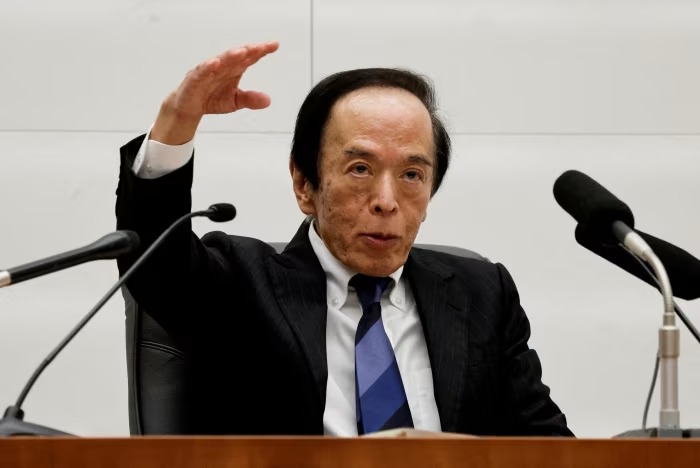
The Bank of Japan announced that Governor Kazuo Ueda has been hospitalised and will miss the June 15–16 policy meeting. Deputy Governor Ryozo Himino will chair the session, while Deputy Governor Shinichi Uchida will lead the post-meeting press conference. Governor Ueda is expected to return for the July meeting.
TOKYO, June 10, 2026 — The Bank of Japan (BOJ) announced today that Governor Kazuo Ueda has been hospitalised and will be absent from the upcoming monetary policy meeting scheduled for June 15–16. The central bank confirmed that Deputy Governor Ryozo Himino will temporarily step in to chair the critical interest rate review, ensuring administrative continuity for the nation's monetary authority.
This unexpected leadership adjustment comes at a sensitive juncture for Japanese monetary policy. Market participants and international currency traders have been monitoring the central bank closely for indications of incremental interest rate adjustments and quantitative tightening measures. The temporary absence of the head policymaker introduces an element of procedural complexity into the mid-year policy assessment.
Interim Leadership Arranged for June Policy Review
According to a series of official statements released by the Bank of Japan, Governor Ueda is expected to remain in the hospital for approximately two weeks. While the central bank did not disclose specific medical details regarding the hospitalisation, it emphasized that the stay is part of a planned recovery timeline. The central bank explicitly stated that Governor Ueda is anticipated to return to full operational duties in time to attend the subsequent monetary policy meeting scheduled for July 30–31.
To manage the immediately upcoming session, the central bank has triggered its statutory contingency protocols. While Deputy Governor Himino assumes responsibilities for chairing the policy discussions on June 15–16, Deputy Governor Shinichi Uchida will take charge of public communications. Deputy Governor Uchida is scheduled to host the traditional, highly scrutinized press conference immediately following the conclusion of the June meeting to explain the board's policy decisions.
Market Impact and Policy Continuity
Institutional investors and macroeconomic analysts expect the temporary institutional arrangement to preserve baseline stability rather than introduce drastic policy shifts. In institutional frameworks like the BOJ, core decisions are reached via a nine-member policy board consensus, reducing dependency on a single individual during short-term absences.
Historically, Japanese debt and currency markets react sharply to unexpected central bank announcements. However, initial financial indicators showed measured responses following today's disclosure, as the clear delegation of authority to Deputy Governors Himino and Uchida mitigated immediate administrative uncertainty. Analysts note that major policy changes, such as modifying sovereign bond-purchasing programs, are more likely to be deferred until Governor Ueda returns to the helm in late July.
Quote Section
"According to officials at the central bank, all institutional protocols have been fully activated to guarantee smooth administrative execution. Organizers stated that Governor Ueda is resting comfortably and that the temporary leadership structure will ensure the policy board operates without disruption during the upcoming two-day session."
Why It Matters
The temporary restructuring of the BOJ leadership panel carries immediate practical implications for global financial systems:
For Currency Traders: Participants in global foreign exchange markets will focus heavily on Deputy Governor Uchida's rhetoric during the post-meeting press conference to gauge whether the interim leadership signals a holding pattern for the Japanese Yen ($¥$).
For Fixed-Income Investors: Sovereign bond markets rely on predictable communication. The explicit confirmation of Governor Ueda’s July return helps anchor medium-term interest rate expectations.
For Commercial Banking Institutions: Domestic lenders can maintain standard operational forecasts knowing that the central bank's voting mechanism remains fully legal and functional under Deputy Governor Himino's temporary chairmanship.
Key Facts at a Glance
Primary Development: Bank of Japan Governor Kazuo Ueda has been hospitalised and will miss the June policy meeting.
Duration of Absence: Governor Ueda is expected to remain hospitalised for approximately two weeks, with a planned return for the July 30–31 policy review.
Interim Chairman: Deputy Governor Ryozo Himino will formally chair the monetary policy sessions on June 15–16.
Media Representative: Deputy Governor Shinichi Uchida will conduct the post-meeting media briefing to relay the board's economic outlook.
Frequently Asked Questions
Can the Bank of Japan alter interest rates without the Governor present?
Yes. The Bank of Japan’s monetary policy decisions are determined by a majority vote among its nine-member policy board. Under the Bank of Japan Act, the designated interim chair holds the authority to preside over meetings and cast votes, maintaining full legal validity.
What is the expected timeline for Governor Ueda's return to office?
The central bank expects Governor Ueda to remain in the hospital for about two weeks. Official announcements indicate he is fully projected to resume his duties and lead the subsequent monetary policy meeting scheduled for July 30–31.
How do markets typically interpret a temporary change in central bank leadership?
Markets generally prefer clear communication. Because the BOJ explicitly outlined which deputy governors will handle specific duties (chairing the meeting vs. handling the press), immediate market panic is minimized, and investors typically anticipate a neutral, steady-state policy outcome.
Source: Bank of Japan (BOJ) Official Portal, Ministry of Finance Japan