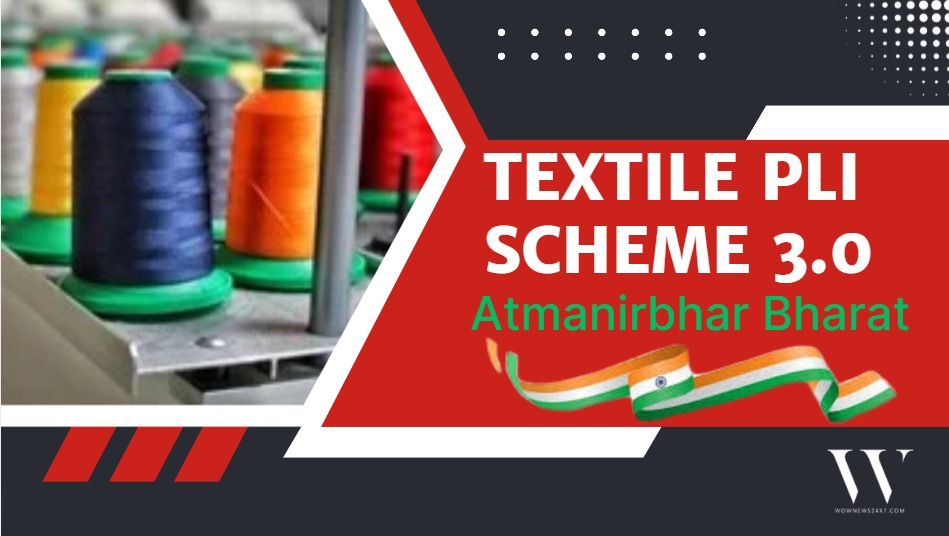
The Indian government has approved 96 companies under Round 3 of its Textile Production Linked Incentive (PLI) scheme, drawing 128.23 billion rupees in committed capital. Targeting man-made fibers and technical textiles, the initiative aims to generate 582.94 billion rupees in turnover while building a globally competitive, job-heavy domestic export ecosystem.
The Government of India has approved 96 companies under Round 3 of the Production Linked Incentive (PLI) Scheme for Textiles, securing a total committed investment of 128.22 billion Indian rupees ($128.23\text{ bln INR}$). The official development, announced by the Ministry of Textiles on Wednesday, marks an aggressive step to transform India into a global hub for synthetic and technical garment manufacturing. With 22 newly cleared applicants added to the third-round pipeline today, the infrastructure push is projected to generate thousands of domestic jobs and dramatically boost export revenue.
Strategic Shift Toward High-Value Textile Manufacturing
According to official data released by the Press Information Bureau (PIB) on June 10, 2026, the newly approved batch of 22 companies under the third round will independently inject 23.39 billion rupees into the domestic market. These operations are expected to produce a turnover of 155.61 billion rupees in notified goods and open up 36,217 direct employment opportunities across the localized value chain.
When aggregated with prior selections, the cumulative footprint of Round 3 spans 96 distinct companies. The broad-based manufacturing expansion targets key sunrise niches where India historically maintains a minimal footprint compared to regional rivals like China and Vietnam. The selected businesses are allocating capital toward Man-Made Fibre (MMF) Apparel, MMF Fabrics, and Technical Textiles, which include specialized protective gear, automotive upholstery, and medical-grade materials.
Economic Impacts on Global Trade and Local Labor Markets
The rollout of production incentives aligns closely with India’s overarching trade policy strategy. Government advisors noted that expanding the supply of premium fabrics will allow domestic exporters to maximize benefits under newly enacted bilateral trade frameworks. Zero-duty access to major European and Western consumer hubs has sharply escalated the demand for locally manufactured garments, filling structural gaps left by shifting regional supply chains.
For the domestic workforce, the localized infrastructure deployment provides critical stability, specifically in labor-intensive industrial clusters across states like Gujarat, Tamil Nadu, Telangana, and Maharashtra. Beyond the 36,217 jobs mandated by the latest batch, the cumulative operational turnover for all 96 selected corporations under this specific segment is projected to top 582.94 billion rupees, offering sustained orders for regional yarn spinners, transport businesses, and packaging distributors.
Quote Section
"According to officials at the Ministry of Textiles, the addition of these companies under the PLI Scheme reflects the continued industry response to the Government's efforts to promote investments in sunrise segments. Organizers stated that the proposed investments and production capacities are expected to support a globally competitive ecosystem aligned with the vision of self-reliant industrial manufacturing."
Why It Matters
The mass scale of the production-linked investment framework alters the operating landscape for multiple financial segments:
For Global Retailers: A broader base of high-tech manufacturing plants in India offers international fashion houses a diversified, duty-advantaged sourcing alternative.
For Local MSMEs: Small-scale yarn producers and weavers gain steady enterprise buyers as large PLI-backed factories expand operations.
For Industrial Parks: Integrated manufacturing hubs, including the developing PM MITRA mega-textile parks, will see increased tenant occupancy and asset utilization.
Key Facts at a Glance
Total Investment Pool: The 96 approved firms under Round 3 have committed a total of 128.23 billion rupees in capital expenditure.
Turnover Target: Total output turnover from the combined factory networks is modeled to reach 582.94 billion rupees.
Job Generation: The newest phase adds 36,217 jobs, contributing directly to skilled and semi-skilled industrial employment.
Focus Categories: Factory setups focus predominantly on MMF apparel, technical textiles, and synthetic fabric blends.
FAQ Section
What is the primary objective of India's Textile PLI Scheme?
The program aims to expand the production size and scale of India's Man-Made Fibre (MMF) apparel, fabrics, and technical textiles sectors to increase global export market share.
How much investment has been committed under Round 3?
A total of 96 selected companies have committed to an aggregate investment value of 128.23 billion Indian rupees ($12,822.67\text{ crore rupees}$).
What specific types of textile products are targeted for development?
The scheme incentivizes high-value categories, including man-made synthetic garments, heavy industrial fabrics, and high-performance technical textiles used in medicine, defense, and automotive builds.
Source: Press Information Bureau (PIB), Ministry of Textiles, Government of India.