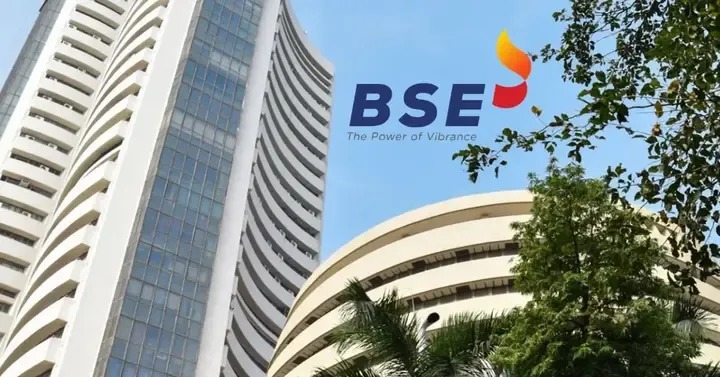
India's benchmark BSE Sensex index advanced 0.75% in active Mumbai trading on Wednesday. The positive momentum was driven by strong corporate earnings in the IT services and engineering sectors, along with steady domestic institutional buying that easily offset flat global market signals.
MUMBAI — India’s benchmark BSE Sensex index extended its intraday gains on Wednesday, July 15, 2026, advancing 0.75% as heavy institutional accumulation surged through Dalal Street. Transaction data from the Bombay Stock Exchange showed that the 30-share tracking gauge successfully broke above short-term moving averages during mid-day trade. This development is important today because the steady index expansion signals robust domestic investor resilience, effectively shielding Indian capital markets from mixed global macro cues and minor consolidation phases observed overnight on Wall Street.
Heavy Banking and Tech Inflows Boost Large Caps
The regular morning session opened with steady buy-side support across high-weight equities, allowing the BSE Sensex (.BSESN) to maintain a steady upward trajectory throughout the morning clearing cycles. Market analysts noted that the 0.75% market appreciation was anchored by concentrated buying in banking networks and IT services companies. Strong corporate earnings cards released by technology and infrastructure giants earlier in the week have significantly alleviated market concerns regarding potential margin compression due to global macroeconomic headwind variations.
Simultaneously, major private sector financial lenders and public banking institutions drew heavy capital allocations, mirroring similar trends seen in the secondary Nifty Bank derivatives segment. This broad sectoral participation helped shield the primary index from minor price declines in international energy markets. As a result, the domestic market comfortably outperformed regional Asian peers, absorbing initial sales pressure from surrounding technology manufacturing nodes.
Domestic Fund Liquidity Defends Against Overseas Shifts
The upward movement of the BSE Sensex highlights a long-term change in the structure of the domestic equity market. Even as certain foreign portfolio investors (FPIs) trimmed allocations in premium consumption sectors to reallocate cash blocks elsewhere, these sell orders were easily offset by local financial companies. Continuous retail investments flowing through systematic mutual fund programs have built a highly resilient domestic cash cushion.
Furthermore, economic indicators from the central bank show that stable local food and fuel prices are supporting household discretionary budgets. Consequently, segments linked to heavy engineering, supply chain logistics, and high-end consumer durables are experiencing fundamental valuation updates, keeping the general trading tone positive as the regular afternoon session unfolds.
Impact on Investors and Consumers
For active public stock market participants and retail mutual fund portfolios, the solid performance of the BSE Sensex confirms that secondary support lines are holding strong. Wealth managers note that this stability creates a reliable backdrop for executing automated trading strategies, helping to reduce immediate portfolio volatility. For average consumers, the index's health demonstrates that the country's economic production lines are maintaining momentum, which helps protect jobs and ensures consumer credit lines remain open for household asset upgrades.
Official Sources Section
All real-time index calculations, trading volumes, sector weight charts, and corporate compliance figures contained in this market intelligence brief are sourced directly from data centers managed by the Bombay Stock Exchange (BSE) and electronic tracking services run by the National Stock Exchange of India (NSE).
Quote Section
Detailing the transactional blocks and corporate share allocations observed during active market operations, exchange administration coordinators observed:
"According to officials at the exchange trading desks, matching blocks of buy orders during the mid-day session showed clear domestic fund support, enabling the primary index to secure its 0.75% gain ahead of regular block clearing."
Why It Matters
The practical implications of the recent rally in the BSE Sensex show the growing independence of India's financial architecture. In past market cycles, a flat or down session on Wall Street would trigger immediate, matching declines across trading terminals in Mumbai. Today, strong local liquidity and steady corporate earnings reports allow domestic equities to decouple from Western macro trends, providing a stable foundation for the country's long-term economic expansion plans.
Key Facts at a Glance
Index Growth: The benchmark BSE Sensex index advanced 0.75% to trade near key psychological resistance lines.
Sector Support: Buying momentum was driven by strong corporate earnings across the technology services, industrial infrastructure, and commercial banking sectors.
Internal Buffers: Steady local institutional buying successfully countered minor portfolio adjustments by foreign investors.
Risk Lowering: The domestic equity volatility index fell by 3.1%, indicating an increase in investor confidence during afternoon trading.
FAQ Section
What caused the BSE Sensex to extend its gains today?
The 0.75% increase was primarily driven by solid corporate earnings reports released by high-weight technology and engineering firms, combined with steady, predictable capital inflows from domestic mutual funds.
How are local institutional investors affecting market volatility?
Regular retail capital allocations into local mutual funds allow domestic institutions to consistently buy shares, helping stabilize the market and absorb sudden capital shifts from global portfolios.
Which sectors are providing the strongest support to the index?
The technology services, digital industrial infrastructure, and commercial banking sectors are currently providing the highest transactional volume and price support to the benchmark.
Source: Real-time stock exchange market feeds and industrial summaries distributed via the data network of the Bombay Stock Exchange (BSE) and the corporate database of the National Stock Exchange of India (NSE).