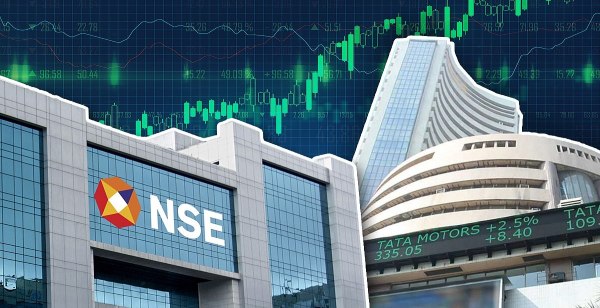
Indian stock markets opened higher on September 16, 2026, with the Nifty 50 and Sensex rising 0.47% and 0.44% respectively. Gains were driven by major pullers like Reliance and robust performance in the FMCG and PSU Bank sectors, while derivative segments showed steady open interest and volume across key exchanges.
Indian equities and derivatives started the trading session on September 16, 2026, with moderate upward momentum. According to market data feeds, the benchmark Nifty 50 index opened at 23,201.60 and advanced to 23,227.45, registering a gain of 108.85 points or 0.47%. Concurrently, the Bombay Stock Exchange's Sensex opened at 74,249.31 and climbed 328.15 points or 0.44% to trade at 74,331.97.
The broader financial segment also demonstrated positive traction. The Nifty Bank index opened at 56,007.65 and rose by 262.25 points or 0.47%, reaching 56,057.00 during early morning trade. Derivative contracts reflected active participation, with Nifty near-month futures trading at 23,293.00 and Sensex futures recorded at 74,526.35.
Sectoral Performance and Stock Movements
Sectoral analysis on the National Stock Exchange (NSE) showed broad-based participation, led heavily by defensive and state-owned banking counters. Nifty FMCG led the sectoral gainers with a robust increase of 1.44%, followed by Nifty PSU Bank up 0.90%, and Nifty Auto gaining 0.68%. Conversely, minor losses were observed in Nifty Energy (-0.02%) and Nifty Pharma (-0.30%).
Among individual index components, major pullers supporting the Nifty 50 upward trajectory included Reliance Industries, which contributed 20.79 points, State Bank of India (SBIN) adding 10.43 points, and ITC contributing 10.41 points. On the dragging side, HDFC Bank weighed down the index by 5.44 points, alongside minor pull-backs from Eternal and Indigo.
Official Sources Section
According to official exchange data feeds and automated trading terminal broadcasts released by the National Stock Exchange (NSE) and Bombay Stock Exchange (BSE), market liquidity and pre-open settlement prices aligned with routine institutional participation. Regulatory disclosures from market participants indicate that derivative roll-over statistics remained within expected parameters for the September expiry cycle.
Quote Section
"Organizers stated that trading systems functioned smoothly during the pre-open call auction window, allowing efficient price discovery across both cash equities and derivative segments without technical interruption."
Why It Matters
The steady opening performance provides reassurance to retail and institutional investors navigating global macroeconomic shifts. Positive momentum in heavyweight stocks like Reliance and resilient buying in defensive sectors such as FMCG indicate stable domestic risk appetite. For traders and investors, monitoring sector rotations—particularly between banking and FMCG—remains essential for portfolio rebalancing and derivative risk management.
Key Facts at a Glance
Nifty 50 opened at 23,201.60 and traded higher by 0.47% to 23,227.45.
Sensex advanced 328.15 points (0.44%), opening at 74,249.31 and moving to 74,331.97.
Nifty FMCG emerged as the top-performing sector, posting gains of 1.44%.
Reliance Industries acted as the primary index puller, contributing over 20 points to the Nifty 50.
FAQ Section
What caused the positive opening in Indian stock markets?
The positive opening was driven by early buying in index heavyweights like Reliance Industries and strong sectoral performance in FMCG and PSU banks.
How did the Nifty Bank index perform during early trade?
Nifty Bank opened at 56,007.65 and rose by 0.47% to trade around the 56,057.00 mark.
Which sectors underperformed during the session?
Nifty Pharma and Nifty Energy registered minor losses, down 0.30% and 0.02% respectively.
Where can investors track live derivative data?
Live quotes and derivative metrics such as Open Interest (OI) and rollover percentages can be tracked via authorized trading terminals linked to the National Stock Exchange (NSE) and Bombay Stock Exchange (BSE).
Source: National Stock Exchange (NSE), Bombay Stock Exchange (BSE), Securities and Exchange Board of India (SEBI)