Union Railway Minister Ashwini Vaishnaw announced on September 7, 2026, that India's first bullet train project is accelerating rapidly. The first test coach has been manufactured, and civil construction on the Vapi-Surat section is set for December completion, keeping the inaugural Surat-Bilimora trial corridor on track for commissioning.
Backed by official ministerial statements, India’s flagship high-speed rail initiative has reached a critical manufacturing milestone alongside rapid civil construction progress.
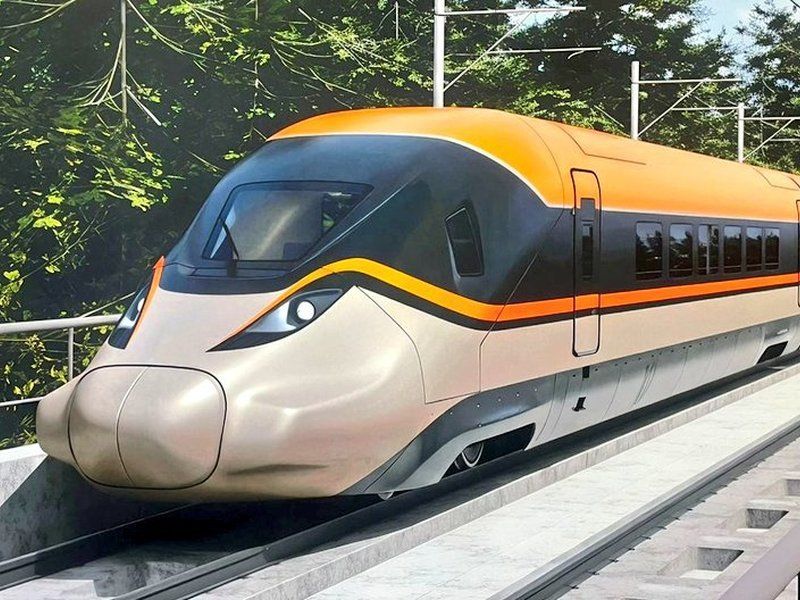
Marking a major leap forward for national infrastructure, Union Minister of Railways Ashwini Vaishnaw announced on Monday, September 7, 2026, that India’s inaugural bullet train project is advancing at an unprecedented pace. Disclosed during a comprehensive project review in Ahmedabad, the minister confirmed that the very first test coach for the high-speed rail network has been successfully manufactured.
The landmark development runs parallel to heavy structural advancements across the Mumbai-Ahmedabad High-Speed Rail (MAHSR) Corridor, with the pioneering Surat-to-Bilimora stretch targeted for initial commissioning.
Evaluating Construction Timelines, Rolling Stock Readiness, and Regional Corridors
Analyzing the structural progress of the 508-kilometer corridor reveals swift mobilization across engineering and manufacturing fronts. According to official announcements made by the Ministry of Railways on September 7, 2026, core project updates include:
Vapi-Surat Civil Completion: Heavy civil construction work along the critical Vapi-to-Surat section is officially slated for completion by December.
Surat-Bilimora Target: The pilot operational stretch connecting Surat and Bilimora remains on schedule for commissioning, paving the way for wider commercial rollouts anticipated by August 2027.
Rolling Stock Milestones: The completion of the primary test coach signifies that domestic manufacturing lines are meeting rigorous technical benchmarks for high-speed transit.
Corridor Architecture: Spanning Maharashtra, Gujarat, and Dadra & Nagar Haveli, the 12 designated stations—including Mumbai (BKC), Vadodara, and Ahmedabad—incorporate multimodal connectivity and localized architectural designs.
Why It Matters
The practical implications of accelerating the bullet train network transform long-distance regional mobility, economic connectivity, and industrial engineering capabilities across India. For daily commuters and business travelers, high-speed rail drastically cuts transit times between major western economic hubs. For domestic manufacturers and engineers, the successful production of advanced test rolling stock establishes native technological capacity for future high-speed corridors nationwide.
Key Facts at a Glance
Project Initiative: Mumbai-Ahmedabad High-Speed Rail (MAHSR) Corridor.
Key Milestone: First test coach successfully manufactured.
Target Timeline: Vapi-Surat civil work completion by December; Surat-Bilimora commissioning next year.
Leadership: Reviewed and announced by Union Railway Minister Ashwini Vaishnaw.
FAQ Section
What major milestone was recently announced for India's bullet train project?
Union Railway Minister Ashwini Vaishnaw announced that the very first test coach for the bullet train has been successfully manufactured.
When is the first section of the high-speed rail expected to be operational?
The initial stretch connecting Surat and Bilimora is targeted for commissioning next year.
By when is the civil construction on the Vapi-Surat section scheduled to finish?
Civil construction work along the Vapi-Surat segment is expected to reach completion by December.
Which regions does the Mumbai-Ahmedabad High-Speed Rail corridor pass through?
The 508-kilometer corridor traverses Maharashtra, Gujarat, and the Union Territory of Dadra & Nagar Haveli.
Where can citizens track official updates regarding the bullet train development?
Verified project updates and progress reports are published regularly through the Ministry of Railways Portal and the Press Information Bureau (PIB).
Source: ANI News Service, The Economic Times, ET Now News, Ministry of Railways, India