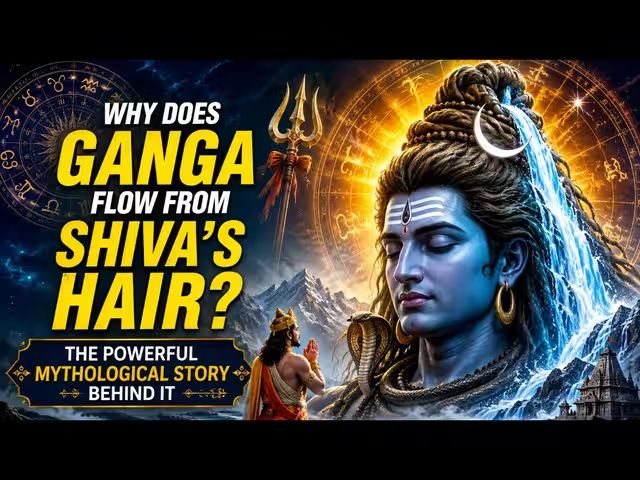
According to Hindu mythology and epic texts like the Valmiki Ramayana, Lord Shiva caught the mighty river Ganga in his matted hair (jata) to temper her overwhelming celestial descent. Prompted by King Bhagiratha’s rigorous penance, this divine intervention saved Earth from catastrophic flooding while liberating his ancestors.
Rooted in the ancient epic narrative of Ganga Avataran, the timeless legend details how unwavering devotion and divine intervention brought the holy river to Earth.
The Ancestral Curse and Bhagiratha’s Resolve
The narrative of the descent of the Ganga, widely known in Hindu tradition as Ganga Avataran, begins centuries prior to her arrival on Earth with King Sagara of the Ikshvaku dynasty. According to scriptural accounts referenced in ancient texts like the Valmiki Ramayana, King Sagara’s sixty thousand sons were reduced to ashes by the wrath of the meditating sage Kapila after their intrusion during a sacred ritual.
Because their souls could not find liberation without proper funerary rites performed by purifying waters, generations of descendants attempted to summon the celestial river from the heavens. It was finally the king’s great-grandson, Bhagiratha, who abandoned his royal comforts to perform intense austerities and prolonged penance to invoke divine grace.
Key milestones in the legendary ascent and descent include:
The Divine Boon: Pleased with Bhagiratha's extraordinary devotion, Lord Brahma granted permission for the celestial Ganga to descend to Earth to purify the ashes of Sagara's sons.
The Force of the Cosmos: Recognizing her immense and untamed velocity, Ganga warned that her direct impact would shatter the earthly terrain and flood the entire planet.
The Second Prayer: To prevent planetary destruction, Bhagiratha redirected his intense prayers toward Lord Shiva, requesting him to bear the force of the falling river.
Taming the Torrent: Lord Shiva's Intervention
To protect the mortal realm, Lord Shiva agreed to assist the resolute monarch. As the fierce celestial current plummeted toward the physical world, Shiva caught the roaring river within the tangled locks of his matted hair, known as his jata.
Trapped temporarily within these divine bounds, Ganga's ego and overwhelming velocity were completely tempered. Following this containment, Shiva released the river in gentle, manageable streams. Guided by Bhagiratha across mountains and plains, the waters eventually reached the underworld to fulfill their sacred purpose, earning the river the alternate designation of Bhagirathi.
Why It Matters
The legend of Bhagiratha and Lord Shiva serves as a foundational cultural allegory within Sanatan Dharma, symbolizing perseverance, discipline, and environmental balance. It illustrates that profound challenges require sustained, generational effort, while great power must be tempered with wisdom and restraint.
Key Facts at a Glance
Core Legend: Ganga Avataran, the descent of the sacred river from heaven to Earth.
Key Figures: King Bhagiratha, Lord Shiva, and Goddess Ganga.
The Intervention: Lord Shiva caught the rushing river in his matted hair (jata) to protect Earth from catastrophic impact.
Cultural Legacy: The river is frequently called Bhagirathi in honor of the king's relentless perseverance.
FAQ Section
Why did King Bhagiratha want to bring Ganga to Earth?
King Bhagiratha sought to bring the celestial river down to purify the ashes of his sixty thousand ancestors and grant their souls spiritual liberation.
Why did Lord Shiva catch Ganga in his hair?
Ganga descended with immense, unchecked velocity that threatened to shatter the planet; Lord Shiva caught her in his matted locks to safely break and channel her fall.
What is the significance of the name Bhagirathi?
The river is known as Bhagirathi in recognition of King Bhagiratha's monumental, multi-generational penance and leadership in bringing the waters to the mortal realm.
Where can readers explore more about these traditional texts?
Detailed translations of classical epics and scriptural archives are available via the Ministry of Culture, Government of India Portal.
Source: Valmiki Ramayana via ICCR, Ministry of Culture, Government of India Portal, Hindu Epics Research Bureau