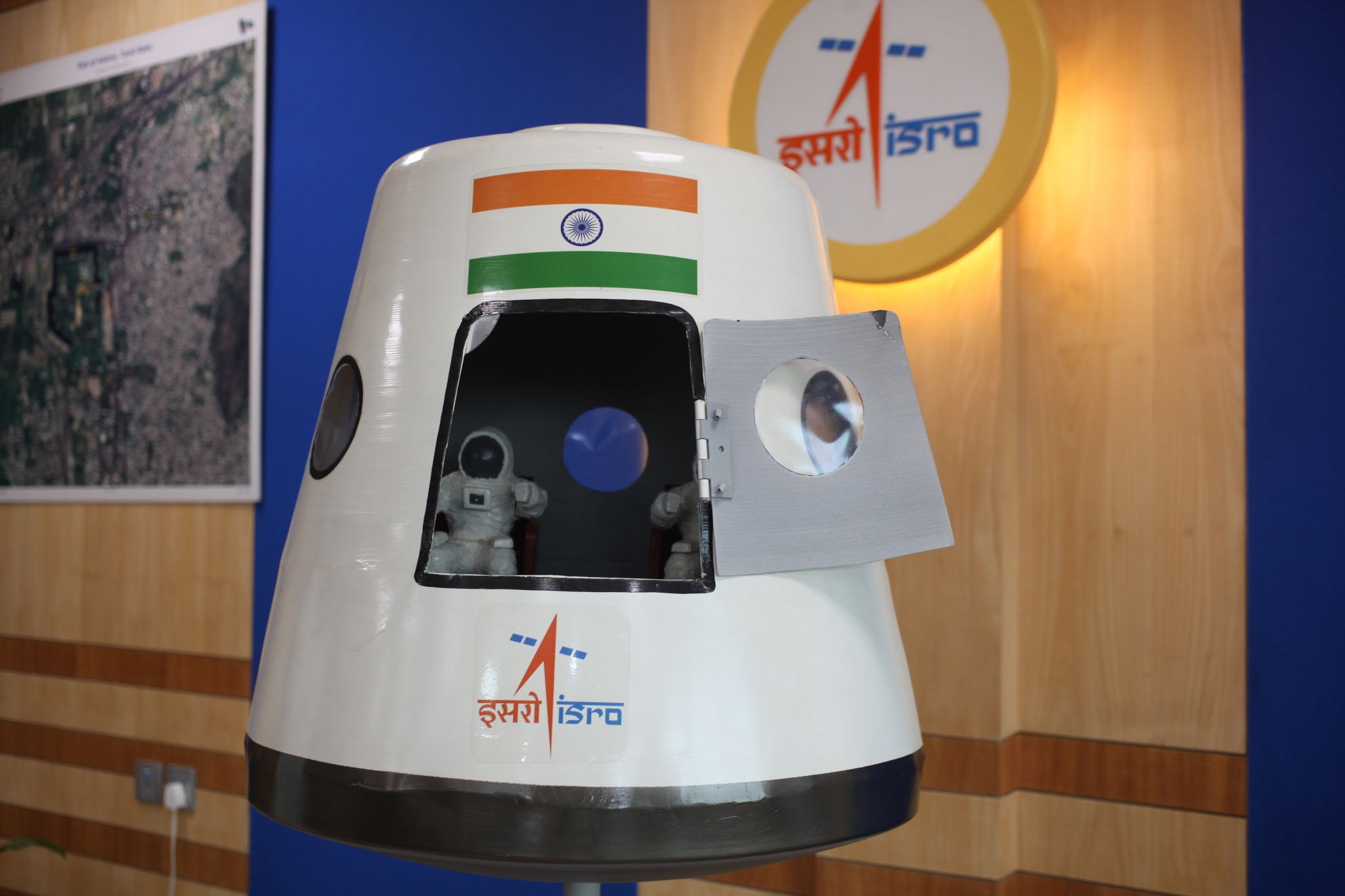
Following the resignation of over 100 key scientists, India's Department of Space has tightened exit rules for ISRO personnel linked to flagship programs like the Gaganyaan mission. Center directors can no longer routinely approve resignations, transferring final decision-making powers back to the central government to prevent disruptions to critical space projects.
BENGALURU, INDIA — Following a series of high-profile departures of over 100 space agency personnel, the Department of Space (DoS) has officially stepped in. The decision, which marks a significant policy shift, confirms that the Centre tightens exit rules at the Indian Space Research Organisation (ISRO) to stem the loss of senior engineering talent. In an internal memorandum issued on July 14, 2026, the department directed all major research facilities to halt routine processing of voluntary retirement or resignation requests from Group 'A' scientific and technical staff. The regulatory move comes at a crucial time as India works to safeguard timelines for its flagship human spaceflight initiative, the Gaganyaan mission, alongside other strategically vital national space projects.
Unprecedented Exits From Key Space Research Facilities
Reports of widespread departures have unsettled the Indian aerospace community, with source-based disclosures indicating that between 100 and 120 key technical personnel have resigned in recent months. While ISRO has not publicly declared the final headcount of these departures, the exits are heavily concentrated within two of the agency's primary operational centers: the U R Rao Satellite Centre (URSC) in Bengaluru, which saw roughly 80 personnel leave, and the Vikram Sarabhai Space Centre (VSSC) in Thiruvananthapuram, which experienced at least 20 departures.
Crucially, the resignations include several high-ranking project leaders whose technical expertise is integral to ongoing missions. Key departures reportedly feature the LVM-3 launch vehicle project director, Victor Joseph, from VSSC; the project director for India's upcoming Space Docking Experiment (SpaDeX) at URSC; and Aditya Rallapalli, the simulations project manager for the successful Chandrayaan-3 lunar mission. Because these scientists hold domain-specific knowledge, the sudden vacancies present structural obstacles to the engineering pipelines of national projects.
Centralization of Exit Approvals
Under the new administrative guidelines, the central government has revoked decentralized exit powers in an effort to curb the talent loss. The July 14 memorandum, signed by Joint Secretary (Personnel) S.R. Rajashekar, alters an administrative framework established in 2020. Under the previous 2020 reform, directors of individual ISRO centers were authorized to independently accept resignation and voluntary retirement requests for Group 'A' staff up to the Scientist/Engineer-SG grade level.
The newly introduced rules strip local facility heads of this authority. All resignation and voluntary retirement requests must now be compiled by center directors, appended with "clear recommendations" detailing the impact of the vacancy on current projects, and forwarded directly to the Department of Space for a final ministerial determination. The Centre hopes that by raising the level of bureaucratic review, it can actively negotiate terms or reassign roles to delay departures until major project milestones are realized. This centralization strategy illustrates why the Centre tightens exit rules rather than allowing local management to resolve local labor concerns.
Reconciling Staffing Gaps with Timeline Pressure
The internal memo explicitly noted that the wave of resignations was "severely impacting the implementation of projects of national importance". The timing is particularly sensitive for the Gaganyaan mission. The HLVM3 G1/OM1 uncrewed test flight, which serves as the preliminary step to launching Indian astronauts, was originally planned for early 2026 but has experienced subsequent schedule delays.
Union Minister of State for Science and Technology, Jitendra Singh, addressed parliamentary inquiries regarding the space agency's labor shortages earlier this year. Official data revealed a total sanctioned strength of 18,142 positions across ISRO's scientific, technical, and administrative branches, with a vacancy rate of roughly 14.4%. While Singh noted that active recruitment processes are in motion to fill over 1,400 positions by October 2026, administrative experts acknowledge that replacing senior mission-level leaders is a far more complex challenge than hiring entry-level engineers. The threat of prolonged delays explains the urgency as the Centre tightens exit rules to stabilize the workforce.
Official Sources Section
The administrative guidelines restricting exits were formally disseminated in a memorandum dated July 14, 2026, by the Department of Space (DoS) to ISRO's primary units. Supplementary human resource data and vacancy statistics were presented during parliamentary sessions by the Ministry of Science and Technology and recorded by the Lok Sabha Secretariat.
Quote Section
Commenting on the administrative restructuring and the memorandum, Joint Secretary S.R. Rajashekar wrote in the official communication:
"Of late, it is noticed that there has been spate of requests for voluntary retirement and resignation from Group 'A' Scientific/Technical personnel of ISRO including those associated with the prestigious Gaganyaan and other important missions/projects severely impacting the implementation of projects of national importance."
Meanwhile, ISRO Chairman V. Narayanan sought to reassure the public that operations remain resilient:
"The memorandum was intended not only to retain talent but also to ensure that important projects were not affected suddenly."
Why It Matters
The decision to execute these measures, wherein the Centre tightens exit rules for state space scientists, points to broader macroeconomic pressures. As India's private space sector expands under the government's deregulation policies, private aerospace startups and global tech conglomerates are offering competitive compensation, flexible roles, and lighter bureaucratic burdens. This dynamic places state-run organizations like the Indian Space Research Organisation (ISRO) under persistent hiring pressure. The new policy represents a direct government intervention to protect state secrets, technological assets, and major national deadlines from commercial poaching.
Key Facts at a Glance
Mass Resignations: Up to 120 scientists and engineers, including project directors, have recently resigned from key space facilities.
Policy Intervention: As a result, the Centre tightens exit rules to prevent routine resignations of critical staff.
Gaganyaan Target: Special emphasis is placed on retaining personnel tied directly to the Gaganyaan human spaceflight mission.
Shift of Power: Center directors have lost their independent authority to approve retirements, handing decision-making back to the central government.
FAQ Section
Why did the Centre tighten exit rules for ISRO scientists?
The rules were tightened because a wave of resignations from over 100 key scientists was beginning to severely affect the progress and timelines of vital projects, such as the Gaganyaan mission.
Can ISRO scientists still resign or retire voluntarily?
Yes, but the process is no longer handled routinely at local center levels. Every resignation request must now go to the Department of Space in New Delhi for final approval, with center directors recommending whether or not to delay the exit until ongoing projects are completed.
Is India's Gaganyaan spaceflight mission delayed because of these departures?
While the mission is running behind its original schedule due to various technical and administrative reasons, government officials state that teams are being reorganized and new recruitments are underway to prevent further delays.
Source: Official circulars and administrative press releases from the Department of Space (DoS) and parliamentary reports from the Lok Sabha Secretariat.