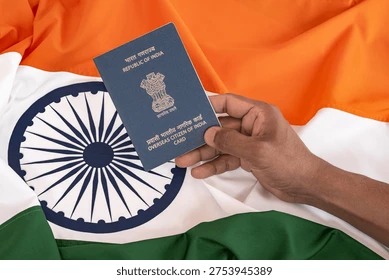
Nationality and citizenship are legally distinct. Nationality denotes a broad cultural or legal bond between an individual and a state, preventing statelessness. Citizenship is a specific legal status providing full political participation, rights, and duties. Distinguishing between them is critical for navigating international law, travel, and democratic processes effectively.
NEW DELHI — In an era of increasing global mobility and complex migration laws, understanding the difference between citizenship and nationality is essential. While the terms are frequently conflated, they refer to different levels of affiliation and rights, carrying significant implications for how individuals interact with governments, travel across borders, and exercise political power.
At its core, the distinction lies in the nature of the relationship: nationality generally describes a person's cultural or ethnic identity and their belonging to a nation-state, whereas citizenship is a formal legal status that grants specific rights and obligations within that state.
Defining Nationality: The Bond of Belonging
Nationality is primarily an international law concept that establishes a link between a person and a state, often based on birth, heritage, or naturalization. It signifies that an individual is a member of a specific nation, regardless of whether that person resides within the state’s borders or enjoys full political rights.
According to international legal frameworks, every person has a right to a nationality to prevent statelessness. It is often the basis upon which a government provides diplomatic protection to its people when they are abroad. However, possessing nationality does not automatically guarantee political participation; one can be a national of a country without being a full citizen entitled to vote, hold public office, or receive a passport.
Defining Citizenship: The Status of Participation
Citizenship is a more restrictive legal status that defines the relationship between an individual and the state. It is a subset of nationality that includes specific legal duties and privileges. A citizen is recognized by the state as having full membership, which inherently includes the right to vote in elections, stand for public office, and access state-specific welfare benefits.
The criteria for acquiring citizenship—whether by jus soli (birthright) or jus sanguinis (bloodline)—are dictated by a country's internal laws. Citizenship is often viewed as a reciprocal arrangement: the state provides protection and rights, while the citizen owes allegiance to the state, which may include responsibilities such as jury duty, mandatory military service, or adherence to national tax codes.
Key Differences in Legal Practice
The practical application of these terms often surfaces during international travel and residency applications.
Political Rights: A citizen typically holds the right to participate in the democratic process, a privilege not always afforded to mere nationals.
Legal Protections: Citizenship provides a more comprehensive layer of legal protection within the country, including the right to reside permanently and work without restriction.
International Travel: While both citizens and nationals may be issued travel documents, citizenship status often facilitates easier visa-free travel through bilateral agreements, whereas nationals of some states may face more rigorous screening.
Official Definitions and Frameworks
According to the United Nations High Commissioner for Refugees (UNHCR), nationality is a legal bond between a person and a state, which does not necessarily entail political rights. Conversely, the Ministry of Home Affairs in India defines citizenship under the Citizenship Act, 1955, as a status that confers specific rights, such as the right to vote and access to government services, distinct from the broader concept of belonging to a nation.
"According to officials and legal experts, while nationality is a broad identification of a person's origin or state connection, citizenship represents the formal completion of that bond, granting an individual full political and civic membership within the state structure," organizers stated in a policy review.
Why It Matters
Understanding these distinctions is vital for international travelers, expatriates, and those seeking to naturalize in a new country. Misunderstanding these terms can lead to legal complications, particularly regarding tax residency, visa eligibility, and the ability to claim consular protection during international disputes. For businesses and states alike, the differentiation ensures that legal frameworks—ranging from labor laws to electoral mandates—are applied to the correct demographic.
Key Facts at a Glance
Legal Membership: Citizenship is a formal status of participation; nationality is the broader status of belonging.
Political Power: Citizenship generally includes the right to vote and hold office, which is not guaranteed to all nationals.
International Law: Nationality is a fundamental human right used to prevent statelessness; citizenship is determined by domestic policy.
Reciprocity: Citizenship involves a social contract of mutual duties and rights, while nationality is often an inherited or ascribed status.
Frequently Asked Questions (FAQ)
1. Can a person be a citizen of a country but not a national?
In most modern legal systems, citizenship and nationality are merged; a citizen is almost always a national. However, in some territories, one can be a national without full citizenship rights.
2. Is a passport proof of citizenship or nationality?
A passport is a travel document that serves as proof of nationality. It is widely accepted as evidence of the holder's right to enter the issuing state, but it is not always proof of the holder's full political rights as a citizen.
3. Do all countries distinguish between the two?
Many countries use the terms interchangeably in daily life. However, legal systems in countries with complex territorial statuses (such as the UK or US territories) often maintain strict legal distinctions.
Source: United Nations High Commissioner for Refugees (UNHCR), Ministry of Home Affairs (India), The Citizenship Act, 1955