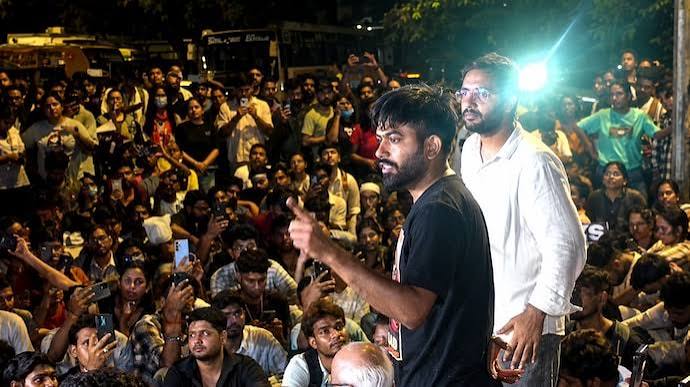
The Cockroach Janta Party continues its protest march to Parliament, demanding educational reform and the resignation of Education Minister Dharmendra Pradhan. After a violent crackdown on July 20, 2026, the youth-led movement has maintained a sit-in, signaling a deepening confrontation between disillusioned young Indians and the government over exam integrity.
NEW DELHI — The Cockroach Janta Party (CJP), a rapidly growing youth-led political movement, has vowed to continue its "Chalo Sansad" (March to Parliament) protest after intense clashes with security forces on Monday, July 20, 2026. Protesters have reclaimed their demonstration site near Jantar Mantar following a police crackdown that saw dozens of arrests and injuries to both demonstrators and police personnel.
The march, organized to demand the resignation of Union Education Minister Dharmendra Pradhan, stems from widespread discontent over alleged irregularities in the NEET and CBSE examination processes. The movement, which has galvanized millions of young Indians, intensified its efforts ahead of the Monsoon Session of Parliament, resulting in a large-scale mobilization that paralyzed parts of central Delhi.
Escalating Tensions and Police Crackdown
On July 20, the situation at Jantar Mantar escalated into chaos as thousands of CJP supporters attempted to march toward the Parliament building. Security forces deployed riot gear, including tear-gas shells and batons, to disperse the swelling crowds.
Official reports from the Delhi Police stated that protesters engaged in "unruly, aggressive, and violent" behavior, leading to the detention of over 70 individuals and injuries to more than 100 police personnel. Conversely, CJP leadership and supporters have alleged the use of excessive force, reporting that several students and prominent faces of the movement were assaulted during the crackdown.
Government Engagement and Ongoing Sit-in
While the march was met with resistance, CJP representatives Saurav Das and Ashutosh Ranka held talks with Union Minister J.P. Nadda on Monday. According to Nadda, the discussions took place in a "cordial atmosphere," with the CJP delegation submitting a formal written petition outlining their demands, which include education reform and the immediate release of activist Sonam Wangchuk, who remains on an indefinite hunger strike at Safdarjung Hospital.
Despite the government's appeal for protesters to end their agitation, CJP founder Abhijeet Dipke and other leaders have maintained that the sit-in will continue until concrete commitments are made regarding their demands for ministerial accountability.
Why It Matters
The rise of the CJP represents a significant challenge to the status quo, highlighting deep-seated frustrations among India’s Gen Z and millennial population regarding the education system and the job market. With nearly 40% of India's graduates under 25 currently unemployed, the movement has successfully tapped into a vein of national anxiety, forcing the government to address issues of transparency and accountability in national testing processes.
Key Facts at a Glance
Movement Origin: Founded in May 2026 by Abhijeet Dipke as a satirical response to derogatory remarks made about unemployed youth.
Primary Demands: Resignation of Education Minister Dharmendra Pradhan, accountability for NEET paper leaks, and systemic education reforms.
Recent Escalation: Large-scale "Chalo Sansad" march on July 20, 2026, met with police lathicharge and tear-gas deployment.
Ongoing Action: Indefinite hunger strike led by Sonam Wangchuk and continued sit-in protest by CJP supporters.
FAQ
What is the Cockroach Janta Party (CJP)?
The CJP is a youth-based political movement founded in May 2026 by Abhijeet Dipke. It began as a satirical parody of the ruling party but has grown into a major platform for young Indians protesting policy failures and unemployment.
Why are the protesters marching to Parliament?
The protesters are marching to demand accountability for examination paper leaks, specifically the NEET and CBSE exams, and the resignation of Education Minister Dharmendra Pradhan.
What is the current status of the protest?
Following clashes on July 20, CJP leaders have continued their sit-in protest near Jantar Mantar/Kerala House, awaiting a more formal response from the government following their meeting with J.P. Nadda.
Source: The Hindu, The Indian Express, NDTV