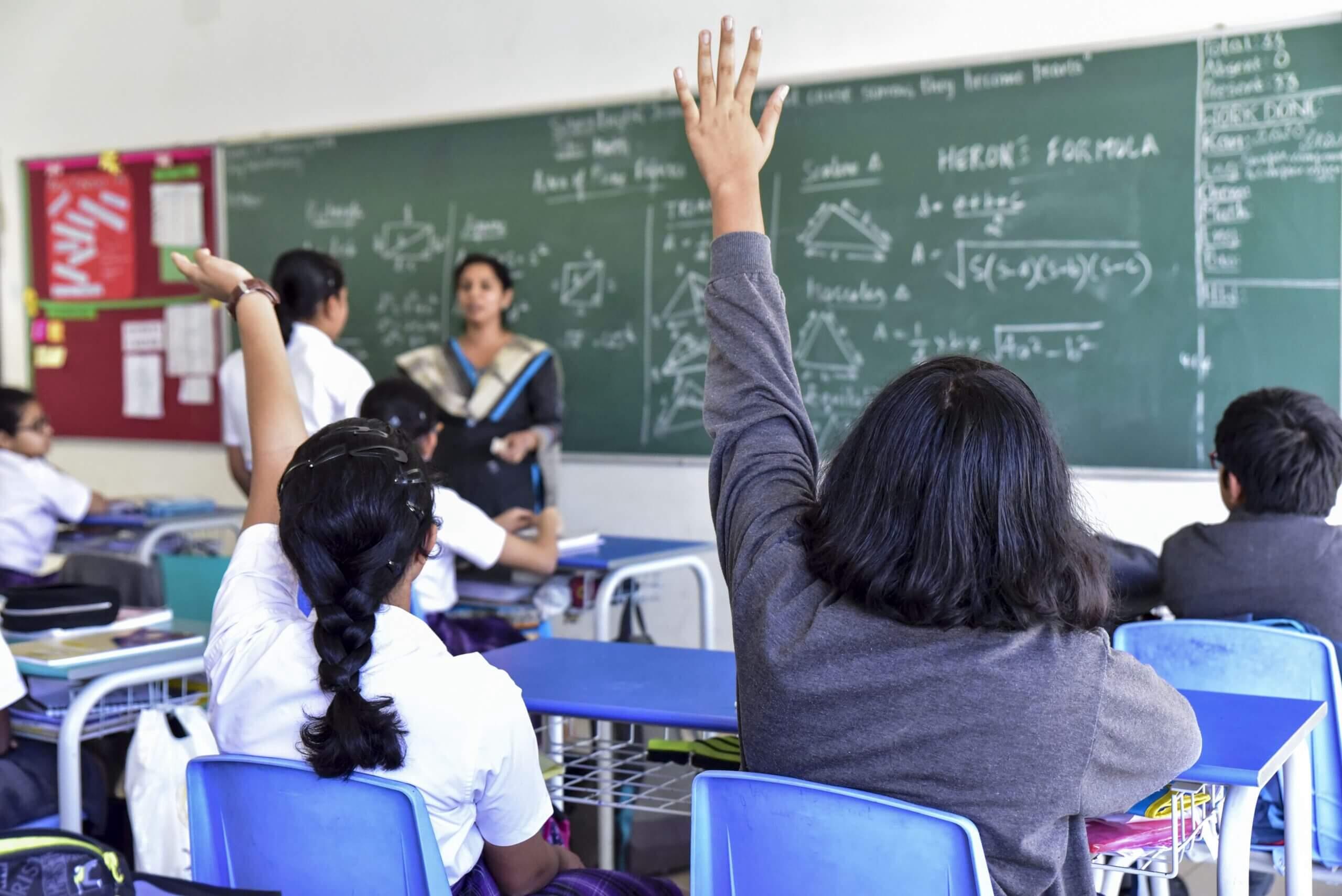
A critical debate has intensified over whether India schools require comprehensive structural modernization rather than new curriculum mandates. Following protests against a sudden CBSE three-language rule, federal data revealed that half of government secondary schools lack science labs and one-third lack internet, highlighting an urgent need for fundamental infrastructure reform.
NEW DELHI — A growing coalition of education specialists, parent networks, and policy analysts are urging a fundamental redirection of India’s elementary and secondary education priorities, arguing that the nation’s institutional frameworks require an immediate structural overhaul rather than administrative language mandates. The domestic debate reached an intensive critical threshold on Sunday, June 21, 2026, driven by a series of legal petitions filed in the Supreme Court of India contesting a recent Central Board of Secondary Education (CBSE) directive that suddenly accelerated a compulsory three-language curriculum model. Policy researchers argue this heavy focus on linguistic alignment ignores widespread operational deficits across public and private academic facilities, including acute shortages of trained personnel, missing laboratory infrastructure, and dropping higher secondary enrollment indicators.
The Language Friction Triggering Constitutional Challenges
The immediate policy stand-off stems directly from CBSE Circular No. Acad-33/2026, issued on May 15, 2026. The mandate dictates that starting July 1, 2026, all Class 9 students under central boards must compulsorily study three distinct languages, with a strict caveat that at least two must be native Indian tongues. Although the board clarified that the third language would be evaluated internally rather than via external high-stakes board examinations, the sudden rollout schedule triggered substantial pushback from parents and state administrators.
On June 18, 2026, a Supreme Court bench led by Chief Justice Surya Kant reviewed an emergency petition seeking interim protection against the rule. While the apex court declined to stay the policy immediately—scheduling a comprehensive consolidated hearing for July 14, 2026—the legal friction has highlighted major practical vulnerabilities on the ground. Multiple schools reported having neither the designated instructional materials from the National Council of Educational Research and Training (NCERT) nor the certified multi-lingual teaching staff required to execute the mandate by next month's deadline.
NITI Aayog Report Exposes Core Infrastructure Shortfalls
While administrative energy remains heavily consumed by the linguistic dispute, a landmark sector evaluation compiled by the federal think tank NITI Aayog reveals that the authentic limitations of India schools lie within structural and digital architecture.
The analytical document, titled "School Education System in India: Temporal Analysis and Policy Roadmap for Quality Enhancement" and released on May 6, 2026, tracks ten years of public educational metrics across all 36 States and Union Territories. The quantitative metrics indicate a highly fragile, pyramid-like enrollment pipeline. While India maintains approximately 7.3 lakh active primary school institutions, that number contracts sharply to just 1.64 lakh facilities at the higher secondary tier, severely curtailing long-term academic access for rural demographics.
The data parameters reveal that the Gross Enrollment Ratio (GER) for higher secondary education stalls at a restricted 58.4%. The NITI Aayog policy audit directly attributes this weak retention rate to structural deficiencies rather than curriculum designs. According to localized school registries audited in the report, approximately 50% of all government-managed secondary institutions lack functional science laboratories entirely, while more than 33.5% of schools nationwide continue to operate without consistent internet access or functional digital learning devices.
The Operational Burden Facing Families and Faculty
The disconnect between central curriculum mandates and real-world resource allocation places severe strain on regional academic stakeholders. School administrators have noted that finding qualified language instructors with functional proficiency on less than 60 days' notice is mathematically impossible in many districts.
To bridge this immediate gap, the CBSE has permitted institutions to temporarily reassign non-language teachers who possess basic conversational fluency or leverage virtual shared class models. However, education specialists warn that these makeshift administrative adjustments risk diluting actual instructional quality, ultimately increasing the psychological and academic burden on students who are simultaneously preparing for critical transition years.
Official Sources Section
The statutory directives, legal filing indexes, infrastructure percentages, and school census metrics referenced in this national update are compiled directly from public circulars distributed by the Central Board of Secondary Education, litigation transcripts from the Supreme Court of India, and the comprehensive school evaluation roadmap published online by NITI Aayog.
Quote Section
"The structural issue in India schools cannot be solved simply by adding another line item to a student's grade sheet," an independent educational policy analyst remarked during an evaluation of the upcoming academic cycle. "According to officials, the country needs to raise its total public expenditure on education closer to the recommended 6% of GDP benchmark from its current position of approximately 4.6%. Organizers stated that prioritizing language enforcement before solving the structural absence of basic libraries, science labs, and electricity grids creates an unequal learning environment between urban and rural school zones."
Why It Matters
For millions of households across India, the configuration of the secondary school system directly defines long-term career readiness and economic mobility. When educational policy focuses intensely on linguistic composition over functional science, technology, engineering, and mathematics (STEM) infrastructure, it risks widening the skill gap between public school graduates and the evolving requirements of the global digital workforce.
Key Facts at a Glance
The Core Debate: Legal and institutional challenges are mounting against the accelerated implementation of the CBSE three-language rule, effective July 1, 2026.
Retention Drop: Data reveals that India's higher secondary Gross Enrollment Ratio sits at just 58.4%, exposing a steep drop-out trend after the primary school level.
Laboratory Deficit: Approximately half of all government-managed secondary schools across the country currently operate without active science laboratory spaces.
Digital Isolation: Despite massive rural electrification programs, roughly one-third of the nation's 14.71 lakh schools still lack a reliable internet connection.
Financial Recommendation: Federal policy roadmaps indicate public spending must climb significantly to support the integration of advanced skill-based learning and future AI pedagogical tools.
FAQ Section
Why is the new CBSE three-language policy being legally challenged?
Petitioners argue that the sudden introduction of a mandatory third language causes immense academic pressure on Class 9 students, disrupts pre-planned foreign language coursework, and suffers from a severe national deficit of trained regional language teachers.
What did the 2026 NITI Aayog report identify as the biggest issue in Indian schools?
The comprehensive temporal analysis identified fragmented school structures, low retention rates at the senior secondary level, lack of functional science labs in 50% of government schools, and uneven digital infrastructure as the primary barriers to quality education.
How are schools expected to handle the immediate shortage of language teachers?
The board has issued guidance allowing schools to temporarily share resource pools, utilize virtual teaching tools, reassign staff with basic language proficiency, or contract qualified retired educators to cover the curriculum gaps.
Source: Educational policy registries maintained by NITI Aayog, legal case transcripts from the Supreme Court of India, and official academic notifications from the Central Board of Secondary Education.