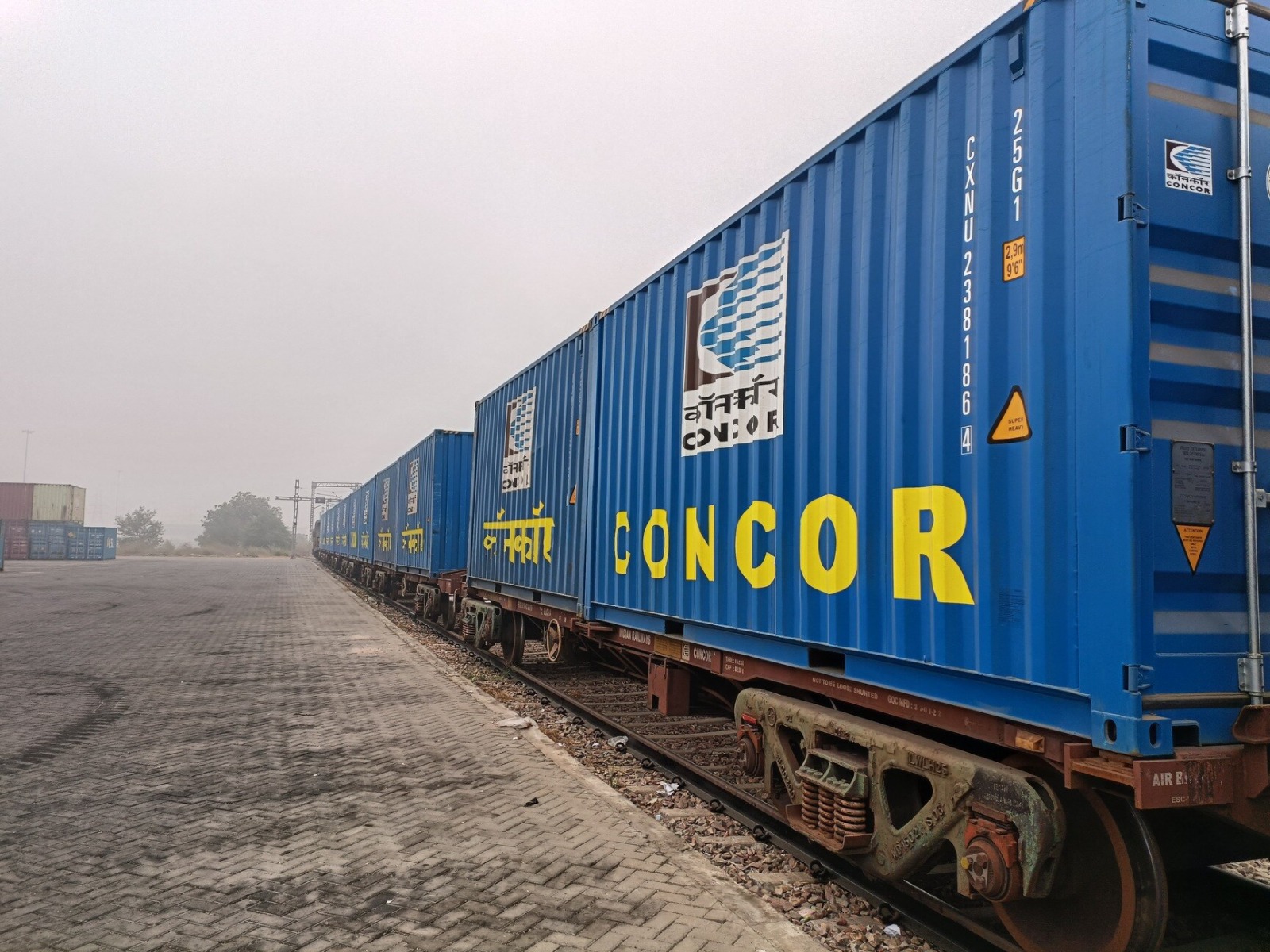
Container Corporation of India (CONCOR) reported an 8.89% year-on-year growth in total throughput for Q1 FY27. This operational milestone highlights the company’s resilient volume handling in the logistics sector, as stakeholders look ahead to the upcoming quarterly earnings release for further insight into profitability and margin sustainability.
The state-run logistics firm sees volume expansion as it prepares for upcoming quarterly financial results amidst a challenging macroeconomic environment.
NEW DELHI — Container Corporation of India Ltd (CONCOR) recorded an 8.89% year-on-year growth in total throughput for the first quarter of fiscal year 2027, according to preliminary operational data. The growth in physical volumes—measured in Twenty-Foot Equivalent Units (TEUs)—signals resilient demand for the company’s multimodal logistics services despite broader economic headwinds and regional geopolitical uncertainties.
The Navratna public sector undertaking (PSU), which serves as a critical artery for India’s EXIM (Export-Import) and domestic trade, continues to focus on volume-led recovery. While the logistics sector has faced pressure from global supply chain disruptions and volatile energy costs, CONCOR’s throughput figures suggest that its infrastructure network remains a preferred choice for industrial and trade cargo movement.
Operational Performance Overview
Throughput, a key operational parameter for logistics providers, reflects the total volume of containers handled across the company's vast terminal network. The 8.89% increase in throughput is being closely analyzed by market participants as a precursor to the company's official financial results.
The growth trajectory is particularly notable given the company's recent focus on expanding its first-mile and last-mile connectivity. By integrating new rail-linked terminals and enhancing double-stack rake deployment, CONCOR has aimed to improve terminal efficiency and reduce turnaround times. Management has historically emphasized that these physical volume gains are the foundation for long-term revenue sustainability, particularly as the firm seeks to maintain its dominant market share against increasing competition in the private logistics space.
Contextualizing the Market Environment
Investors are currently awaiting the company's detailed Q1 FY27 financial results, with a board meeting scheduled for late July 2026. The market is particularly interested in how these volume gains will translate into bottom-line profitability, especially as the company balances elevated operational costs, including empty running expenses and rising energy-linked tariffs.
Analysts at major brokerage firms have been monitoring the stock, noting that while CONCOR’s volume growth remains robust, the company faces pressure from margin compression due to heightened competition and macroeconomic shocks. The current growth of 8.89% is seen as a positive signal, though shareholders remain focused on the company’s ability to sustain these levels while managing costs in the upcoming quarters.
Official Sources
Why It Matters
For the logistics and trade sectors, CONCOR’s throughput is a bellwether for Indian economic activity. A sustained rise in container volume indicates that industrial production and consumption patterns are holding up despite global energy price volatility and trade route disruptions. For investors, these figures provide a critical baseline for evaluating whether the firm can meet its growth guidance for the full fiscal year.
Key Facts at a Glance
Performance: Total throughput grew by 8.89% year-on-year in Q1 FY27.
Industry Role: CONCOR remains a dominant player in India’s EXIM and domestic containerized cargo sector.
Upcoming Milestone: Board meeting to consider Q1 FY27 financial results and potential dividend, scheduled for July 24, 2026.
Strategic Focus: Infrastructure expansion, including new multimodal logistics parks and increased rail-rake capacity.
FAQ
Q: What does "throughput" signify for CONCOR?
A: Throughput, measured in TEUs (Twenty-Foot Equivalent Units), represents the total volume of cargo handled. It is a vital operational metric because higher volumes generally correlate with increased revenue potential and infrastructure utilization.
Q: When will the detailed financial results be released?
A: The company is expected to present its detailed Q1 FY27 financial results at its board meeting scheduled for July 24, 2026.
Q: Does this volume growth guarantee profit growth?
A: Not necessarily. While higher volumes are positive, profitability is also influenced by operating margins, input costs, and competitive pricing pressures. Investors typically monitor both physical throughput and financial margins during earnings reports.
Source: BSE Limited, Container Corporation of India