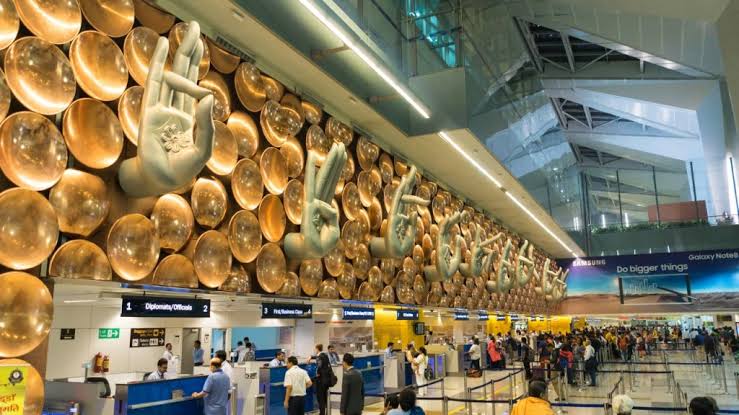
Heavy monsoon downpours and thunderstorms caused 15 flight diversions at Delhi's Indira Gandhi International Airport on August 24, 2026. Aircraft were rerouted to Jaipur, Chandigarh, and Lucknow as severe weather, strong winds, and waterlogging triggered widespread schedule disruptions, impacting over 280 flights across major domestic carriers.
NEW DELHI — Severe weather conditions lashed the National Capital Region on Monday, August 24, 2026, leading to widespread disruptions at Indira Gandhi International Airport (IGIA). Airport authorities confirmed that Delhi airport sees 15 flight diversions due to bad weather, with incoming domestic and international services redirected to alternate regional airports across Northern India following sudden squalls, intense lightning, and severe waterlogging across terminal approaches.
The disruptions unfolded as the India Meteorological Department (IMD) issued orange and red weather alerts for New Delhi and adjacent districts, forecasting sustained thunderstorms with wind speeds reaching 30 to 40 km/h.
Regional Diversions and Flight Delays
Adverse meteorological conditions forced air traffic controllers to execute standard contingency holding patterns before diverting flights unable to land safely during low-visibility windows.
According to airport operations desks, the 15 diverted flights—which included scheduled domestic carriers and international arrivals—were rerouted to neighboring airfields:
Jaipur International Airport (JAI): Received the bulk of diverted air traffic, accommodating 12 redirected aircraft.
Shaheed Bhagat Singh International Airport, Chandigarh (IXC): Safely accepted 2 diverted flights.
Chaudhary Charan Singh International Airport, Lucknow (LKO): Handled 1 diverted passenger aircraft.
Beyond the diversions, live aviation radar trackers reported that more than 280 scheduled departures and arrivals experienced cascading delays, alongside more than 20 proactive cancellations across domestic routes.
Impact on Passengers and City Infrastructure
The severe weather system impacted not only air transit but also ground connectivity around the airport terminals. Intense downpours triggered localized waterlogging along arterial routes leading to Terminal 1, Terminal 2, and Terminal 3, slowing vehicular transit for departing passengers.
Airlines operating high-frequency networks out of Delhi—including IndiGo, Air India, SpiceJet, and Akasa Air—issued operational travel advisories warning travelers of extended turnaround times and runway congestion. Passengers were urged to verify live flight tracking feeds prior to departing for the airport to prevent terminal overcrowding.
Ground handling personnel and airport staff were deployed to manage terminal bottlenecks, coordinate re-fueling logistics at diversion hubs, and assist transit passengers awaiting delayed connections.
Official Sources Section
Operational flight tracking data, diversion metrics, and air traffic updates were verified through statements released by Delhi International Airport Limited (DIAL) and real-time aviation monitoring databases, including Flightradar24.
Meteorological forecasts, storm path analyses, and regional rainfall measurements were corroborated through official weather bulletins authorized by the India Meteorological Department (IMD) and the Directorate General of Civil Aviation (DGCA).
Airline and Aviation Authority Commentary
Airlines operating out of the national capital updated their flight advisories as weather conditions evolved across the afternoon:
"Adverse weather conditions and heavy rainfall in the national capital have impacted flight schedules. Our operations teams are closely monitoring the situation and working to minimize passenger inconvenience," IndiGo stated in a public operational update.
Addressing standard aerodrome safety protocols, aviation officials emphasized the role of pilot discretion:
"According to officials at air traffic control, flight diversions are standard precautionary safety maneuvers triggered when wind shear, low visibility, or runway standing water exceed certified aircraft landing limits."
Why It Matters
For Air Travelers and Commuters: Causes extensive flight delays, missed domestic and international connections, and extended ground travel times around Delhi-NCR.
For Commercial Airlines: Increases operational costs through diversion fuel consumption, crew duty-time rescheduling, and turnaround bottlenecks across regional hub airports.
For Airport Operations: Tests multi-airport coordination and runway safety procedures during monsoon storm surges at India's largest hub.
Key Facts at a Glance
Total Flights Diverted: 15 aircraft (including international and domestic carriers).
Primary Diversion Destinations: Jaipur (12), Chandigarh (2), Lucknow (1).
Weather Cause: Heavy rain, thunderstorms, lightning, and wind gusts up to 40 km/h.
Operational Scale: Over 280 flights delayed and over 20 cancellations recorded.
Airport Capacity: IGIA handles over 1,300 daily flight movements under normal operations.
Frequently Asked Questions
Why were flights diverted from Delhi airport today?
Flights were diverted due to heavy rainfall, severe thunderstorms, lightning, and strong wind gusts that temporarily reduced visibility below safe landing minimums.
Which airports received the diverted aircraft?
A total of 12 flights were diverted to Jaipur, 2 to Chandigarh, and 1 to Lucknow.
Are flights still delayed at Indira Gandhi International Airport?
Yes. Over 280 flights faced cascading delays as airlines worked to normalize schedules and reposition aircraft.
What should passengers travelling via Delhi airport do?
Airlines have advised all passengers to check their flight status online before heading to the airport and to allow extra travel time for ground transit.
Source: India Meteorological Department, Directorate General of Civil Aviation (DGCA), Delhi International Airport Limited (DIAL), Ministry of Civil Aviation