To combat air pollution, the Delhi government has launched pilot projects featuring innovative technologies like the PAWAN III purification device, filter-free purifiers, and EV-mounted anti-smog guns. These efforts, monitored by scientific institutions, support the broader ₹8,300-crore "Clean Air, Healthy Delhi" initiative, which aims for sustainable, year-round emissions control through 2033.
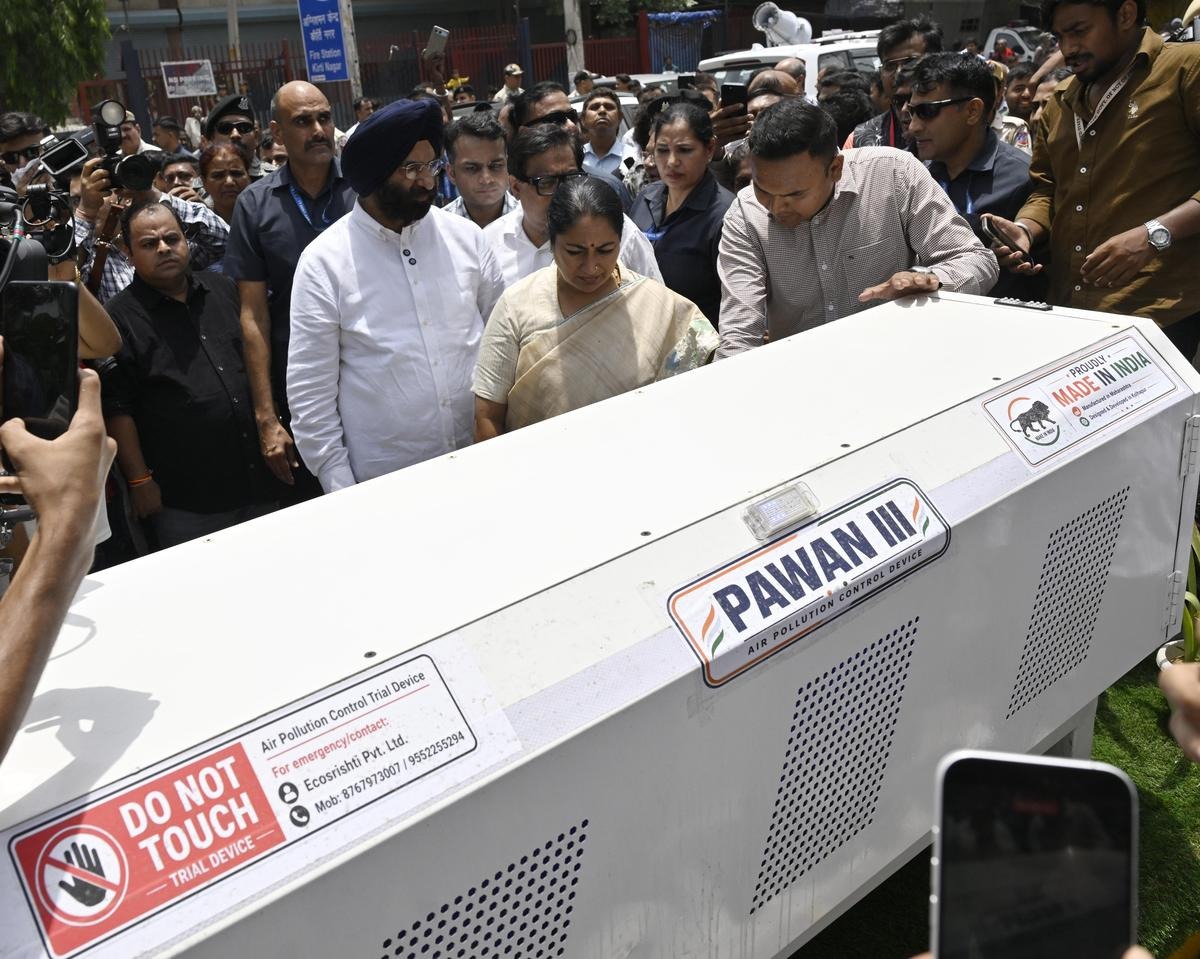
As part of a new technology-driven initiative, the Delhi government has installed the PAWAN III pollution control device in Kirti Nagar to address localized air quality concerns.
NEW DELHI — In a push to modernize the capital’s fight against poor air quality, the Delhi government has deployed the "PAWAN III" air pollution control device near the Kirti Nagar fire station. The installation is part of a series of pilot projects aimed at testing innovative, scientific solutions to mitigate particulate matter and dust levels in high-traffic urban zones.
Chief Minister Rekha Gupta, accompanied by Environment Minister Manjinder Singh Sirsa, inspected the new installation in late May 2026. The PAWAN III device is designed to capture polluted air from vehicular sources at the street level, subjecting it to a multi-stage purification process before releasing cleaner air back into the environment.
Technology-Driven Mitigation
The PAWAN III unit is one of several technologies currently under evaluation by the state government. According to government officials, field trials for the device conducted in Kolhapur previously indicated a reduction in particulate pollution levels by approximately 29%.
In addition to the PAWAN III, the pilot projects include:
Filter-Free Air Purifiers (STR-101): 21 units installed on electricity poles along Sat Guru Ram Singh Marg, designed to operate without consumables while targeting various pollutants, including PM1, PM2.5, and PM10.
EV-Mounted Anti-Smog Guns: A mobile, zero-emission system deployed on the Kirti Nagar–Mayapuri stretch, aimed at suppressing road dust through ultrafine water mist.
Evaluating Scalability
The deployment is part of the government’s broader Innovation Challenge initiative. Officials stated that these technologies will be monitored for approximately two to two-and-a-half months under the supervision of the National Physical Laboratory and the International Centre for Automotive Technology. Chief Minister Rekha Gupta emphasized that the government is committed to a year-round approach to air quality management rather than relying solely on seasonal winter measures.
"The government needs to focus on solutions that address pollution at its source rather than relying on temporary mitigation measures," noted Mukesh Khare, an expert from IIT Delhi, regarding the reliance on roadside air purification hardware. While government officials view these units as effective tools for creating cleaner "air corridors" in high-pollution hotspots, environmental experts continue to debate the long-term efficacy of roadside purification systems in Delhi’s open-ambient conditions.
Why It Matters
This deployment is significant as it signals the government's move toward integrating localized hardware solutions into its broader environmental strategy. With the recent announcement of an ₹8,300-crore “Clean Air, Healthy Delhi” project—a seven-year initiative supported by the World Bank—the use of these technologies is part of a larger plan to combine data analytics, inter-departmental coordination, and scientific innovation to address vehicular and industrial emissions.
Key Facts at a Glance
Device Function: PAWAN III captures polluted air from vehicles and purifies it through a multi-stage process.
Pilot Location: Installed near the Kirti Nagar fire station to address high-traffic pollution.
Trial Performance: Early field trials in other cities have suggested a particulate pollution reduction of nearly 29%.
Government Commitment: The initiative is part of a broader, year-round strategy managed by the Delhi Environment Department.
Frequently Asked Questions
1. What is the PAWAN III device?
PAWAN III is a roadside air pollution control device designed to suck in polluted air near traffic sources, purify it through multiple stages, and release cleaner air.
2. Where is it currently installed?
The device is currently undergoing pilot testing near the Kirti Nagar fire station in Delhi.
3. Are these machines effective?
The government is currently monitoring their effectiveness through the National Physical Laboratory; while initial trials showed a reduction in particulate matter, environmental experts suggest that long-term results depend on addressing pollution at the source.
4. What is the "Clean Air, Healthy Delhi" project?
It is a seven-year, ₹8,300-crore project supported by the World Bank to implement air quality management across all Delhi districts through 2033.
Source: The Hindu, Hindustan Times, NDTV India