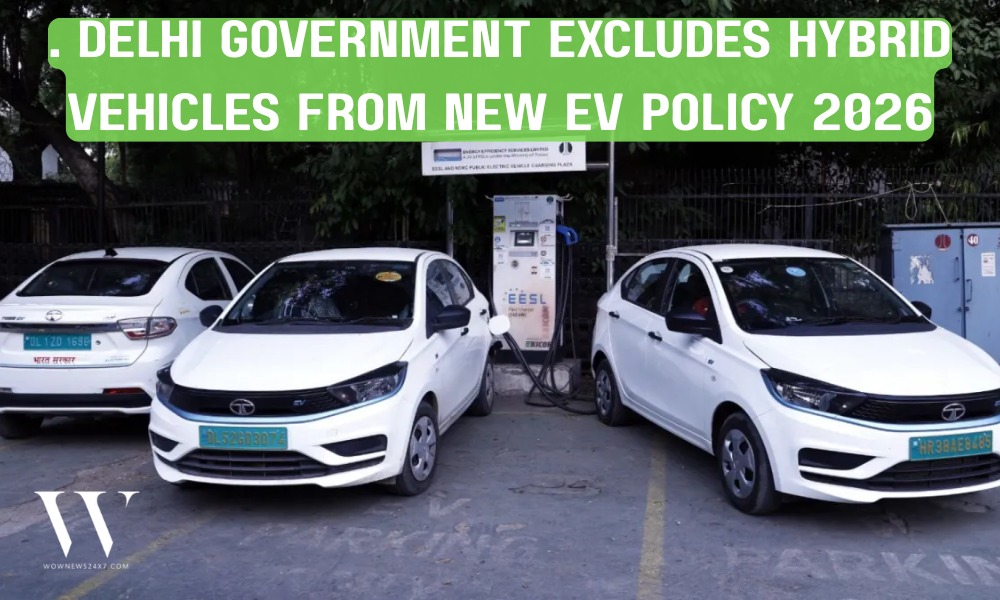
The Delhi EV Policy 2026, effective July 1, 2026, provides extensive incentives for pure electric vehicles, including full tax waivers and purchase subsidies, but explicitly excludes hybrid cars. The policy also mandates a phased end to new registrations for fossil-fuel-powered three-wheelers and two-wheelers by 2027 and 2028, respectively.
NEW DELHI — The Delhi Cabinet has officially unveiled its new Electric Vehicle (EV) Policy 2026, a comprehensive roadmap aimed at accelerating the capital's transition to zero-emission mobility. While the policy introduces significant financial support for pure battery-electric vehicles, it has notably excluded strong hybrid vehicles from its incentive scheme, marking a departure from earlier draft proposals that had suggested tax exemptions for the segment.
Effective July 1, 2026, the policy will remain in force until March 31, 2030, with a planned government investment of approximately ₹15,000 crore. According to the Delhi government, the primary objective is to curb rising vehicular pollution by incentivizing the adoption of pure electric two-wheelers, three-wheelers, and commercial goods carriers.
A Pure-Play Focus on Electric Mobility
The decision to omit hybrid vehicles from the subsidy structure follows internal debates regarding the most effective path toward decarbonization. Although earlier drafts of the Delhi EV Policy 2026 had proposed a 50% exemption on road tax and registration fees for strong hybrid cars priced up to ₹30 lakh, this provision was ultimately dropped during final consultations.
"The policy is focused exclusively on battery-powered or 'pure EVs' to maximize the environmental impact in the national capital," according to officials familiar with the cabinet's decision. By limiting incentives to pure EVs, the government intends to streamline its budgetary allocations, which are now heavily prioritized toward building a robust network of over 30,000 public charging points.
Phased Transition and Registration Mandates
The Delhi government has also set clear, aggressive timelines for the phasing out of internal combustion engine (ICE) vehicles. From January 1, 2027, only electric three-wheelers and N1 category goods carriers will be eligible for fresh registration. This mandate will extend to two-wheelers starting April 1, 2028.
For consumers, the policy offers substantial financial benefits, including a 100% exemption on road tax and registration fees for electric cars priced under ₹30 lakh. Additionally, owners who scrap older, polluting vehicles (BS-IV or below) and transition to a new EV can avail of scrappage incentives ranging from ₹5,000 to ₹1 lakh, depending on the vehicle category.
Why It Matters
For prospective car buyers and the automotive industry, the exclusion of hybrids signals a clear policy direction: the government is prioritizing a direct leap toward full electrification rather than bridging the gap with hybrid technology. For businesses and logistics providers operating in Delhi, the mandatory transition deadlines for commercial vehicles mean that fleet procurement strategies must be updated immediately to comply with the 2027 and 2028 registration cut-offs.
Key Facts at a Glance
Hybrid Exclusion: Strong hybrid vehicles are ineligible for purchase subsidies or tax waivers under the new policy.
Tax Exemptions: Pure electric passenger cars priced up to ₹30 lakh receive a 100% exemption on road tax and registration fees.
Infrastructure Goal: The government aims to establish more than 30,000 public charging points across the city by 2030.
Registration Deadlines: New ICE three-wheelers are barred after Jan 1, 2027; new ICE two-wheelers are barred after April 1, 2028.
Direct Benefits: All subsidies will be transferred directly to beneficiaries through the Direct Benefit Transfer (DBT) system.
FAQ: Frequently Asked Questions
Why did the government decide to exclude hybrid vehicles?
Official deliberations prioritized pure battery-electric vehicles to ensure the "double dividend" of reduced tailpipe emissions and decreased dependence on fossil fuels, focusing resources exclusively on full electrification.
Are existing petrol or CNG vehicles affected?
No. The registration restrictions apply only to new vehicles. Existing petrol and CNG-powered vehicles can continue to be used and re-registered without restriction.
What is the "lock-in" period mentioned in the policy?
To prevent the misuse of subsidies, the policy introduces a three-year lock-in period, barring beneficiaries from registering their incentivized EVs in other states for three years.
How can I apply for the scrappage incentive?
Incentives are available to the first 100,000 applicants who purchase a new EV within six months of receiving a Certificate of Deposit (CoD) from an authorized scrapping facility.
Source: Delhi Transport Department, National Stock Exchange (NSE), The Economic Times