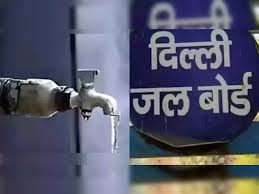
The Delhi Jal Board can boost its revenue by 30% by overhauling its aging 16,634-km pipeline network, where over 5,500 km of pipes exceed 30 years of age. Fixing these leaks addresses a 46% Non-Revenue Water deficit, recovering millions of gallons of treated water without requiring expensive new dams.
NEW DELHI, India — Amid recurring municipal deficits and intensifying clean water demands, the Delhi Jal Board (DJB) can achieve a direct 30% surge in total revenue collection by prioritizing the systematic overhaul of its decades-old distribution network. This strategic assessment, delivered by infrastructure experts on the occasion of World Environment Day, highlights a critical operational path forward for the capital's primary utility body.
Currently, a massive volume of treated water never generates a single rupee of utility collections. According to data from the latest Economic Survey, Delhi’s Non-Revenue Water (NRW)—the standard technical metric denoting treated drinking water that is lost to physical leakages, unauthorized tapping, or unmetered use before reaching consumers—stands at an inefficient 46%. Infrastructure specialists emphasize that plugging these systemic cracks is fundamentally a revenue-recovery mechanism that avoids the massive capital expenditures associated with constructing new reservoirs or treatment facilities.
The Scale of Delhi's Decaying Underground Pipeline Network
The fundamental driver behind the capital's steep distribution losses is the advanced age of its primary plumbing grid. Out of the 16,634-kilometer water distribution network managed across the national capital region, nearly 5,500 kilometers of underground lines are more than 30 years old, while an additional 3,000 kilometers have crossed the 25-year operational threshold.
As a result of this aging asset base, severe internal corrosion, degraded joint seals, and pressure-induced structural cracks cause an estimated 50% to 55% of processed water to seep into the ground before reaching household meters. This means that nearly half of the chemicals, electricity, and engineering labor deployed at treatment plants like Chandrawal or Haiderpur goes completely unbilled.
Infrastructure Overhaul Prompts a 30% Revenue Recovery
Infrastructure evaluations indicate that fixing these structural leaks changes the balance sheets of the water utility. Addressing the core plumbing loop allows the city to recover massive volumes of high-value treated water that is currently missing from billing loops.
“If the Delhi Jal Board upgrades its municipal plumbing infrastructure, it can achieve an increase in revenue of about 30% by reducing internal transmission losses, not by straining to produce more raw water,” explained Gurmit Singh Arora, National President of the Indian Plumbing Association. “The solution requires sustained technical execution through the replacement of old pipelines with durable modern materials and the establishment of dedicated District Metering Areas (DMAs) to pinpoint micro-losses.”
Financially, the present water tariff policy follows a progressive "use more, pay more" model. During the 2024-25 fiscal term, this system brought in ₹1,702.63 crore in direct collections. Infrastructure analysts project that capturing the 46% chunk of missing non-revenue water and routing it through standard domestic meters would immediately expand the utility's collection base by several hundred crores annually. This operational correction provides a complete return on capital investments within a five-to-seven-year window.
Macro Impact on Citizens, Businesses, and Urban Stability
The financial rehabilitation of the utility directly affects water security across all urban consumer segments:
| Consumer Segment | Direct Operational Impact |
| Domestic Citizens | Increased tap pressure, reduction in dirty water contamination, and equitable distribution across underserved assembly zones. |
| Commercial Businesses | Lower dependence on unregulated private water tankers, reducing secondary operational costs for hotels and complexes. |
| Municipal Planners | Lower power consumption at pumping centers, a smaller carbon footprint, and reduced depletion of groundwater tables. |
Phased Capital Allocations Target Systemic Re-Zoning
In response to the mounting infrastructure deficit, the local administration has launched an ambitious water management reform program. The government has set aside an initial budget allocation of ₹9,000 crore within the Water Supply and Sanitation sector to reduce non-revenue losses to 15% via a phased pipeline replacement initiative.
As part of this broader strategy, the Delhi Jal Board has floated comprehensive corporate tenders to divide the capital into six macro distribution zones (East, North East, South, North West, West, and Southwest). Appointed engineering consultants will execute 100% geographic surveys to map municipal networks, deploy automated leak detection and investigation (LDI) cells, and systematically replace roughly 7,000 kilometers of damaged pipes over a multi-year timeline estimated to cost up to ₹50,000 crore.
Official Sources Section
Asset metrics, financial statistics, and policy frameworks detailed throughout this report are derived from the following official sources:
Financial and Collection Data: Deliberations from the Delhi Economic Survey and the Comptroller and Auditor General (CAG) institutional reports.
Network Status and Policy Adjustments: Press briefings by Delhi Water Minister Parvesh Sahib Singh at the Delhi Secretariat.
Technical Insights: Engineering assessments published by the Indian Plumbing Association.
Quote Section
Administrative updates and expert testimonies emphasize that modern urban centers cannot afford to ignore transmission asset depreciation.
Delhi Water Minister Parvesh Sahib Singh stated during a recent planning briefing:
"People must recognize that Delhi's raw water resources are finite while our urban population continues to expand rapidly. The sustainable answer is not merely seeking more raw water from neighboring states, but managing every single drop efficiently. We are systematically building a pipeline infrastructure that will serve the capital safely for the next several decades."
According to officials familiar with the DJB engineering registry:
"Collaborative initiatives, including technical studies alongside institutional bodies like IIT Roorkee and regional partnerships with water corporations, are actively being finalized. Transforming unlined canal systems into closed pipeline networks will permanently stop transmission losses and optimize our billing efficiency."
Why It Matters
Upgrading aging water infrastructure provides a clear fiscal lesson for developing cities: physical resource conservation translates directly into financial self-sustainability. By stopping physical leaks, utility providers can generate substantial new revenue from their existing production capacity, funding further modernization without forcing steep tariff hikes on ordinary citizens.
Key Facts at a Glance
Revenue Potential: Upgrading legacy plumbing networks can expand DJB’s revenue collections by an estimated 30% purely via loss reduction.
The NRW Crisis: Around 46% of processed drinking water in Delhi is currently categorized as Non-Revenue Water due to leaks, unmetered usage, and theft.
Aging Infrastructure: Out of a total 16,634-km network, more than 5,500 km of pipelines have been underground for over 30 years, leading to high leakage rates.
Strategic Re-Zoning: The utility is executing a comprehensive re-zoning plan across six city zones to lower water losses down to an international standard of 15%.
FAQ Section
What exactly is Non-Revenue Water (NRW)?
Non-Revenue Water represents the volume of clean, treated drinking water produced at utility plants that is lost before it ever reaches a consumer's meter. This loss happens due to physical pipe leaks, system overflows, theft, or faulty unmetered connections.
Can the Delhi Jal Board increase revenue without increasing water tariffs?
Yes. By replacing broken pipelines and reducing non-revenue water losses from 46% down to 15%, the utility can bill and collect revenue on millions of gallons of water that currently leak into the ground, boosting revenues by 30% using existing production levels.
How long will it take for the pipeline replacement project to yield results?
Experts indicate that while the comprehensive overhaul of thousands of kilometers of pipelines requires a five-to-seven-year execution timeline, individual zones see immediate improvements in water pressure, purity, and billing accuracy as soon as local District Metering Areas are upgraded.
Source: Official press bulletins from the Delhi Secretariat, technical whitepapers from the Indian Plumbing Association, and capital infrastructure reports verified via the Hindustan Times municipal desk.