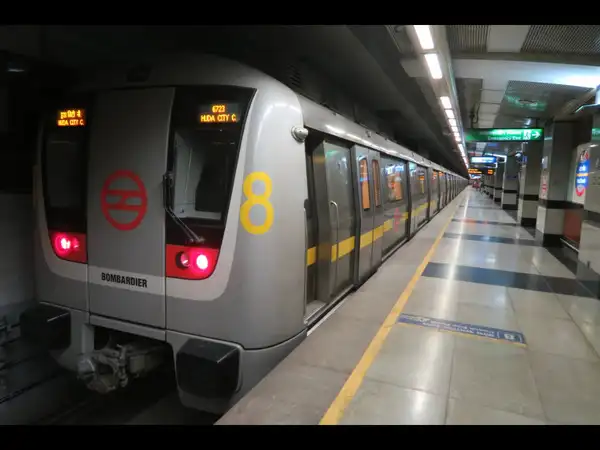
A study by WRI India reveals that Delhi Metro last-mile connectivity remains a critical challenge, with commuters spending 40% of travel time and 48% of costs on just 18% of their total journey distance. Authorities are expanding electric feeder fleets, mini-buses, and digital ticketing to resolve final-stretch commuting friction.
NEW DELHI — Despite carrying more than six million passengers daily across an expansive 393-kilometre network, Delhi Metro last-mile connectivity remains the primary bottleneck discouraging wider public transit adoption in the National Capital Region (NCR), according to urban mobility data and research from the World Resources Institute (WRI) India. Commuters spend up to 40 percent of their daily journey time and 48 percent of their total transit expenditure on the final stretch of their commute, which represents just 18 percent of their overall travel distance. The persistent friction outside station gates highlights the operational gap between heavy rail transit infrastructure and neighborhood-level feeder systems as urban authorities confront persistent vehicular congestion and seasonal air pollution across Delhi.
Disproportionate Travel Cost and Time on the Final Stretch
The operational scale of the Delhi Metro Rail Corporation (DMRC) has transformed regional transit across Delhi, Noida, Gurugram, Ghaziabad, and Faridabad. However, the economic and logistical burden of reaching residential colonies, commercial hubs, and educational institutions continues to fall disproportionately on commuters once they exit turnstiles.
According to WRI India transport assessments, the absence of standardized feeder networks forces passengers to rely on fragmented intermediate public transport (IPT) options, including unregulated e-rickshaws, shared auto-rickshaws, and app-based ride-hailing aggregators. This structural inefficiency often results in short three-kilometre trips costing significantly more than a 25-kilometre rapid rail ride, reducing the net economic benefit of public transit for daily wage earners and middle-income office workers alike.
Women's Safety and Pedestrian Infrastructure Deficits
Beyond economic costs, systemic gaps in Delhi Metro last-mile connectivity raise significant passenger safety and accessibility challenges, particularly for women and senior citizens. While DMRC maintains high internal security protocols through Central Industrial Security Force (CISF) personnel, designated women-only coaches, and extensive closed-circuit surveillance, safety assurance drops markedly once passengers step outside station perimeters.
Studies on women's mobility in Delhi identify the presence of broken pedestrian footpaths, poorly illuminated arterial access roads, unregulated parking clusters, and the absence of designated public feeder bays as critical deterrents. The lack of safe, predictable walking infrastructure prevents commuters from completing short distances on foot, directly forcing reliance on private motorized vehicles and ride-hailing services for trips under two kilometres.
Electric Feeder Fleet Expansion and Institutional Interventions
To resolve these integration bottlenecks, transport planners are turning toward standardized electric mobility integration. The Delhi Government’s Transport Department and DMRC have introduced several joint operational initiatives to strengthen feeder networks across key interchange stations.
Electric Auto and Feeder Fleets: DMRC has deployed over 1,507 electric autos across major terminals, with plans to induct additional units to expand feeder coverage across suburban clusters.
Battery-Swapping Hubs: Dedicated battery-swapping and fast-charging infrastructure have been commissioned across 14 high-density metro stations, including Rithala, Botanical Garden, and Vaishali, to stabilize e-rickshaw turnaround cycles.
Integrated Digital Ticketing: Upgrades to the DMRC Momentum 2.0 (Delhi Sarthi) platform allow commuters to book multimodal journeys, incorporating bike taxis and bus connections alongside regular metro smart tickets.
Mohalla Mini-Bus Rollout: The Delhi Transport Department is deploying low-floor 9-metre electric buses specifically optimized to navigate narrow residential roads connecting neighbourhood clusters to nearby transit stations.
Impact on Citizens, Urban Traffic, and Environmental Goals
Addressing systemic gaps in Delhi Metro last-mile connectivity is critical to reversing personal vehicle dependency in the national capital:
Daily Office Commuters and Students: Formalizing feeder bus frequencies and capping short-distance fares lowers monthly transportation expenses while eliminating daily negotiations with intermediate transport operators.
Women and Vulnerable Travellers: Well-lit multimodal transit hubs, monitored pick-up and drop-off zones, and regulated fleet drivers improve safety and accessibility during late-evening hours.
Urban Road Decongestion: Eliminating informal vehicle clustering around metro gates smooths traffic flow along arterial ring roads, reducing bottleneck congestion near major junctions.
Regional Air Quality Targets: Shifting short-distance vehicular travel to zero-emission electric feeder fleets supports statutory clean air mandates across the National Capital Region.
Official Sources
Operational metrics, transit studies, and policy frameworks are compiled from mobility research published by the World Resources Institute India, fleet deployment data released by the Delhi Metro Rail Corporation, transit planning mandates from the Delhi Transport Department, and clean transportation assessments issued by the International Council on Clean Transportation.
"According to transit research analysts and urban mobility officials, closing the gap in Delhi Metro last-mile connectivity requires shifting focus from building heavy rail infrastructure alone to designing fully integrated pedestrian walkways, regulated electric feeder corridors, and predictable shared mobility solutions that ensure safe journeys from doorstep to destination."
Why It Matters
The viability of heavy public transit investments depends heavily on seamless first- and last-mile accessibility. When the final one to two kilometres of a journey remain unpredictable, expensive, or unsafe, commuters inevitably opt for private two-wheelers and passenger cars. Solving the last-mile challenge is essential for Delhi to reduce chronic road congestion, improve urban air quality, and maximize the social return on its extensive mass transit investments.
Key Facts at a Glance
Commuter Cost Imbalance: The final 18% of travel distance accounts for 40% of journey time and 48% of total transit costs.
Network Scale: Delhi Metro carries over six million passengers daily across 393 kilometres of operational track.
E-Mobility Integration: Over 1,500 electric autos and battery-swapping stations at 14 key terminals have been deployed to strengthen feeder connectivity.
Multimodal Focus: Initiatives prioritize electric feeder mini-buses, unified digital ticketing, and station drop-off bay redesigns.
Frequently Asked Questions
What makes the last mile challenging for Delhi Metro commuters?
Commuters face irregular feeder bus services, high intermediate fares from unregulated operators, poorly maintained walking paths, and safety concerns during late-evening hours.
How much time and money do passengers spend on last-mile travel?
According to WRI India, commuters spend approximately 40 percent of their total journey time and 48 percent of their total commuting costs navigating the final 18 percent of travel distance to and from stations.
What measures are authorities taking to improve feeder connectivity?
DMRC and the Delhi Transport Department are deploying electric feeder mini-buses, expanding EV auto fleets, setting up battery-swapping hubs, and integrating app-based multimodal ticketing.
Source: Delhi Metro Rail Corporation, World Resources Institute India, Delhi Transport Department, International Council on Clean Transportation, Ministry of Housing and Urban Affairs